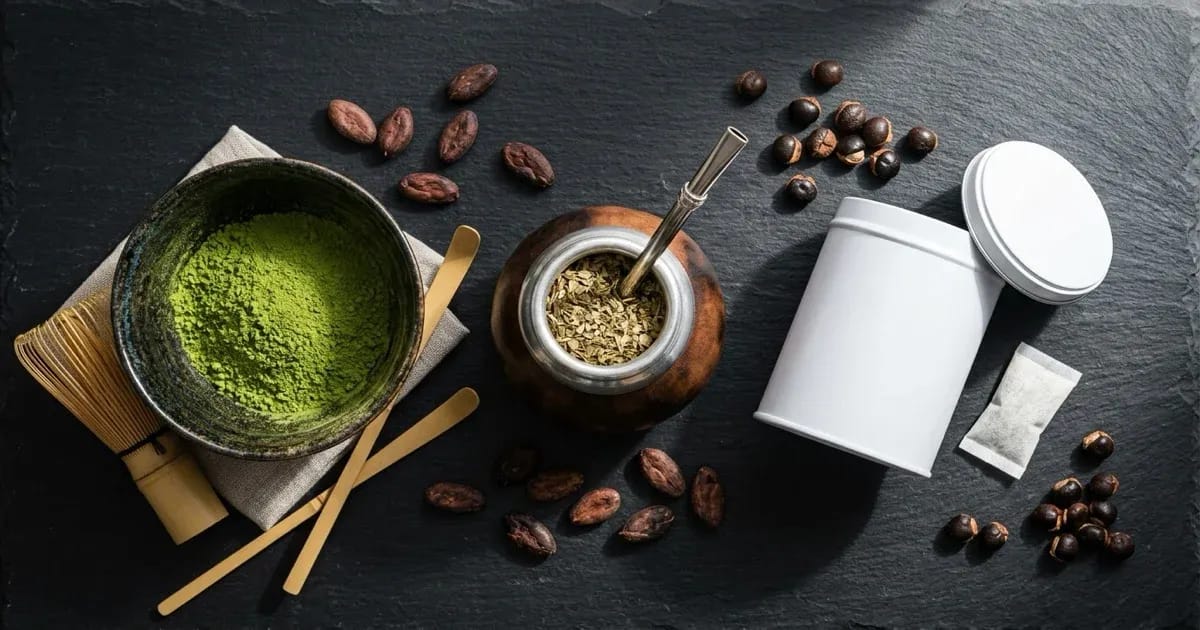
If you want the focus and energy of caffeine without the coffee, you have more options than you probably realize. Caffeine occurs naturally in tea leaves, guarana seeds, yerba mate, kola nuts, and cacao. It's also added to functional products like pouches, pre-workouts, and energy strips. The right choice depends on how much caffeine you want, how fast you want it to hit, and what you're trying to avoid about coffee — acidity, bitter taste, crash, jitters, or stained teeth.
We put this guide together because people quitting coffee (or rationing caffeine for health reasons) keep asking us what else works. Here's the honest breakdown, ranked by how closely each alternative delivers the coffee feel without the coffee itself.
Quick Comparison: Coffee-Free Caffeine Sources
| Source | Caffeine (typical) | Best For |
|---|---|---|
| Matcha green tea | 60–80 mg/cup | Smooth, sustained focus |
| Yerba mate | 70–85 mg/cup | Coffee-like kick without acidity |
| Black tea | 40–70 mg/cup | Moderate, familiar taste |
| Guarana supplements | 40–150 mg/serving | Plant-based caffeine |
| Focus pouches | 50 mg/pouch | Discreet, no drink required |
| Pre-workout powder | 150–400 mg/scoop | Gym performance |
| Energy strips/gum | 40–100 mg/unit | Portable, no drink required |
| Dark chocolate (85%+) | 20–30 mg/oz | Minimal boost with food |
Tea Is the Obvious Swap — Start Here
If you want something close to the coffee experience — hot drink, ritual, social compatibility — tea is the direct replacement.
Matcha gives you 60–80 mg of caffeine per serving plus L-theanine, an amino acid that smooths out caffeine's sharp edges. Research from Haskell et al. (2008, PMID: 18006208) showed L-theanine combined with caffeine improves cognitive performance more than either alone. That's why matcha drinkers describe the feel as "alert but calm" rather than wired.
Yerba mate comes closer to coffee's intensity. Traditional in South America, it delivers 70–85 mg of caffeine per cup with a savory, slightly bitter flavor that coffee drinkers tend to like immediately. No acidity, no tooth staining, no crash for most people.
The research backs this up. That study (Haskell et al., 2008, PMID: 18006208) found that L-theanine combined with caffeine improved both speed and accuracy on attention-switching tasks — better than either compound alone. L-theanine crosses the blood-brain barrier and promotes alpha-wave activity, which takes the jittery edge off caffeine without reducing alertness. Matcha delivers both compounds naturally in a single drink.
Black tea is the lowest-effort option — 40–70 mg per cup, available everywhere, no specialty equipment needed.
Guarana: Nature's Slow-Release Caffeine
Guarana seeds contain about four times the caffeine of coffee beans by weight. The structural difference matters: guarana caffeine is bound to tannins, which slows absorption and extends duration compared to coffee's fast peak-and-crash pattern.
This is what makes guarana useful in functional products. A 50 mg dose of guarana caffeine often lasts 4–6 hours, versus 2–3 hours for the same dose from coffee. You get less peak intensity but more sustained alertness.
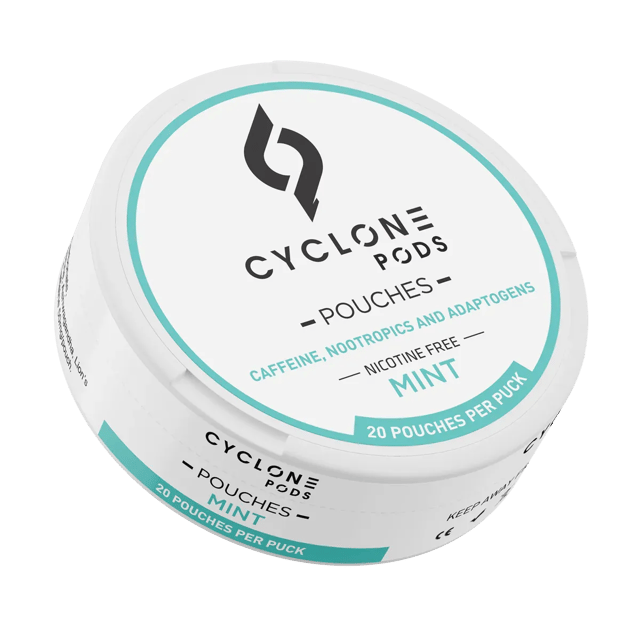
Guarana appears in energy drinks, supplements, and — increasingly — nicotine-free focus pouches. Cyclone's Focus Pouches use 50 mg of guarana caffeine per pouch alongside adaptogens like Ashwagandha, Lion's Mane, Reishi, Cordyceps, and Bacopa Monnieri.
Kennedy et al. (2004, PMID: 15582012, Pharmacology Biochemistry and Behavior) found something unexpected: guarana improved cognitive performance beyond what its caffeine content alone predicted. Their conclusion was that guarana's tannins, saponins, and other phytochemicals contribute independent effects. This matters if you're choosing between pure caffeine tablets and guarana-based products — the plant extract does more than the isolated molecule.
Pre-Workout and Energy Strips: Intense
If you want maximum caffeine in minimum time — gym days, long drives, pulling an all-nighter — pre-workout powders deliver 150–400 mg per scoop. Most people tolerate the lower end (150–200 mg) fine. Above 300 mg, expect jitters, elevated heart rate, and a meaningful crash.
Energy strips and gum are portable alternatives at 40–100 mg per unit.
What About "Caffeine-Free Energy"?
Products marketed as "caffeine-free energy" typically rely on B-vitamins, adaptogens, and nootropics instead of stimulants. They won't give you the caffeine-style alertness spike, but they can support sustained cognitive function without affecting sleep.
The active ingredients that actually have research backing include:
- Ashwagandha — adaptogen, supports stress response (Lopresti et al., 2019)
- Lion's Mane — mushroom, supports nerve growth factor production
- Bacopa Monnieri — traditional Ayurvedic herb for memory and learning
- Cordyceps — mushroom, supports oxygen utilization and stamina
These are slow-acting — effects accumulate over days to weeks of consistent use rather than hitting within an hour. That's fundamentally different from caffeine, which is why serious functional products combine both: caffeine for the immediate boost, adaptogens for the baseline support. Our nootropic pouches guide covers the evidence for each adaptogen in detail.
Matching the Source to Your Goal
Quit coffee but still want the morning ritual: Yerba mate or matcha. Hot drink, similar caffeine content, smoother experience. Brewed in minutes.
Discreet caffeine during work or travel: Focus pouches, energy gum, or caffeine strips. No brewing, no cup, no smell. 50–100 mg per unit.
Gym or high-intensity focus: Pre-workout powder at 150–200 mg. Short-duration, high-output situations only.
Sustained all-day energy: Guarana-based products. Slow release prevents the 11 AM crash that plagues coffee drinkers. Some caffeine pouches use guarana.
Quitting caffeine entirely: Adaptogen-only formulas (no caffeine) won't spike your alertness, but they provide cognitive support without disrupting sleep. Expect effects in 1–2 weeks, not immediately.
Factor in caffeine sensitivity. If one cup of coffee makes you anxious, you may be a slow metabolizer (CYP1A2 gene variant — the primary enzyme responsible for caffeine metabolism). Start with matcha, where L-theanine buffers the stimulant effect. Or try a single 50 mg Focus Pouch, which is roughly one-third the caffeine of a standard drip coffee. If you tolerate caffeine well, yerba mate (70–85 mg) or guarana supplements give you more headroom.
Think about budget and convenience. Tea bags run under $0.50 per serving and are available everywhere. Focus pouches are $0.50 each ($9.99 for a 20-pack) — mid-range, but zero prep and fully portable. Pre-workout powder varies widely but typically costs $1–2 per serving. Energy drinks ($2–3 each) are the worst value per milligram of caffeine.
What to Avoid
Synthetic caffeine pills (NoDoz, generic tablets) deliver the same caffeine but lack any of the ritual, nutrients, or co-factors that make tea, yerba mate, or whole-plant products easier on your system. They work, but they're unpleasant to take and easy to over-dose.
High-caffeine energy drinks (300+ mg per can) combine caffeine with taurine, guarana, and sugar at levels that concern cardiologists. If you need that much caffeine, pre-workout powder is at least cleaner.
Anything marketed as "nicotine pouches with caffeine" — that's a nicotine product first, caffeine second. If you're trying to avoid nicotine, read labels carefully. True nicotine-free focus pouches exist, but they're a smaller category than the nicotine versions.
The Honest Answer
There's no perfect coffee replacement because coffee does a lot at once: caffeine, antioxidants, ritual, warmth, smell, social context. No single alternative replicates all of that. But if you isolate what you actually want from caffeine — alertness, focus, energy — then tea, guarana-based products, and focus pouches each deliver it more cleanly than coffee does.
Start with whichever alternative fits your situation. Yerba mate if you'll miss the morning drink. Matcha if you want smoother focus. Focus Pouches if you want something portable that doesn't require brewing. Most people find a combination works better than any single swap — matcha in the morning, focus pouches in the afternoon, and no coffee at all.