What Does "Clean Vaping" Actually Mean?
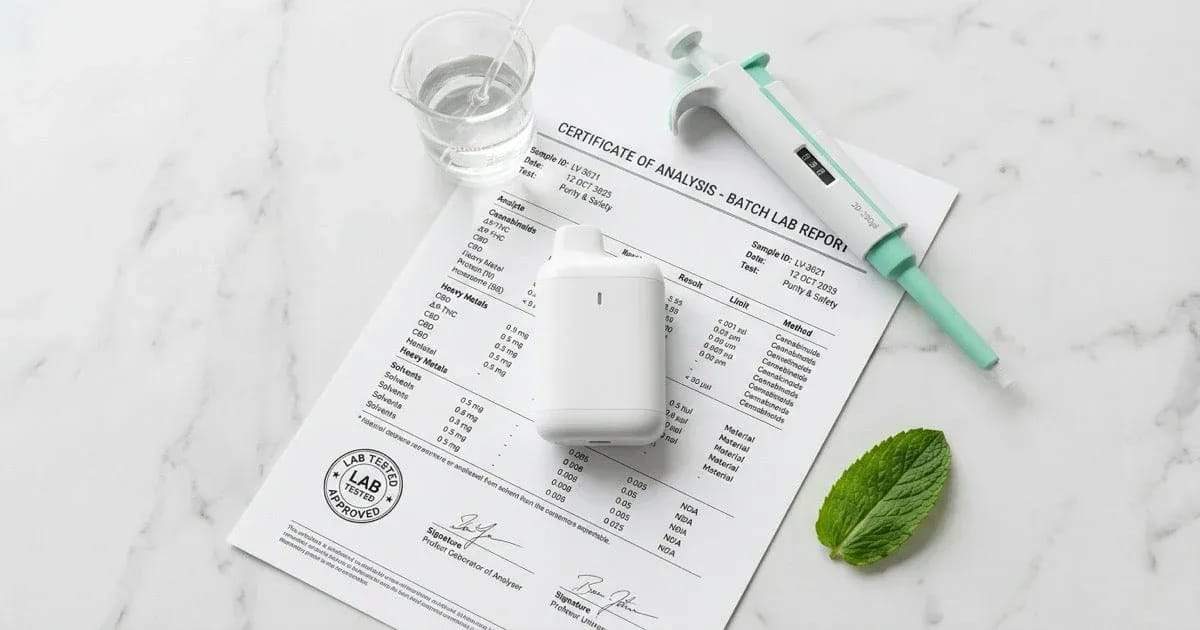
Clean vaping is using a vape product whose ingredients have been tested by an accredited third-party lab, with results published for anyone to verify. It means the results cover what is actually in the liquid, such as nicotine, diacetyl and heavy metals, measured with named methods like LC-MS/MS, not just a claim on a label.
That definition might surprise you. Google "clean vaping" right now and you'll get tutorials on wiping down your device with isopropyl alcohol. Useful if your coil tastes burnt, useless if you're trying to figure out whether what you're inhaling is actually safe.
We're not talking about device maintenance. We're talking about what's in the liquid — and whether anyone has bothered to prove it.
The Three-Word Problem With Vape Marketing
"Plant-based." "Vitamin-infused." "All-natural."
These phrases show up on product pages across the nicotine-free vape market. They sound good. They mean almost nothing.
Vegetable glycerin (VG) — the base liquid in most vapes — comes from vegetable oil. Its CAS number is 56-81-5. Every VG-based vape is technically "plant-based." That includes the $4 gas station disposable and the $30 wellness device with the minimalist packaging. Same ingredient. Different marketing budget.
Propylene glycol (PG), the other common base, is synthetic (CAS 57-55-6). Both VG and PG are FDA-recognized as generally safe for ingestion. Inhalation is a different question — one the FDA hasn't fully answered for any vape product.
So when a brand calls itself "plant-powered," ask: plant-powered how? VG has always been plant-derived. That's not a differentiator. It's a baseline.
What Actually Makes a Vape "Clean"?
If "plant-based" and "all-natural" don't cut it, what does? Four things. In order of importance:
1. Third-Party Lab Testing With Published Results
Not "we test our products" in a FAQ answer. Published certificates of analysis (COAs) from a named lab, with a work order number you could call to verify. The lab should be ISO 17025 accredited — that's the international standard for testing laboratory competence, and it's a higher bar than "ISO certified," which can mean almost anything.
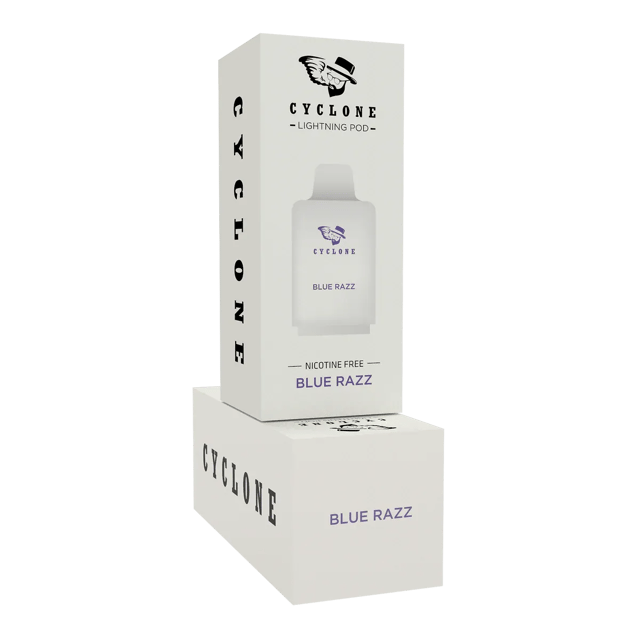
At Cyclone Pods, our Gust Pro and Lightning vapes are tested by Legend Technical Services in St. Paul, Minnesota. ISO 17025 accredited. LC-MS/MS method — the gold standard for detecting trace compounds. Detection limit: 0.063 µg/g. Work Order #2503988: 13 of 16 flavors non-detect for nicotine, with trace amounts in 3. You can read the full results on our lab testing page.
We added a second work order (#2602062) in July 2026. Six Gust Pro and Lightning flavors came back non-detect for diacetyl and 2,3-pentanedione, and non-detect for arsenic, cadmium, lead, and mercury by ICP/MS. Clean here means verified free of those specific compounds — not simply asserted.
We publish this because we think you should be able to check. If a brand doesn't publish their COA, ask yourself why.
2. No Diacetyl
In 2004, NIOSH investigated workers in microwave popcorn factories who were developing serious respiratory disease — bronchiolitis obliterans, sometimes called "popcorn lung." The culprit was diacetyl, a flavoring chemical that adds a buttery, sweet taste. It later showed up in e-cigarette liquids for the same reason.
Most reputable brands have removed it. But "most" isn't "all," and not every brand tests for it. Our report from Legend Technical Services (Work Order #2602062) found no detectable diacetyl in the six Gust Pro and Lightning flavors it tested. We wrote a full breakdown of diacetyl in vape juice if you want the details.
3. No Vitamin E Acetate
In 2019 and 2020, the CDC investigated a wave of severe lung injuries tied to vaping — EVALI (e-cigarette or vaping product use-associated lung injury). They identified vitamin E acetate as a primary culprit. It was used as a thickening agent in some THC vape cartridges, and it coated lung tissue in a way that blocked oxygen exchange.
Our vape liquids don't contain it: the formula is USP-grade VG, PG, and food-grade flavorings. Neither Legend report includes a vitamin E acetate panel, so that is an ingredient fact, not a lab result. Leaving it out should be the minimum for any product calling itself "clean."
4. USP-Grade Ingredients With Full Disclosure
USP-grade means the ingredients meet the standards set by the United States Pharmacopeia — the same body that sets standards for pharmaceutical ingredients. Our vapes use USP-grade vegetable glycerin, propylene glycol, and food-grade flavorings. That's it. No vitamins, no supplements, no botanicals. You can see exactly what goes into our vape juice.
Is There Such a Thing as a Clean Vape?
Yes — if you define "clean" by verifiable lab data rather than marketing copy. A clean vape is one where you can confirm what's in it, confirm what's not in it, and trace those confirmations back to an accredited lab.
No vape is risk-free. We won't pretend otherwise. The FDA hasn't approved any ENDS (electronic nicotine delivery system) product as safe — including nicotine-free ones. Inhaling heated aerosol carries unknowns that no amount of lab testing eliminates.
But there's a difference between a product tested by an ISO 17025 lab with published detection limits and one that says "tested for purity" somewhere in its footer. The first gives you data. The second gives you a sentence.
How Brands Stack Up on Transparency
| Criteria | Cyclone Pods (Gust Pro, Lightning) | HealthVape | ARRØ | Ripple+ |
|---|---|---|---|---|
| Published COA with work order # | Yes (WO #2503988) | No | No | No |
| Lab accreditation level | ISO 17025 | Claims "ISO certified" | Not disclosed | Not disclosed |
| Testing method disclosed | LC-MS/MS | No | No | No |
| Detection limit published | 0.063 µg/g | No | No | No |
| Nicotine lab result | Published: 13/16 ND, 3 trace | Label claim only | Label claim only | Label claim only |
| Diacetyl-free confirmed | Yes (ND in 6 flavors, WO #2602062) | Claims | Claims | Claims |
| Vitamin E acetate tested | Not lab-tested (not an ingredient) | Claims absent | Not stated | Not stated |
| Adds vitamins/supplements | No | Yes (B12, melatonin, caffeine) | No | Botanical aromatherapy |
Credit where it's due: HealthVape and ARRØ both make nicotine-free products, and that alone puts them ahead of the 95% of the vape market that still runs on addiction. Ripple+ is a B-Corp with genuine sustainability commitments. These are all legitimate positives.
The gap is in verification. "We test our products" is a sentence. A COA with a work order number, lab name, method, and detection limit is evidence. Those are different things.
The Vitamin Vape Question
Some brands market vapes infused with vitamins — B12, melatonin, caffeine. The pitch: get your vitamins while you vape.
The pharmacology doesn't support it. B12 absorption requires intrinsic factor — a protein produced in your stomach — and specific receptors in the ileum (the last section of your small intestine). Your lungs have neither. Inhaling aerosolized B12 bypasses the only pathway your body has for absorbing it. No peer-reviewed study has shown meaningful B12 bioavailability via inhalation.
The FDA's position is clear: they have not approved any vaping product for delivering health or wellness benefits. In fact, the agency has specifically cautioned against unproven health claims in the vaping market.
This doesn't mean vitamin vapes are dangerous, necessarily. It means the "health" angle is unproven marketing — not science.
What Is the Healthiest Vape You Can Use?
The healthiest vape doesn't contain nicotine, doesn't contain known harmful additives, and proves both with third-party lab data from an accredited facility. That's the best standard available right now. We've written a full ranking of the safest vapes in 2026 based on these criteria.
But we'll say what most vape brands won't: the healthiest option is not vaping at all. No aerosol inhalation product is risk-free. If you don't currently vape, don't start. If you're switching from cigarettes or nicotine vapes, a zero-nicotine option with verified lab testing is a measurable step in a better direction — but it's not "healthy" in the way an apple is healthy.
Honesty about limits is part of being clean too.
How to Evaluate Any Brand's "Clean" Claims
Next time you see a vape brand calling itself clean, natural, or plant-based, run through this checklist:
- Can you find their COA? Not a summary — the actual certificate from the lab. If it's not on their site, email and ask for it.
- Is the lab named and accredited? ISO 17025 is the standard you want. "ISO certified" without a specific standard number is vague.
- Do they disclose the testing method? LC-MS/MS, GC-MS, and HPLC are legitimate analytical methods. "Lab tested" without a method name tells you nothing.
- Do they publish detection limits? A test result of "ND" (not detected) means different things depending on the detection limit. ND at 0.063 µg/g is precise. ND at 100 µg/g would miss a lot.
- Are the health claims verifiable? If a brand claims their product delivers vitamins, ask for the bioavailability data. If there isn't any, the claim is marketing.
Looking for a vape that backs up its claims with actual lab data?
Browse our nicotine-free vapes — Gust Pro and Lightning are tested by an ISO 17025 accredited lab, with results you can read yourself. Need help choosing? Try our product finder.