Are Plant-Based Vapes Actually Plant-Based?
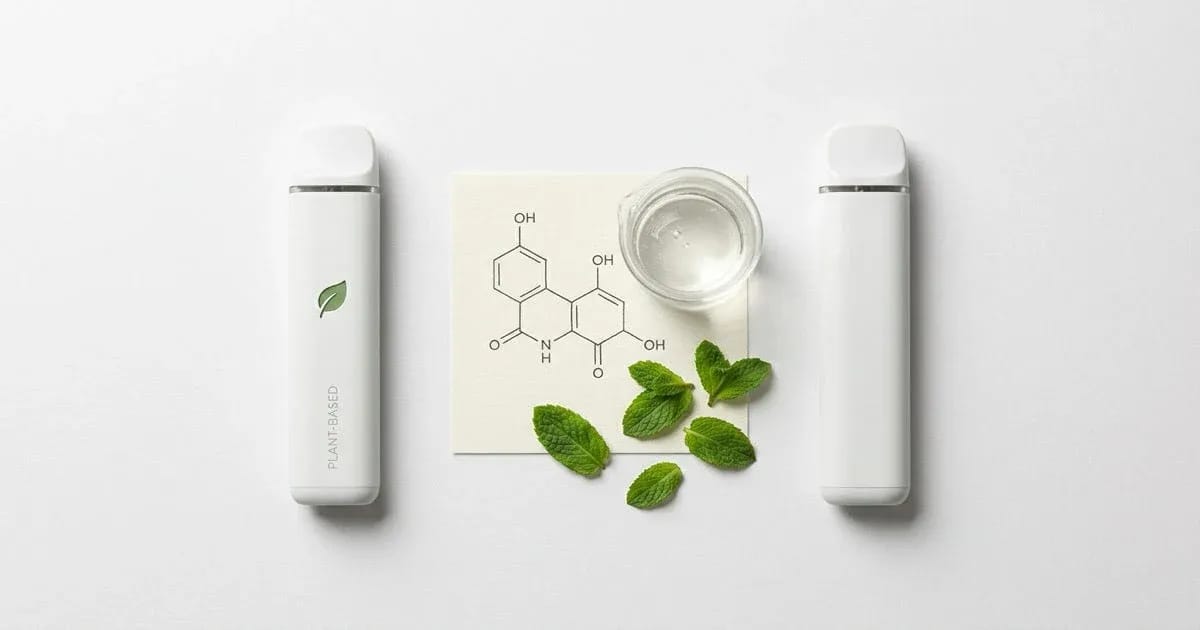
A plant-based vape uses vegetable glycerin (VG) as its base liquid — a compound derived from vegetable oils like soy, palm, or coconut. By this definition, the vast majority of vapes on the market are already plant-based, because VG has been the standard base ingredient in e-liquids for over a decade.
So why are some brands charging a premium for it?
The "plant-based" label in vaping is a marketing distinction, not a chemical one. When ARRØ calls its products "plant-powered" or HealthVape labels its collection "plant-based vapes and pods," they're describing the same VG that's in every other vape liquid on the shelf. The ingredient didn't change. The branding did.
That's not necessarily a scam. But it is worth understanding before you pay extra for it.
What's Actually in a Vape Liquid?
Every e-liquid — plant-based or not — starts with some combination of these ingredients:
| Ingredient | Chemical Name | CAS Number | Source | Role |
|---|---|---|---|---|
| VG | Vegetable Glycerin (Glycerol) | 56-81-5 | Plant-derived (vegetable oils) | Base liquid, produces visible vapor |
| PG | Propylene Glycol | 57-55-6 | Synthetic (petroleum-derived) | Carries flavor, produces throat hit |
| Flavorings | Varies | Varies | Natural or synthetic | Taste |
| Nicotine | Nicotine | 54-11-5 | Tobacco plant or synthetic | Stimulant (absent in nicotine-free products) |
That's it. Four possible ingredients. The "plant-based" claim applies to one of them — VG. PG is synthetic. Flavorings can go either way. And nicotine, when present, comes from tobacco (a plant, technically, though nobody's marketing Juul pods as "plant-based").
The "Plant-Based" vs "Plant-Powered" Marketing Play
Here's what happened. Around 2023-2024, nicotine-free vape brands started differentiating from the broader vape market. Smart move — nicotine-free is genuinely different from nicotine vapes. But "nicotine-free" alone wasn't enough to command the wellness price point some brands wanted.
Enter "plant-based."
The term borrows authority from the food industry, where "plant-based" signals a meaningful difference — no animal products, often associated with health and sustainability. In food, it means something. In vaping, it describes an ingredient (VG) that was already there.
ARRØ uses "plant-powered." MELO Labs uses "plant-based disposable." HealthVape lists "plant-based" in its collection titles. None of these are lying. VG is plant-derived. But the framing implies a distinction that the chemistry doesn't support.
Compare it to a water brand labeling itself "chemical-free." Water is a chemical (H₂O). The label isn't technically false. It's just not telling you what you think it's telling you.
Are Plant-Based Vapes Safe?
Calling a vape "plant-based" says nothing about its safety. VG being derived from vegetables doesn't make inhaling it safe any more than peanut oil being natural makes inhaling peanut oil safe. Source ≠ safety.
What actually matters for safety:
- Is it tested by a third-party lab? An ISO 17025 accredited lab using LC-MS/MS or similar analytical methods — not just "lab tested" in a FAQ.
- Are the results published? A certificate of analysis (COA) with a work order number, lab name, and detection limits.
- Is it free of known harmful compounds? Specifically: diacetyl (linked to bronchiolitis obliterans, NIOSH Health Hazard Evaluation HETA 2002-0408-2949, 2004), vitamin E acetate (linked to EVALI, CDC MMWR Vol. 68 No. 41, Oct 2019), and nicotine.
- Does the brand make health claims it can't back up? The FDA has not approved any vaping product — plant-based or otherwise — for health or wellness benefits.
At Cyclone Pods, we use the same VG/PG base as everyone else. We don't call it "plant-powered" because that doesn't tell you anything useful. What we do instead: publish our full lab results from Legend Technical Services, an ISO 17025 accredited lab in St. Paul, Minnesota. Work Order #2503988. LC-MS/MS method. Detection limit 0.063 µg/g. Results: 13 of 16 flavors ND for nicotine, with trace amounts in three (Lush Ice 0.85, Bold Tobacco 24, Tobacco 26 µg/g).
In July 2026 we added a second work order (#2602062): six Gust Pro and Lightning flavors, non-detect for diacetyl and 2,3-pentanedione, and non-detect for arsenic, cadmium, lead, and mercury on an ICP/MS heavy-metals screen.
That's not a marketing label. It's a verifiable data set.
What to Look for Instead of "Plant-Based"
"Plant-based" is a surface-level indicator — and unlike in food, the FDA has no regulatory definition for "plant-based" applied to vaping products. The term is completely unregulated. Here's what tells you more about what you're actually inhaling:
| What the Label Says | What It Actually Tells You | What Would Be More Useful |
|---|---|---|
| "Plant-based" | Contains VG (standard ingredient) | Published COA from accredited lab |
| "All-natural" | Undefined — no regulatory meaning for vapes | Full ingredient list with CAS numbers |
| "Lab tested" | Unknown scope and rigor | Lab name, method, accreditation, detection limits |
| "Vitamin-infused" | Contains added vitamins | Bioavailability data (none exists for inhaled vitamins) |
| "Zero nicotine" | Claims no nicotine | COA confirming ND at a specific detection limit |
Brand Transparency Comparison
We looked at the four brands that show up most frequently when you search "plant-based vape." Here's what each one publishes about what's in their products (as of May 2026):
| Brand | Uses "Plant-Based" Label | Published COA | Lab Named | Method Disclosed | Nicotine-Free |
|---|---|---|---|---|---|
| ARRØ | Yes ("plant-powered") | No | No | No | Yes |
| HealthVape | Yes | No | No | No | Yes |
| Ripple+ | Yes ("plant-powered puffs") | No | No | No | Yes |
| Cyclone Pods | No | Yes (WO #2503988) | Legend Technical Services | LC-MS/MS | Yes (13/16 ND, 3 trace) |
Disclosure: Cyclone Pods is one of the brands in this table. We've published our lab data above — apply the same verification standard to our claims.
Every brand in this table makes nicotine-free products. That's a genuine shared positive. ARRØ has Walmart distribution, which means accessibility. Ripple+ is a certified B-Corp focused on sustainability. HealthVape offers variety with vitamin-infused options. These are real strengths.
The difference is what you can verify. One column in that table has data points. The others have claims.
The Best Plant-Based Vape (If That's What You're Looking For)
If "plant-based" matters to you, know that every VG-based vape qualifies. The question isn't whether a vape is plant-based — it almost certainly is. The question is whether you can confirm what else is or isn't in it.
The safest vapes aren't necessarily the ones with the best marketing labels. They're the ones with the most transparent lab data. Check for a published COA. Confirm the lab is ISO 17025 accredited. Verify the detection limits are actually precise. Read the ingredient breakdown.
The Cyclone Pods Gust Pro — our 20,000-puff rechargeable vape at $20 — has a published COA at work order #2503988. It's the only option in this comparison where that's true. If a brand can answer all four of those questions with specifics, it doesn't need to call itself "plant-based." Not sure where to start? Our product finder walks you through the options.