No vape is "FDA approved." Not one. The FDA has authorized 48 e-cigarette products for sale through its Premarket Tobacco Product Application (PMTA) process, as of August 28, 2026 — all nicotine products, and all tobacco- or menthol-flavored except two Glas pods cleared in May 2026 — but authorization is not the same as approval. If you searched "FDA approved vape" looking for a device the government has certified as safe, that product does not exist.
We hear this question constantly. People assume the FDA stamps vapes the way it approves prescription drugs. It doesn't. The regulatory framework for vapes is entirely different, and understanding the distinction matters if you're making decisions about what to put in your body.
Are Vapes FDA Approved?
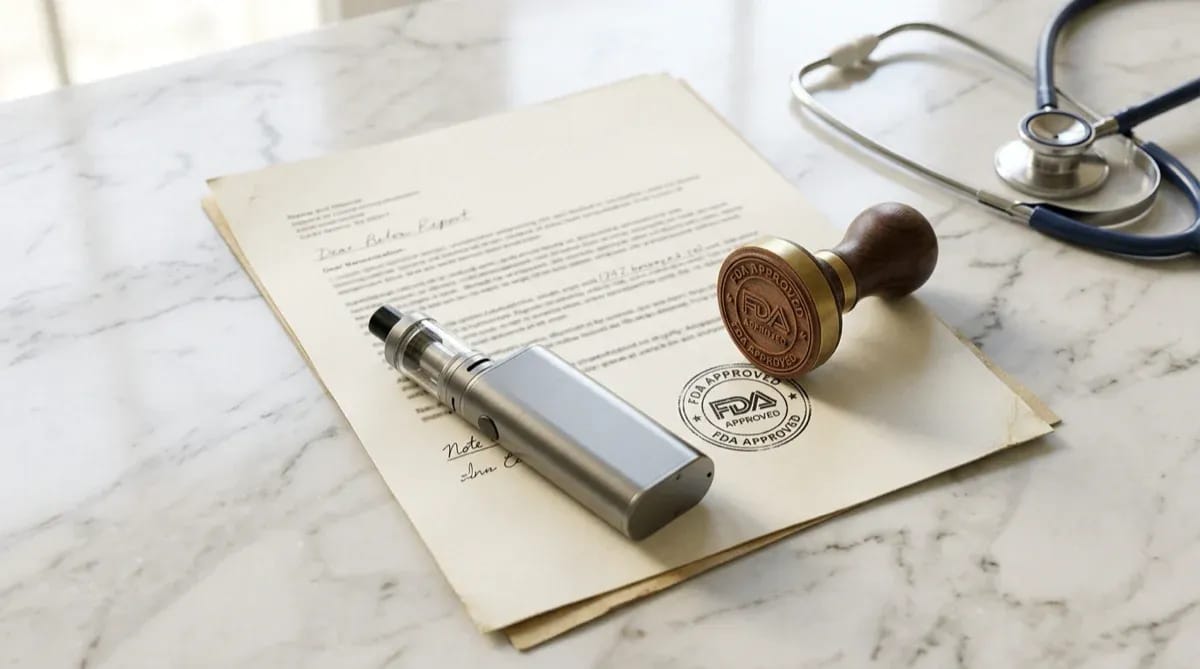
No. Zero vapes carry FDA approval. The FDA has never "approved" any vape, e-cigarette, or electronic nicotine delivery system as safe or effective. What the FDA has done is authorize specific products through the PMTA pathway — a process that evaluates whether a product is "appropriate for the protection of public health." That language is deliberate. It doesn't mean safe. It doesn't mean healthy. It means the FDA determined that the public health benefit of keeping that specific product on the market outweighs the risks.
This distinction trips people up because FDA approval — the kind your prescription medication goes through — involves rigorous clinical trials proving a product is safe and effective for its intended use. PMTA authorization for tobacco products uses a completely different standard. The FDA is weighing population-level harm reduction, not giving individual consumers a safety guarantee.
FDA Authorization vs. FDA Approval — What's the Difference?
The FDA operates two entirely separate frameworks, and conflating them is the core mistake most articles on this topic make.
FDA Approval (Drugs, Devices)
When the FDA approves a drug, it has reviewed clinical trial data proving the product is safe and effective for a specific medical condition. The process typically takes 10-15 years and costs over $1 billion. Approved products carry an FDA-approved label, and the agency actively monitors them for adverse events post-approval. Nicotine replacement therapies like patches and gums go through this process.
PMTA Authorization (Tobacco Products)
The PMTA process, established under the Family Smoking Prevention and Tobacco Control Act of 2009, requires manufacturers to demonstrate that their product is "appropriate for the protection of public health." The FDA considers the risks and benefits to the population as a whole — including the likelihood that the product will help current smokers switch away from combustible cigarettes versus the risk that it will attract new users, particularly youth.
A PMTA authorization means the FDA has reviewed the application and allowed the product to remain on the U.S. market. It does not mean the FDA endorses the product, considers it safe, or recommends anyone use it. The FDA has been explicit about this: "A marketing granted order does not mean a tobacco product is safe or 'FDA approved.'"
Which Vapes Has the FDA Actually Authorized?
As of August 28, 2026 the FDA has authorized 48 e-cigarette products — and two facts about that list matter more than any brand name: every one of them contains nicotine, and until May 2026 every one was tobacco- or menthol-flavored. On May 5, 2026 the FDA authorized Glas's Gold and Sapphire pods, its first non-tobacco, non-menthol ENDS products; the FDA identifies them only by those names. They lock to an age-verified smartphone and stop working away from it. What still hasn't cleared the process: a single nicotine-free vape. Not one. The agency keeps the running tally on its authorized-ENDS page. Here's who's on it.
| Manufacturer (brand) | Products authorized | What's on the list | Flavors | Authorized |
|---|---|---|---|---|
| R.J. Reynolds Vapor (Vuse) | 16 | Vuse Solo power unit and Original cartridges (G1, G2); Vuse Ciro power units and Original 1.5% cartridge; Vuse Vibe power units and Original 3.0% tank; Vuse Alto power unit and Golden Tobacco and Rich Tobacco pods at 1.8%, 2.4% and 5% | Tobacco | Oct 2021 (Solo), May 2022 (Vibe, Ciro), Jul 2024 (Alto) |
| NJOY LLC (NJOY) | 10 | NJOY ACE device; ACE pods in Classic Tobacco 2.4% and 5%, Rich Tobacco 5%, Menthol 2.4% and 5%; NJOY DAILY Rich Tobacco 4.5%, DAILY Menthol 4.5%, DAILY EXTRA Rich Tobacco 6% and Menthol 6% | Tobacco, menthol | Apr–Jun 2022 (tobacco); Jun 21, 2024 (menthol, the first menthol e-cigarettes authorized) |
| Logic Technology Development (Logic) | 8 | Logic Regular and Vapeleaf cartridge/capsule packages, Vapeleaf Tobacco Vapor System, Logic Pro capsule tank systems and Pro Tobacco e-liquid, Logic Power Tobacco e-liquid and rechargeable kit | Tobacco | Mar 24, 2022 |
| JUUL Labs (JUUL) | 8 | JUUL device; JUULpods in Virginia Tobacco and Menthol at 3.0% and 5.0%; JUUL2 device, JUUL2 Virginia Tobacco 18 mg/mL and Polar Menthol JUUL2 pods | Tobacco, menthol | Jul 17, 2025 (JUUL); Aug 28, 2026 (JUUL2) |
| Glas Inc. (Glas) | 6 | Glas G2 device; 50 mg/mL pods in Blonde Tobacco, Classic Menthol, Fresh Menthol, Gold and Sapphire | Tobacco, menthol, and the first non-tobacco, non-menthol flavors (Gold, Sapphire) | May 5, 2026 (Classic Menthol, Fresh Menthol, Gold, Sapphire) |
Not on the list, as of the FDA's August 2026 update:
| Brand | FDA status |
|---|---|
| Elf Bar / ELFBAR | No authorized products |
| Geek Bar | No authorized products |
| Lost Mary | No authorized products |
| blu (Imperial Brands) | No authorized products |
| Any nicotine-free vape, including ours | Not on the list; the PMTA list covers nicotine products |
The JUUL entry was the headline change of 2025. After the FDA moved to ban JUUL in June 2022, the company fought the denial in court — and on July 17, 2025 the agency reversed course and authorized five JUUL products: the device plus Virginia Tobacco and Menthol pods in 3% and 5% nicotine, after JUUL submitted additional evidence that the benefit to adult smokers outweighed the risks. JUUL is no longer in limbo; it's on the list. On August 28, 2026 the FDA added three JUUL2 products (the device plus tobacco and menthol pods at 18 mg/mL, about 1.5–1.6% nicotine), bringing the total to 48.
R.J. Reynolds, NJOY, and the rest all had to submit the same kind of package: toxicological studies, clinical data on how people actually use the product, and evidence that it would help adult smokers switch without pulling in new young users. That youth-risk test is why the flavor list is so narrow — the FDA has denied virtually every fruit and sweet flavor it has ruled on, and menthol only started clearing in 2024.
Some brands are still on the outside:
- blu: Imperial Brands' blu e-cigarette has not received PMTA authorization. The company withdrew certain product applications rather than pursue authorization for products unlikely to pass.
- Disposable brands (Elf Bar, Geek Bar, Lost Mary, etc.): None have received PMTA authorization. Many are manufactured overseas and imported into the U.S. without valid marketing orders. The FDA has issued hundreds of warning letters to retailers selling unauthorized disposable vapes.
The core point remains: 48 nicotine e-cigarette products are authorized — all tobacco or menthol except Glas's Gold and Sapphire pods, cleared in May 2026 — and the vast majority of vapes on the U.S. market have no FDA authorization at all.
What About Nicotine-Free Vapes?
This is where the regulatory picture gets more complex. The FDA's authority over e-cigarettes stems from the 2016 Deeming Rule, which extended FDA jurisdiction to all products "made or derived from tobacco." Nicotine-free vapes that contain zero tobacco-derived ingredients occupy a different regulatory space.
A nicotine-free vape that uses USP-grade vegetable glycerin, propylene glycol, and food-grade flavorings — with no nicotine and no tobacco-derived materials — is not classified as a tobacco product under federal law. That means the PMTA process doesn't apply in the same way. These products aren't "FDA authorized" or "FDA approved," but they also aren't subject to the same regulatory pathway as nicotine-containing e-cigarettes.
This regulatory distinction doesn't mean nicotine-free vapes are unregulated. They still fall under general consumer product safety standards, and the FDA has broad authority to act against products that pose health risks. But the specific PMTA framework — the one behind every "FDA approved vape" search — was built for tobacco products. Where a vape is made is a separate question from its FDA status; see which vapes are actually made in the USA.
At Cyclone Pods, we've operated in the nicotine-free space since 2018. We don't claim FDA approval because no vape has it. What we do is focus on what's within our control: ingredient transparency, independent lab testing, and removing the most harmful components from the equation entirely.
Our vape liquid uses three ingredients: USP-grade vegetable glycerin (VG), USP-grade propylene glycol (PG), and food-grade flavorings. No nicotine. No tobacco derivatives. No diacetyl. No vitamin E acetate. We send our Gust Pro and Lightning vapes to Legend Technical Services, Inc. — an ISO 17025 accredited laboratory in St. Paul, Minnesota — for independent testing using LC-MS/MS methodology with a detection limit of 0.063 µg/g. You can see the results on our lab testing transparency page.
That testing now spans two work orders. The most recent (#2602062, July 2026) covered six Gust Pro and Lightning flavors and returned non-detect for diacetyl and 2,3-pentanedione, plus non-detect for arsenic, cadmium, lead, and mercury on an ICP/MS screen.
Why Most Vapes Are NOT FDA Authorized
The scale of the PMTA backlog tells the story. The FDA received over 6.7 million PMTA applications by the September 2020 deadline. Processing that volume has been a massive undertaking, and the FDA has denied the vast majority of applications — particularly for flavored products and disposable devices from smaller manufacturers.
Several factors explain why so few products have been authorized:
- The evidence bar is high. PMTA applications require toxicological data, product composition analysis, manufacturing information, and evidence about the product's impact on population health. Many manufacturers — especially smaller companies and overseas producers — lack the resources to compile this data. A complete PMTA application can cost millions of dollars.
- Flavored products face extra scrutiny. The FDA has consistently flagged flavored e-cigarettes as a youth initiation risk. The agency has denied authorization for virtually all flavored disposable vapes and most flavored pod systems. Even Vuse's non-tobacco flavors were denied.
- Enforcement is inconsistent. Despite the PMTA requirement, thousands of unauthorized vapes remain on the U.S. market. The FDA has issued warning letters and import alerts, but enforcement hasn't kept pace with the flood of products — particularly disposable vapes from overseas manufacturers.
- Court challenges complicate enforcement. Several manufacturers have challenged FDA denials in federal court, and some have obtained court orders allowing their products to remain on the market while cases proceed. This has created a patchwork where legal status and FDA authorization don't always align.
The bottom line: if a vape brand claims to be "FDA approved," they are either misrepresenting their status or you're misunderstanding what they mean. No vape is FDA approved. A handful are PMTA authorized. The vast majority are on the market through a combination of regulatory backlog, enforcement gaps, and legal maneuvering.
What Does This Mean for Consumers?
If FDA authorization isn't the safety signal most people think it is, what should you actually look for when choosing a vape? Here's what matters more than a regulatory stamp.
Ingredient Transparency
A brand should tell you exactly what's in its products — not vaguely reference "premium ingredients" or "high-quality materials." Look for specific details: pharmaceutical-grade base liquids, named flavoring compounds, and clear statements about what's not included. If a company won't publish its ingredient list, that's a red flag regardless of regulatory status.
Independent Lab Testing
Self-reported quality claims mean nothing without third-party verification. Look for testing from an accredited laboratory (ISO 17025 is the standard) using validated analytical methods. The lab name, accreditation, methodology, and detection limits should all be publicly available. If a brand says "lab tested" without naming the lab or showing results, treat that claim with skepticism.
Nicotine Content (or Lack Thereof)
Nicotine is the primary addictive compound in most vapes and the reason the FDA regulates them as tobacco products. If you're concerned about the safety profile of vaping, removing nicotine from the equation eliminates the addiction risk entirely. A nicotine-free vape from a transparent manufacturer with verified lab testing addresses several of the biggest concerns in a way that FDA authorization alone does not.
Company Track Record
How long has the brand been operating? Do they have a physical U.S. presence? Can you find real information about the company and its founders? Fly-by-night brands importing unregulated devices from overseas factories present a fundamentally different risk profile than an established company with years of operations and a reputation to protect. We've been in Santa Monica, California since 2018 — eight years of building products we stand behind.
A Closer Look at What We Offer
We're not claiming to be FDA approved. No vape manufacturer honestly can. But here's what Cyclone Pods brings to the table for consumers who want the cleanest possible vaping experience:
The Gust Pro delivers 20,000 puffs at $20, with 14 flavors, USB-C recharging, a turbo mode, four ice settings, and a screen displaying battery and liquid levels. The Lightning pod system offers 10,000 puffs per pod at $14 per pod (starter kit $20), with 13 flavors, a turbo button, an LED screen that shows battery level, and magnetic connection. Both use USP-grade VG and PG with food-grade flavorings, made without added nicotine and with no diacetyl or vitamin E acetate in the formula. The Gust Core is rated 50,000 puffs, costs $25 and is assembled in the USA.
We can't control the FDA's regulatory framework. What we can control is ingredient quality, manufacturing standards, and transparency. We publish our lab results. We name our testing lab. We list our ingredients. That's the standard we think every vape company should meet, whether the FDA requires it or not.
The Bottom Line
The search for an "FDA approved vape" leads to a dead end because the concept doesn't exist. The FDA has authorized 48 nicotine e-cigarette products, nearly all tobacco- or menthol-flavored, through the PMTA process — which is a population-level harm reduction evaluation, not a consumer safety endorsement. No vape is FDA approved in the way that a prescription drug or medical device is approved.
For consumers, this means FDA status alone is not a useful filter for choosing a vape. A PMTA-authorized nicotine vape isn't necessarily "safer" for an individual user than a well-tested nicotine-free alternative. The better questions to ask are: What's in this product? Who tested it? Can I verify those results? And does this brand have anything to hide?
We built Cyclone Pods on the belief that transparency and ingredient quality matter more than regulatory checkboxes. No nicotine, no tobacco derivatives, no harmful additives, and independent lab results anyone can review. That's not FDA approval — but it might be more useful.