
Anxiety Pens: What They Are, Do They Work, and 5 Worth Trying in 2026
Updated: Conrad Kurth 13 min read
An anxiety pen is a small, handheld device marketed to reduce stress through inhalation, fidgeting, or both. The term covers everything from aromatherapy vape pens and CBD inhalers to plastic fidget pens you spin between your fingers. They're nicotine-free, widely available, and increasingly popular — especially among people looking for a quick way to take the edge off without medication.
But do they actually work? That depends on what you mean by "work." Some contain ingredients with real research behind them. Others are selling you flavored vapor with a wellness label. And a few are making health claims the FDA has already warned companies about.
We've been in the nicotine-free vape space since 2018. We don't make an anxiety pen — we'll explain why below — but we've watched this category grow, and we think you deserve an honest breakdown of what's out there, what the science actually says, and what we'd recommend instead.
What Is an Anxiety Pen, Exactly?
The term "anxiety pen" gets used loosely. It can mean three very different things:
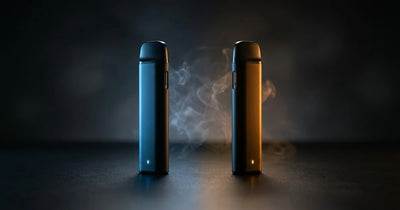
Aromatherapy vape pens are the most common type. These are disposable electronic devices that heat a liquid — usually containing lavender, chamomile, melatonin, or other botanical extracts mixed with vegetable glycerin (VG) and propylene glycol (PG) — into an inhalable aerosol. Brands like HealthVape, ARRØ, MELO/HELO, and LUVV sell these. Prices range from $15 to $25.
CBD vape pens contain cannabidiol and are marketed for fast-acting anxiety relief. These are a different regulatory category — CBD has more published research than aromatherapy compounds, and some studies show short-term anxiolytic effects. We're not covering CBD pens in detail here because Cyclone Pods doesn't operate in the CBD space.
Fidget pens are non-electronic — just plastic or metal pens with spinning parts, pop-it bubbles, or textured grips designed to keep your hands busy. You can find these on Amazon and Walmart for $5-15. They're harmless, they don't involve inhaling anything, and if spinning a pen helps you focus, go for it.
This article focuses on the first category: aromatherapy and supplement-based vape pens marketed for anxiety relief. That's where the biggest claims — and the biggest gaps between marketing and evidence — live.
Do Anxiety Pens Actually Reduce Anxiety?
There are two separate questions here, and most anxiety pen marketing blurs them together:
- Does the ritual of inhaling and exhaling reduce stress?
- Do the ingredients in anxiety pens reach your body and produce a calming effect?
The answer to the first question is: probably yes, a little. Deep breathing activates the parasympathetic nervous system. The physical ritual of inhaling and exhaling — the pause, the hand-to-mouth motion, the slow exhale — can be genuinely calming. This is why ARRØ's marketing says their pens contain "no active ingredients" and instead focuses on "the soothing ritual of vaping." That's honest positioning, and we respect it.
The answer to the second question is where things fall apart.
The Science Problem with Inhaled Supplements
The core claim behind most anxiety pens is that inhaling chamomile, lavender, melatonin, or L-theanine delivers those compounds to your bloodstream through your lungs. The problem: there is no peer-reviewed evidence proving this works.
A 2019 study published in the American Journal of Public Health by researchers at USC examined e-cigarettes marketed as vitamin delivery devices and concluded: "There is no scientific evidence to conclude that inhaling these supplements is safe" and "it is currently unclear whether inhaled vitamins or supplements are equivalent to those that are ingested."
A Stanford Medicine study led by Dr. Bonnie Halpern-Felsher, Professor of Pediatrics, put it more directly: "The GRAS designation means something is safe to consume through eating, or as a salve on the skin, but that's very different from heating a substance and inhaling the resulting aerosol." She added: "Anything you're vaping — anything you're buying without a prescription, heating and inhaling — is bad for your lungs."
And a 2025 study in Chemical Research in Toxicology found that melatonin — one of the most common anxiety pen ingredients — can only be vaporized above 900°F, more than twice the boiling point of CBD or THC. At typical vape temperatures, melatonin molecules are "dragged along" with the aerosol but never actually reach a gas phase. The study also found that melatonin vaping products "may result in respiratory immune dysfunction."
As pharmacist Scott Gavura wrote in Science-Based Medicine: there is "zero biochemical logic to inhaling vaporized vitamins." Humans evolved an efficient gastrointestinal tract for absorbing nutrients from food and supplements. Lungs are designed for gas exchange — oxygen in, carbon dioxide out — not for absorbing chamomile extract.
What About Lavender Aromatherapy?
Here's where it gets nuanced. Lavender inhalation — not through a vape, but through traditional aromatherapy (diffusers, cotton pads, direct sniffing) — does have some clinical support. A review of 11 clinical studies involving 972 participants found that 10 of 11 showed reduced anxiety after lavender inhalation.
But those studies used pure essential oils inhaled at room temperature — not heated through a vape coil, mixed with VG/PG, and aerosolized. Whether the active compounds survive vaporization and deliver the same effect through a vape pen is untested. No published study has validated anxiety pen products specifically.
The difference matters. A $10 lavender essential oil bottle that you sniff directly has more scientific backing than a $20 lavender vape pen.
The FDA Has Already Weighed In
The FDA has warned that wellness vaping products are "illegally sold with unproven claims and could be harmful." No vaping product has been approved by the FDA to prevent or treat any health condition — including anxiety.
In 2022, the FDA and FTC jointly sent a warning letter to MONQ, LLC — a company selling aromatherapy inhalers with products named "Zen," "Sleepy," and "Peace" — for making unsubstantiated claims that their lavender products could help manage anxiety and alcohol recovery. The FDA classified those claims as illegal drug claims.
Any anxiety pen that tells you it will "treat," "reduce," or "manage" your anxiety is making the same type of claim the FDA already flagged. The honest brands in this space — like ARRØ — carefully avoid health claims and instead talk about the ritual.
5 Anxiety Pens Reviewed (Honestly)
Here's what's actually available, what's in each product, and what we think of them.
1. HealthVape CHILL
HealthVape's anxiety pen flagship. Lavender-flavored with chamomile extract. $19.99 per device, or $53.97 for a 3-pack.
HealthVape claims their products are tested by Eurofins and manufactured in an ISO-certified facility. They explicitly state: no vitamin E acetate, no diacetyl, no nicotine. But we couldn't find downloadable lab reports on their site — a gap we've flagged in our safest vapes ranking as well.
The bigger issue is HealthVape's product line as a whole. They sell vapes claiming to deliver B12, collagen, and melatonin through inhalation — the exact type of unproven health claims the Stanford and USC research call into question.
Pros: Nicotine-free, pleasant lavender flavor, established brand (founded 2018)
Cons: No downloadable lab results, parent brand makes unproven supplement-delivery claims, $19.99 is steep for a disposable
2. ARRØ Chill Vapes
ARRØ's "Chill" line is nicotine-free and — to their credit — makes no active ingredient claims. Their marketing explicitly states the pens contain "no nicotine, no CBD, and no active ingredients — just clean flavor and the soothing ritual of vaping." That's an honest position.
Available in flavors like Magic Mint, Lush Ice, and Georgia Peach. $15.99-$19.99 per device.
ARRØ is owned by MELO Labs, Inc. — the same parent company behind HELO, which does make functional claims (caffeine, melatonin delivery). Worth knowing if ingredient transparency matters to you.
Pros: Honest marketing (no health claims), nicotine-free, wide flavor selection, plant-based ingredients
Cons: No published lab results, same parent company as HELO (which does make wellness claims), no anxiety-specific benefit beyond the ritual
3. LUVV ZEN
LUVV's ZEN inhaler is lavender and chamomile flavored, with added valerian root, L-theanine, and passionflower. $19.99 per device, available in 2,100 to 7,000 puff options.
LUVV is more transparent about ingredients than some competitors, listing specific botanical extracts. But they don't publish concentrations per puff, so you don't know how much L-theanine or valerian root you're actually getting — assuming any of it survives vaporization in the first place.
Pros: Lists specific botanical ingredients, nicotine-free, multiple puff-count options
Cons: No published lab results, no concentration data per puff, unproven delivery mechanism for listed ingredients
4. Ripple+ RELAX
UK-based Ripple+ stands out for one thing most competitors lack: UKAS-accredited lab testing (UKAS is the UK equivalent of ISO accreditation). Their RELAX formula contains natural chamomile and lemon balm extracts with VG/PG base.
Ripple+ calls their devices "aromatherapy" rather than making health claims — smart regulatory positioning. They also run a recyclable device mail-back program.
Pros: Published, accredited lab results, avoids health claims, recyclable devices, nicotine-free
Cons: Limited US availability, premium pricing ($55 starter kit), still involves inhalation with unproven ingredient delivery
5. FÜM
FÜM is the outlier on this list. It's not a vape — there's no battery, no heating element, no liquid, no vapor. It's a weighted, wooden-core inhaler with essential oil cores you breathe through. $70 for the device.
The appeal: you get the hand-to-mouth ritual and the aromatherapy scent without putting anything into your lungs besides room-temperature air passing over essential oils. That makes it arguably the lowest-risk option on this list from a respiratory standpoint.
The downside: $70 is expensive for what is essentially a fancy essential oil stick. And "breathing through a wooden tube" doesn't replace the vapor sensation if that's what you're after.
Pros: No vapor, no lung exposure, pure essential oil aromatherapy, quality build
Cons: $70 price tag, no vapor sensation, essential oil cores need replacing ($20+ refills), no published clinical data
Side-by-Side Comparison
| Brand | Price | Key Ingredients | Lab Results | Health Claims | Inhalation? |
|---|---|---|---|---|---|
| HealthVape CHILL | $19.99 | Lavender, chamomile | Claims Eurofins | Implied | Yes |
| ARRØ Chill | $15.99-$19.99 | Flavor only (no active ingredients) | No | None | Yes |
| LUVV ZEN | $19.99 | Chamomile, valerian, L-theanine, passionflower | Not found | Implied | Yes |
| Ripple+ RELAX | ~$15+ | Chamomile, lemon balm | UKAS-accredited | None | Yes |
| FÜM | $70 | Essential oil cores (no vapor) | No | None | No vapor |
| Cyclone Focus Pouches | $9.99 / 20 pouches | Ashwagandha, Lion's Mane, Reishi, Cordyceps, Bacopa, Guarana | Published | None | No |
What We'd Recommend Instead
We could make an anxiety pen. The margins are good, the demand is clearly there (27,000+ monthly searches), and we already have the manufacturing infrastructure. We chose not to — for the same reason we don't make vitamin vapes or melatonin pens.
If the science doesn't support inhaling a supplement to deliver it to your body, we're not going to sell it. That's not a marketing position — it's how we've operated since 2018.
What we do make is Focus Pouches — small, nicotine-free pouches you place between your cheek and gum. They deliver adaptogens and nootropics through buccal absorption (through the lining of your cheek), which is a proven delivery mechanism. It's the same absorption pathway used by sublingual medications, nicotine pouches, and certain prescription drugs.
Here's what's in them:
- Ashwagandha — an adaptogen with multiple randomized controlled trials showing reduced cortisol levels and lower self-reported stress. A 2012 study in the Indian Journal of Psychological Medicine found that ashwagandha root extract significantly reduced stress-assessment scores versus placebo over 60 days. (We cover the science behind these compounds in more detail in our adaptogens and nootropics guide.)
- Lion's Mane — a medicinal mushroom studied for cognitive support. Research published in Biomedical Research found improvements in cognitive function in adults taking Lion's Mane for 16 weeks. For a deeper comparison of nootropic options, see our nootropic pouches roundup.
- Reishi and Cordyceps — adaptogenic mushrooms traditionally used for immune support and stress resilience.
- Bacopa Monnieri — an Ayurvedic herb with published research on memory and anxiety reduction.
- Guarana (50mg caffeine) — for steady, sustained energy without the crash of coffee.
The key difference: these ingredients are delivered through your cheek lining — a route with documented bioavailability — not heated through a coil and inhaled into your lungs. And they're $9.99 for a pack of 20 (about $0.50 per pouch), which is significantly cheaper per use than any anxiety pen on this list.
We publish our third-party lab results. The testing is done by Legend Technical Services, Inc. — an ISO 17025 accredited lab in St. Paul, Minnesota — using LC-MS/MS methodology with a detection limit of 0.063 μg/g.

We're not claiming Focus Pouches treat anxiety. They don't. If you have an anxiety disorder, you need a doctor, not a pouch or a pen. But if you're looking for a stress-support supplement that actually reaches your bloodstream through a proven delivery method — without involving your lungs — this is what we'd point you toward.
If You Just Want the Ritual
Some people searching for "anxiety pen" don't care about ingredients at all. They want the hand-to-mouth motion. The deep breath. The pause in their day. If that's you, a nicotine-free vape does the job without the wellness marketing markup.
Our Gust Pro is a nicotine-free disposable with 20,000+ puffs, 14 flavors, and a rechargeable USB-C battery. It costs $20 — the same as most anxiety pens — but it's honest about what it is: a clean vape with USP-grade VG, PG, and flavoring. No chamomile extract claims. No melatonin delivery promises. Just the ritual.
The Lightning pod system ($20 starter kit, $14 per pod) is the same idea in a refillable format — 10,000 puffs per pod, 13 flavors, turbo button and LED screen. Not sure which is right for you? Our product guide walks you through the options.

We don't call these anxiety pens because calling them that would imply they treat anxiety. They don't. They're nicotine-free vapes. If the act of vaping calms you down, that's the breathing, not the device.
When to Skip the Pen and See a Doctor
Anxiety pens — all of them, including ours if you count our vapes — are not medical devices and don't treat anxiety disorders. If you're experiencing any of the following, talk to a healthcare provider:
- Persistent worry or fear that interferes with daily life
- Panic attacks (sudden, intense episodes of fear with physical symptoms)
- Avoiding situations due to anxiety
- Sleep disruption caused by racing thoughts
- Physical symptoms like heart palpitations, chest tightness, or nausea tied to stress
Evidence-based treatments for anxiety disorders include cognitive behavioral therapy (CBT), prescribed medication (SSRIs, SNRIs, buspirone), and structured exposure therapy. These are proven. Anxiety pens are not.
Resources:
- SAMHSA National Helpline: 1-800-662-4357 (free, confidential, 24/7)
- Crisis Text Line: Text HOME to 741741
- Psychology Today Therapist Finder: Find licensed therapists in your area
If your anxiety is tied to quitting nicotine, our vape withdrawal timeline covers what to expect and what actually helps. For caffeine-related anxiety, we compared caffeine vapes vs pouches — including why inhaled caffeine may not deliver what it promises.
Frequently Asked Questions
Do anxiety pens actually work for anxiety?
Not in a clinically proven way. No anxiety pen — aromatherapy, herbal, or electronic — has been FDA-approved to treat anxiety. There's some evidence that lavender aromatherapy reduces subjective anxiety (a review of 11 studies found 10 of 11 showed reduced anxiety in 972 participants), but these studies used clinical-grade lavender inhalation, not commercial vape pens. Any calming effect you feel is likely from the deep breathing ritual, not the device's ingredients.
Are anxiety pens FDA-approved?
No. The FDA has sent warning letters to companies making health claims about inhaled wellness products (including MONQ, LLC, docket 06302022). No anxiety pen is approved to treat, cure, or prevent any medical condition. Products that claim to reduce anxiety through inhalation are making unregulated wellness claims, not medical ones.
What's the safest anxiety pen?
Non-electronic devices like FÜM are the safest from a respiratory standpoint — you're breathing scented air through a wooden tube, no aerosol or heated compounds. For electronic options, choose brands that publish third-party lab results and don't add unproven supplements. If you want stress-support ingredients through a proven delivery method, adaptogen pouches deliver through your cheek lining without any lung exposure.
What's the difference between an anxiety pen and a CBD pen?
An anxiety pen typically delivers aromatherapy ingredients (lavender, chamomile) or vitamins (B12, melatonin) through a vape-like device. A CBD pen delivers cannabidiol extracted from hemp. CBD has more published clinical research on anxiety reduction than any aromatherapy vape ingredient, but CBD pens face different regulatory requirements and may not be legal in all states. Neither is FDA-approved for anxiety treatment.