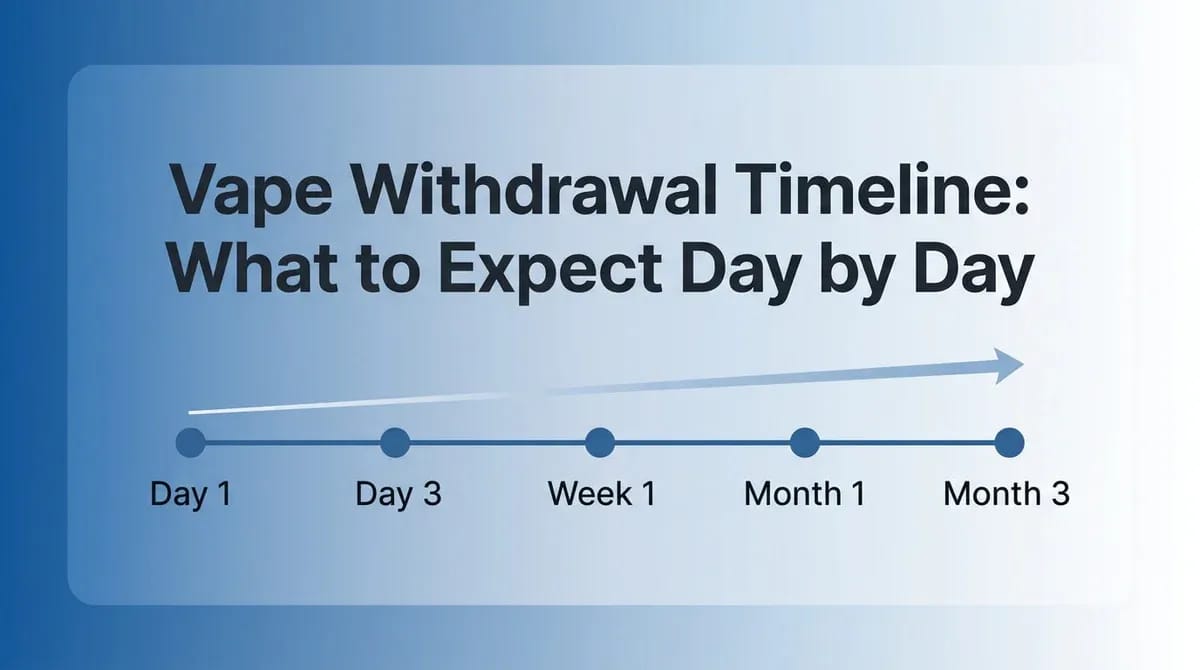
Vape withdrawal peaks around day 3, with the worst physical symptoms — cravings, headaches, irritability, insomnia — hitting hardest in the first week. Most physical symptoms fade within 2 to 4 weeks. Psychological cravings can hang around longer, but they get weaker over time. You won't feel like this forever.
We sell nicotine-free vapes. That means we hear from people mid-withdrawal constantly — customers switching from JUUL, Elf Bar, or Geek Bar to our zero-nicotine devices as a step-down tool. We're not doctors, and this isn't medical advice. But we've seen thousands of people go through this process, and we can tell you what the research says alongside what people actually report. Compare Cyclone Pods vs ARRØ to see which nicotine-free brand fits best.
How Nicotine Withdrawal Works
Nicotine is a stimulant that binds to acetylcholine receptors in your brain, triggering dopamine release. (If you've ever felt that lightheaded nicotine buzz, that's the dopamine spike in action.) When you vape regularly, your brain builds more of these receptors to accommodate the constant nicotine supply. When you stop, those extra receptors are suddenly empty — and your brain's dopamine production hasn't caught up yet.
That gap between what your brain expects and what it's getting is withdrawal. The NIH describes it as a clinically recognized syndrome with seven primary symptoms defined in the DSM-5: irritability, anxiety, depressed mood, difficulty concentrating, increased appetite, insomnia, and restlessness.
Nicotine's half-life is about 2 hours. That means within 4 hours of your last puff, your blood nicotine level drops to half. Within 24 hours, it's nearly gone. Your brain notices fast.
The Vape Withdrawal Timeline: Day by Day
Hours 4-24: First Cravings Hit
The first withdrawal symptoms appear within hours of your last vape. Nicotine leaves your bloodstream quickly — the Cleveland Clinic notes that symptoms begin 4 to 24 hours after your last dose if you've been using nicotine long-term.
What you'll feel:
- Mild cravings that come in waves (typically lasting 15-20 minutes each)
- Restlessness — you don't know what to do with your hands
- Irritability, especially if you can't vape in situations where you normally would
- Slight difficulty concentrating
This stage is manageable for most people. The cravings are present but not overwhelming. The real test comes next.
Days 1-3: Peak Withdrawal
This is the hardest part. Full stop. Days 2 and 3 are consistently reported as the worst by both research and real people going through it.
Your brain's nicotinic receptors are fully unoccupied now, and dopamine production is at its lowest point. The National Cancer Institute reports that anxiety typically builds over the first 3 days and can persist for several weeks.
What you'll feel:
- Intense cravings — stronger and more frequent than day 1
- Headaches — your body adjusting to changed blood flow patterns
- Insomnia or disrupted sleep — nicotine affects your sleep cycle more than most people realize
- Anxiety and irritability — at their peak
- Increased appetite — nicotine suppresses appetite; without it, your hunger signals return full force
- Brain fog — difficulty focusing on tasks that were easy before
This is when most people relapse. If you can get through day 3, you've survived the worst of the physical withdrawal. The CDC reports that only about 7.5% of smokers who try to quit succeed each year without support — and most who fail do so in the first few days.
Days 4-7: The Turn
Physical symptoms start to ease. The cravings are still there, but they're less intense and less frequent. Your body is adjusting.
What changes:
- Cravings drop from constant to episodic — they still hit, but with longer gaps between them
- Headaches usually resolve
- Sleep starts improving (though it may not be back to normal yet)
- Energy levels fluctuate — some days you feel fine, others you're exhausted
- Mood swings continue — irritability and emotional sensitivity are common
The physical withdrawal is winding down. What replaces it is harder to quantify: the psychological pull. You'll reach for your vape at specific moments — after a meal, during a work break, while driving, when stressed. These are habit triggers, not chemical withdrawal, and they take longer to unlearn.
Weeks 2-4: The Mental Game
By week two, most physical symptoms are gone or significantly reduced. A NIH review of nicotine withdrawal studies confirms that most acute physical symptoms resolve within 10-14 days of cessation, though some individuals experience lingering effects for up to a month.
But the psychological withdrawal is just getting started:
- Habit triggers are the main challenge now — specific situations, emotions, or routines that your brain associates with vaping
- Mood swings can persist — some people report feeling more emotional than usual for weeks
- Concentration improves — your brain is rebuilding its baseline dopamine production
- Appetite stabilizes — weight gain of 5-10 pounds is common in the first month of quitting nicotine (it typically levels off)
Month 1-3: New Normal
By the end of the first month, most people report feeling significantly better. Cravings are occasional and manageable — a passing thought rather than an overwhelming urge.
The Truth Initiative reports measurable physical improvements on a clear timeline:
- 20 minutes after quitting: Heart rate and blood pressure begin to drop
- 2 weeks: Circulation and lung function start improving
- 1 month: Cilia in the lungs begin recovering, reducing coughing and shortness of breath
- 3 months: Lung function continues improving; risk of heart attack begins to decrease
The occasional craving may still surface — triggered by a stressful day, a social situation, or seeing someone else vape. But by this point, these are momentary, not consuming. You're through the hard part.
Withdrawal Symptoms at a Glance
| Symptom | When It Starts | When It Peaks | When It Fades |
|---|---|---|---|
| Cravings | 4-24 hours | Days 2-3 | 2-4 weeks (physical), months (psychological) |
| Irritability | Day 1 | Days 2-3 | 2-4 weeks |
| Anxiety | Day 1 | Days 1-3 | 2-4 weeks |
| Headaches | Day 1 | Days 1-3 | 1-2 weeks |
| Insomnia | Day 1 | Days 2-4 | 2-4 weeks |
| Increased appetite | Day 1 | Weeks 1-2 | 4-8 weeks |
| Difficulty concentrating | Day 1 | Days 2-5 | 2-4 weeks |
| Depressed mood | Day 1-3 | Week 1-2 | 4-12 weeks |
What Actually Helps (and What Doesn't)
Evidence-Based Approaches
Nicotine Replacement Therapy (NRT) — patches, gum, and lozenges are FDA-approved and roughly double your chances of quitting successfully compared to willpower alone. The NIH confirms NRT is the most studied and validated approach. If your withdrawal is severe, NRT lets you taper down gradually instead of going cold turkey.
Prescription medications — Varenicline (Chantix) and bupropion (Wellbutrin) are prescription options that reduce cravings by acting on the same brain receptors nicotine targets. Talk to your doctor about whether these are appropriate for you.
Behavioral strategies — Identifying your triggers (coffee, stress, social situations, driving) and building replacement habits for each one. The National Cancer Institute recommends the "4 Ds": Delay (wait 10 minutes — most cravings pass), Deep breathe, Drink water, Do something else. We go deeper on specific methods in our guide to stopping vaping.
Exercise — Even a 15-minute walk reduces nicotine cravings. Exercise triggers the same dopamine pathways that nicotine hijacked, giving your brain a natural substitute during the transition.
Support systems — 1-800-QUIT-NOW (free coaching), the Smokefree.gov quit vaping resources, r/QuitVaping on Reddit, and apps like QuitGenius or Smoke Free all provide structured support.
What Doesn't Help
Willpower alone — "Just stop" works for about 7.5% of people. For the other 92.5%, some form of support or tool dramatically improves the odds. There's no shame in needing help — nicotine is one of the most addictive substances known.
Switching to a "lighter" nicotine vape — Reducing from 5% to 2% nicotine still feeds the addiction. Your brain adjusts to the lower dose and cravings return at the new baseline. It's a slower treadmill, not a path off it.
"One more hit" — A single puff resets the withdrawal clock. Your nicotinic receptors reactivate, dopamine spikes, and you're back to square one. The relapse data is clear: most people who "just have one" are back to regular use within days. Looking for tobacco-free options? Check out chewing tobacco alternatives that actually work.
The Oral Fixation Problem
Here's something the medical withdrawal timelines don't fully capture: for many vapers, the hardest part isn't the nicotine. It's the habit. Looking for tobacco-free options? Check out chewing tobacco alternatives that actually work.
The hand-to-mouth motion. The inhale. The exhale. The pause in your day. After months or years of vaping, these physical rituals are deeply wired. Breaking the chemical dependency and the behavioral habit simultaneously is why quitting vaping is often harder than people expect.
This is where nicotine-free alternatives come in — not as a cure, but as a step-down tool that lets you break the chemical dependency first while keeping the behavioral habit intact. Once the nicotine is gone, you can work on the habit separately.
Two approaches:
Nicotine-free vapes maintain the exact ritual — the inhale, the vapor, the hand-to-mouth motion — without the nicotine. Our nicotine-free vapes use USP-grade VG, PG, and flavoring. No nicotine, no diacetyl, no vitamin E acetate. The Gust Pro ($20, 20,000+ puffs, 14 flavors) and Lightning ($20 kit, $14/pod, 13 flavors) are the two options.
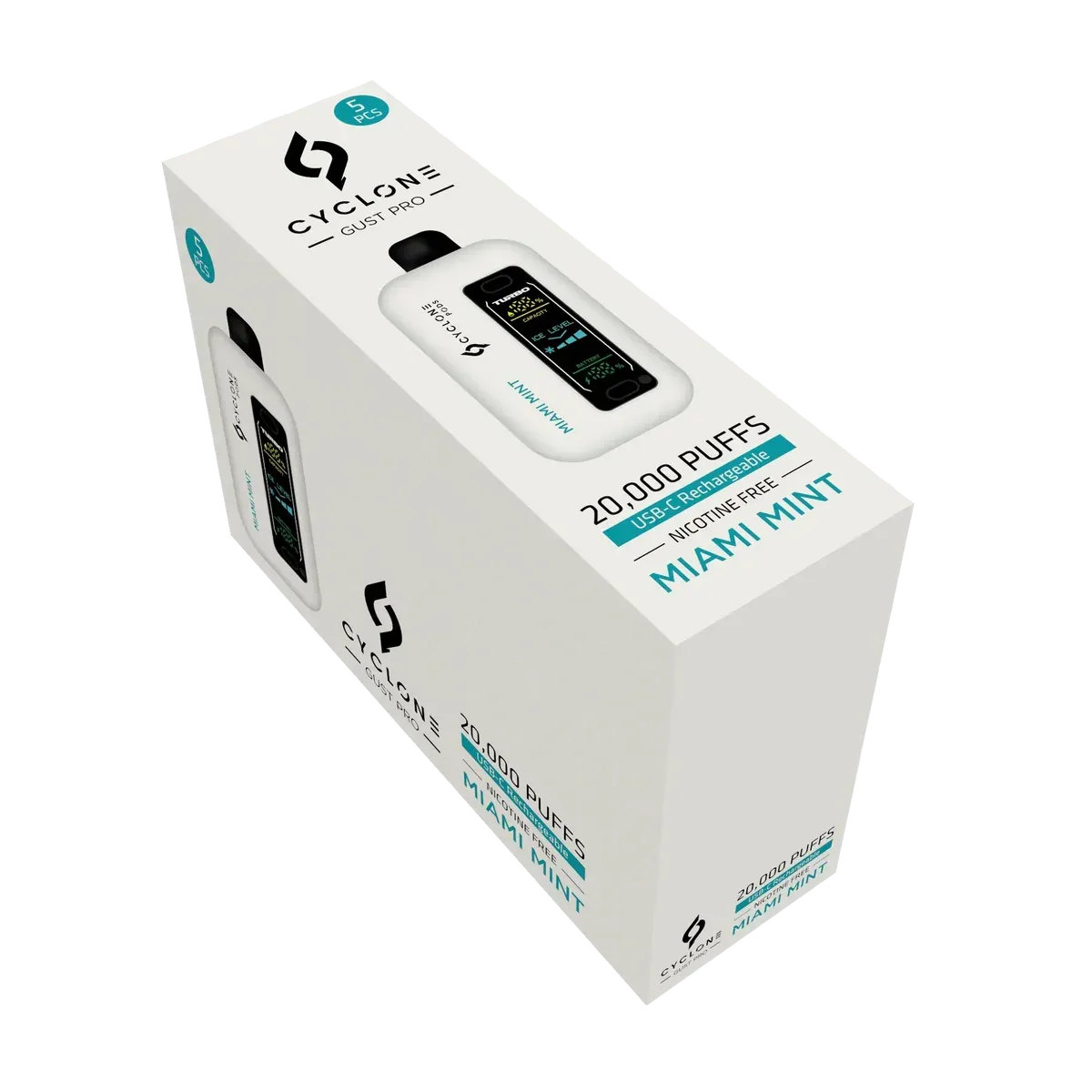
We're not claiming this is medically validated as a cessation tool — the FDA hasn't approved any nicotine-free vape for that purpose. But anecdotally, we hear from customers every week who used our products as part of their transition off nicotine. The ritual gets them through the first few weeks; then they taper off the device too.
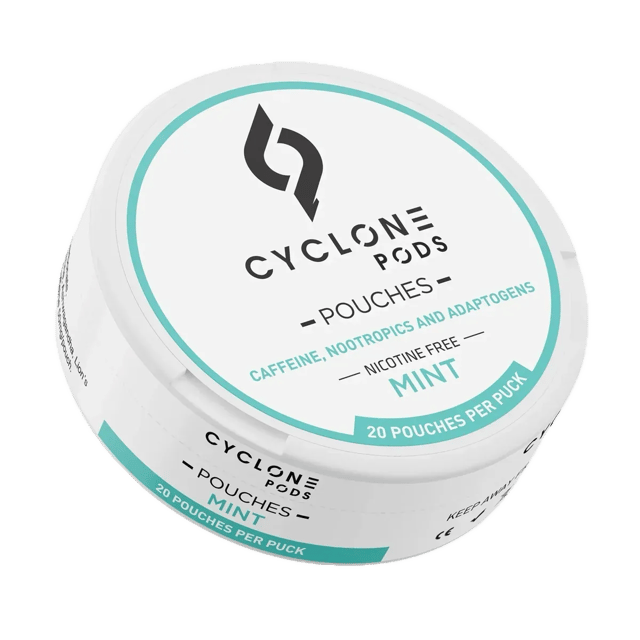
Nicotine-free pouches address the oral fixation without any inhalation. Our energy pouches ($9.99/20 pouches) contain adaptogens like ashwagandha and lion's mane — ingredients with published research on stress reduction. You place one between your gum and cheek and keep it in 20–30 minutes, until the pouch is empty. The physical act of having something in your mouth satisfies the oral fixation.
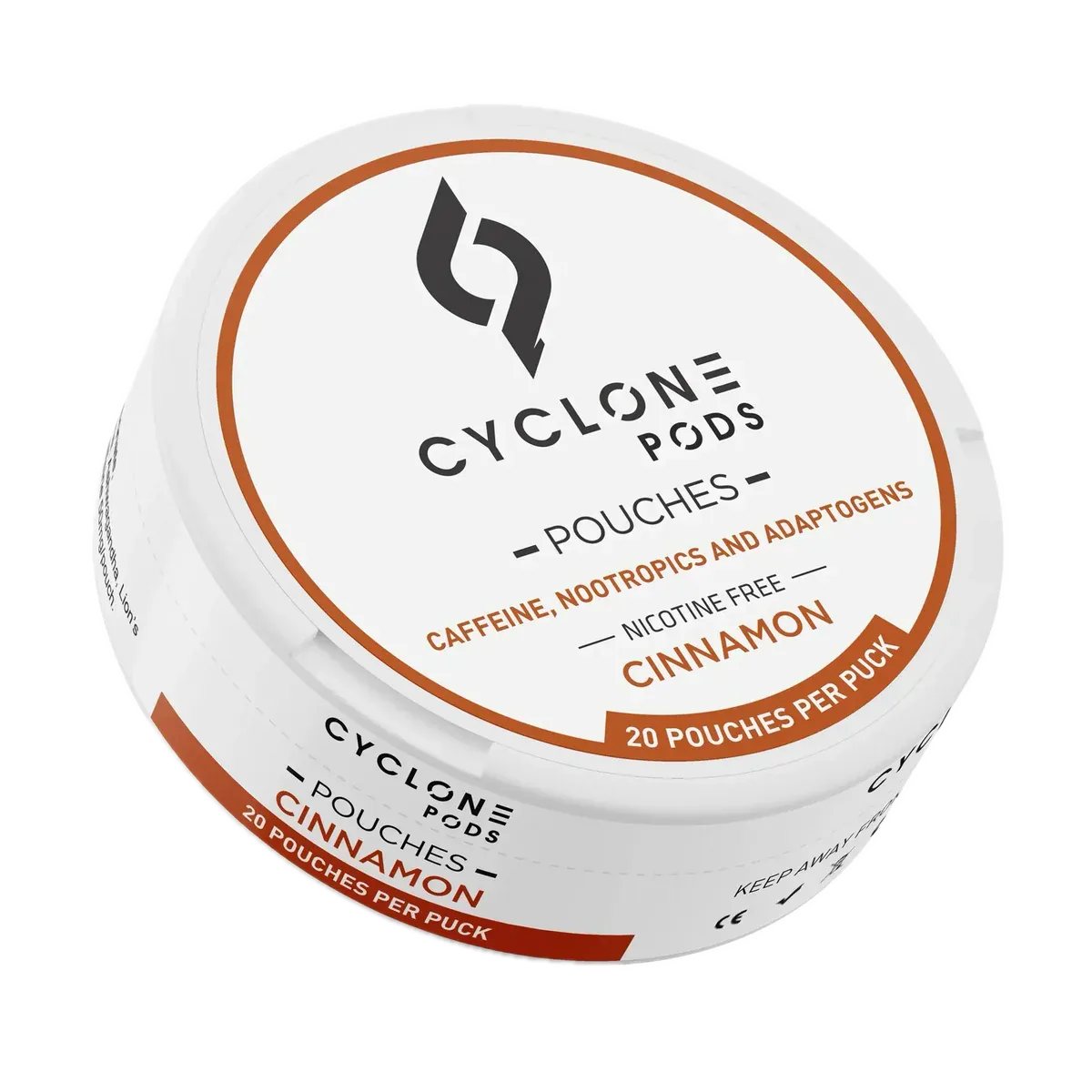
The goal isn't to replace one dependency with another. It's to separate the chemical problem (nicotine) from the behavioral problem (the habit) so you can address them one at a time. If you're not sure which approach fits your situation, our product guide can help you decide.
Cold Turkey vs. Gradual: Which Works Better?
The research is mixed, and frankly, the answer depends on the person.
Cold turkey means stopping all nicotine at once. The withdrawal is more intense but shorter. A meta-analysis published in the NIH found that abrupt cessation is at least as effective as gradual reduction for long-term quit rates — and possibly more effective for some people.
Gradual reduction means tapering down nicotine concentration or frequency over weeks. The withdrawal is milder at each step but stretched over a longer period. Some people prefer this because day 3 is less brutal. The risk: you can plateau at a low dose and never fully quit.
The step-down approach — switching from nicotine vapes to nicotine-free vapes — falls somewhere between the two. You eliminate nicotine entirely (cold turkey on the chemical) while keeping the behavioral habit (gradual on the ritual). This isn't a clinically studied protocol, but it addresses the two components of vaping addiction separately.
When Withdrawal Needs Medical Attention
Most vape withdrawal is uncomfortable but not dangerous. However, contact a healthcare provider if you experience:
- Severe depression or thoughts of self-harm — nicotine withdrawal can worsen pre-existing mental health conditions
- Chest pain or heart palpitations that don't resolve within a few days
- Withdrawal symptoms lasting beyond 4-6 weeks with no improvement
- Inability to function at work, school, or in daily life due to symptoms
These warrant professional support. Nicotine withdrawal is rarely medically dangerous, but your mental health matters, and there's no reason to suffer through it without help.
Resources:
- 1-800-QUIT-NOW — free quit coaching, available 24/7
- Smokefree.gov — quit vaping tools, text support (text DITCHVAPE to 88709)
- Crisis Text Line: Text HOME to 741741
- 988 Suicide & Crisis Lifeline: Call or text 988
If you're exploring alternatives to manage the behavioral side of withdrawal, we've also written about anxiety pens and stress-relief devices and fake cigarette alternatives — both cover tools that address the ritual without nicotine.