In randomised trials, nicotine e-cigarettes helped more people stop smoking than patches, gum or lozenges, when both groups got counselling. A 2026 Cochrane review rates that evidence as high certainty. It does not cover nicotine-free devices, which are not a smoking cessation product, and we make no quitting claims for ours.
This article explains what the trials measured, where the evidence is weak, what the risks are and what other options exist. We rank no devices here. We're not doctors, and this isn't medical advice.
Can Vaping Help You Quit Smoking?
For some adults who smoke, yes. In the Cochrane living review (Lindson et al., 2026, PMID 42642048), nicotine e-cigarettes produced higher quit rates than nicotine replacement therapy (NRT), with the authors rating that finding high certainty. The finding applies to nicotine e-cigarettes used in trials, usually with behavioural support. It is not a promise for any one device or any one person.
The absolute gain over NRT is about four extra quitters per 100 people.
What Did the Trials Find on E-Cigarettes Versus NRT?
Two sources carry most of the weight: one large randomised trial and the Cochrane review that pools many of them.
| Source | Comparison | Result |
|---|---|---|
| Hajek et al., NEJM 2019 (PMID 30699054) | Refillable nicotine e-cigarette starter pack vs NRT of the person's choice; 886 adults in UK NHS stop-smoking services; weekly support for at least 4 weeks | 1-year abstinence 18.0% vs 9.9% (RR 1.83, 95% CI 1.30 to 2.58) |
| Cochrane, Lindson et al., 2026 (PMID 42642048) | Nicotine e-cigarettes vs NRT; 11 studies, 4,114 participants | RR 1.61 (95% CI 1.23 to 2.12), about 4 more quitters per 100; high-certainty evidence |
| Cochrane 2026 | Nicotine e-cigarettes vs behavioural support only or no support; 11 studies, 7,214 participants | RR 1.75 (95% CI 1.39 to 2.20); low-certainty evidence because of risk of bias |
The review covered 80 completed randomised trials with 29,861 participants. It rated 12 studies at low risk of bias and 41 at high risk.
Why Aren't Nicotine-Free Vapes a Cessation Product?
Because the FDA has not approved any nicotine-free vape for smoking cessation, and the best-evidenced trials tested nicotine. In the same Cochrane review, nicotine e-cigarettes probably raised quit rates compared with e-cigarettes without nicotine (RR 1.34, 95% CI 1.05 to 1.69; moderate-certainty evidence). Both groups in those trials used the same kind of device with the same hand-to-mouth routine; the difference was the nicotine.
We make no quitting claims for any Cyclone Pods product. If you want to stop smoking, the options in the section below have trial evidence behind them.
How Reliable Is This Evidence?
Reasonably reliable for the NRT comparison, weaker elsewhere. The review is a living review, so it is updated as trials report. The January 2025 version (PMID 39878158) found RR 1.59 against NRT from 7 studies. The 2026 update, with more trials, found RR 1.61 from 11. The estimate held as the evidence grew.
The limits are real. Most of the gain is measured in adults who also received support, often in stop-smoking services. The comparison with no support is low certainty because many of those studies are at high risk of bias. That is a modest absolute effect, and in Hajek 2019, more than 80% of the e-cigarette group were not abstinent at one year.
Our read: the effect is real, modest and comes from nicotine. That is why we don't sell our devices as quit aids.
What Are the Risks of Vaping to Quit Smoking?
The review found no evidence of serious short-term harm from nicotine e-cigarettes. Serious adverse events were similar to NRT (moderate certainty). The authors also say longer, larger trials are needed to judge safety, and that trial products were regulated nicotine devices. Illicit or THC-containing products may have different harm profiles. Other points from the data:
- Continued use. In Hajek 2019, among people who were abstinent at one year, 80% of the e-cigarette group still used their assigned product, versus 9% of the NRT group.
- Irritation. Throat or mouth irritation was reported by 65.3% of the e-cigarette group and 51.2% of the NRT group.
- Side effects vs support alone. The Cochrane review found low-certainty evidence of more adverse events with nicotine e-cigarettes than with behavioural support alone or no support.
- Dual use. The trials measured people who switched. Using cigarettes and vapes together does not remove the smoking exposure.
- Nicotine dependence. A nicotine e-cigarette replaces one source of nicotine with another. The Cochrane review on quitting vaping (PMID 41288132) found only 15 trials, and low-certainty evidence for any treatment.
For symptoms that new vapers report, see vaping side effects.
What Other Proven Ways Are There to Quit Smoking?
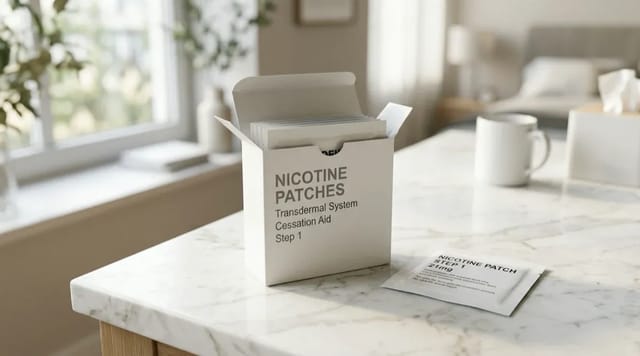
A Cochrane overview of 267 studies with 101,804 participants (Cahill et al., PMID 23728690) found NRT (OR 1.84) and bupropion (OR 1.82) each beat placebo, and varenicline did better still (OR 2.88). A later Cochrane network meta-analysis (PMID 33411338) found behavioural support raises quit rates at six months or longer, with or without medication.
In practice: ask a doctor about NRT, varenicline or bupropion, and call 1-800-QUIT-NOW for free coaching from your state quitline. Smokefree.gov has plans and tools. Expect withdrawal in the first weeks, which our withdrawal timeline walks through, and our quitting-smoking timeline covers what changes in the body afterward.
How Should You Decide?
Treat this as a conversation to have with a clinician, who can weigh your smoking history, other medications and any conditions. Questions worth bringing:
- Have I tried NRT, varenicline or bupropion, and with what support?
- If I try a nicotine e-cigarette, what is my plan to stop smoking completely, and what is my plan for the e-cigarette afterward?
- Do I have a heart or lung condition that changes the advice on nicotine?
Where Do Nicotine-Free Vapes Fit?
They are for adults who want to vape without nicotine, not for quitting. We sell nicotine-free vapes to adults 21 and over, made without added nicotine.