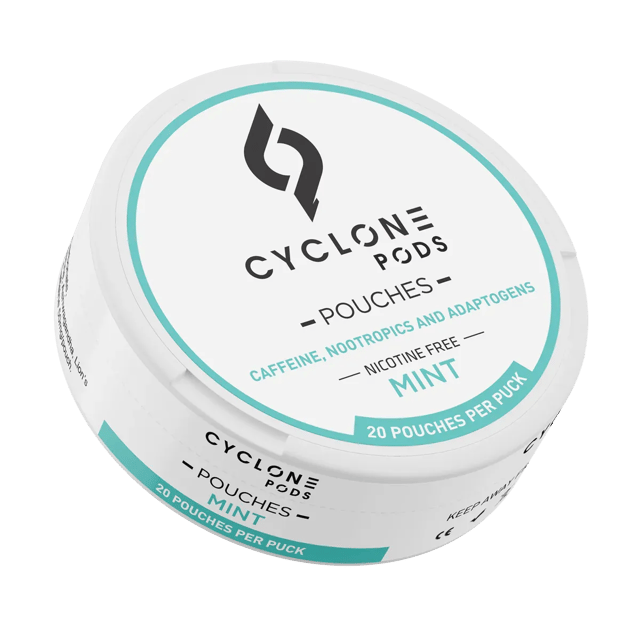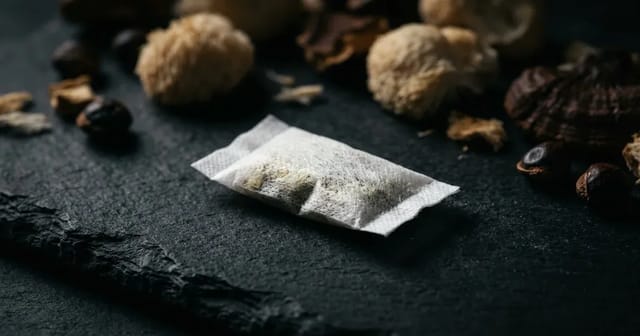
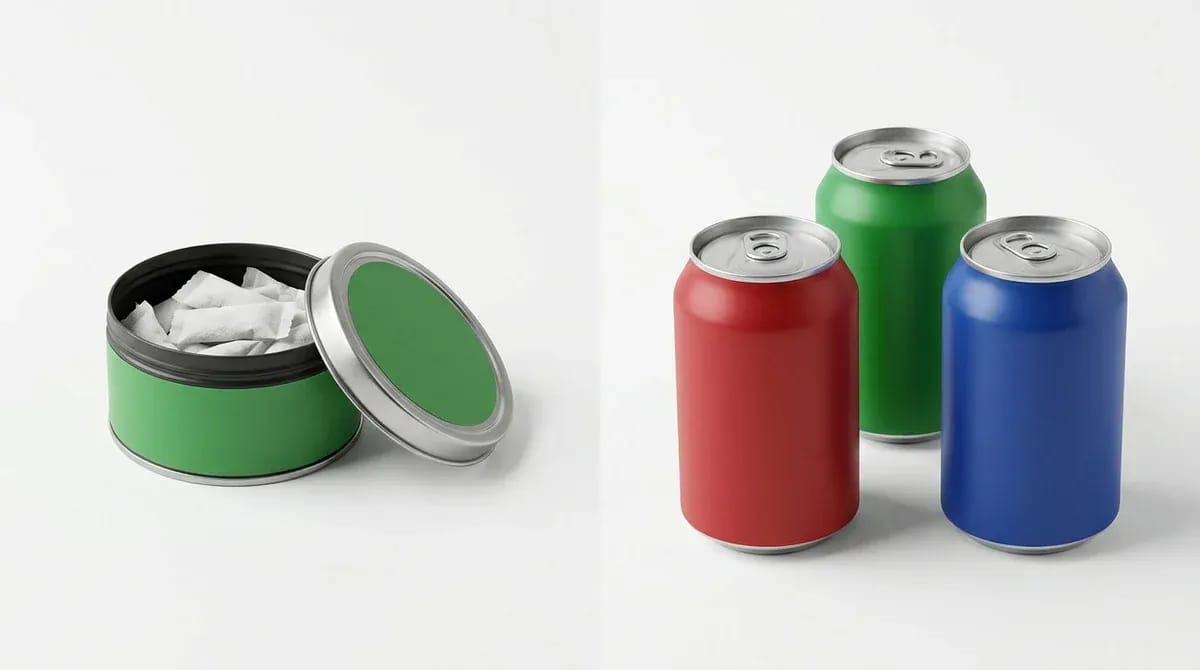
Focus pouches and energy drinks both deliver caffeine, but they work differently, cost differently, and hit your body on different timelines. Focus pouches absorb through the cheek lining (buccal absorption) in 10–15 minutes with no sugar, no carbonation, no plastic bottle. Energy drinks peak 30–45 minutes after drinking, usually deliver 150–300 mg of caffeine per can along with sugar or artificial sweeteners, and cost $3–5 per serving.
We make Focus Pouches, so we're biased. But we're going to lay out the actual trade-offs — dose, onset, price, health impact — and let you decide which one fits your routine.
Focus Pouches vs Energy Drinks: Quick Comparison
| Factor | Focus Pouches | Energy Drinks |
|---|---|---|
| Caffeine dose | 50 mg (measured) | 150–300 mg (variable) |
| Onset | 10–15 min (buccal) | 30–45 min (GI tract) |
| Sugar | Zero | 0–40 g per can |
| Calories | Zero | 0–220 per can |
| Price per serving | $0.50 | $2.50–$5.00 |
| Other actives | 5 adaptogens (Cyclone) | B vitamins, taurine |
| Waste | Small tin + pouches | Aluminum can |
| Portability | Pocket-sized | Bulky, needs fridge |
Caffeine Dose: Precision vs Volume
Focus pouches give you a measured 50 mg dose per pouch. Energy drinks range from 80 mg (a basic Red Bull) to 300 mg (a 16 oz Bang or Monster Ultra). The Mayo Clinic's safe daily caffeine limit for adults is 400 mg — three energy drinks can easily push you past that without you noticing, especially if you also drink coffee.
If you're stacking caffeine sources (coffee at 7 AM, energy drink at 10, another at 2 PM), portion-controlled pouches make it easier to track. One pouch = 50 mg. Two pouches = 100 mg. Simple math. Energy drinks vary so widely that tracking caffeine intake by can is basically guesswork.
Onset: Why Buccal Absorption Is Faster
When you drink an energy drink, caffeine has to pass through the stomach, the small intestine, and first-pass liver metabolism before reaching the bloodstream. Peak plasma caffeine from oral ingestion is typically 30–45 minutes after swallowing.
A pouch bypasses digestion. The cheek lining (buccal mucosa) absorbs caffeine directly into the bloodstream through a capillary-rich membrane. Onset is typically 10–15 minutes. This is the same delivery mechanism sublingual medications use for rapid absorption.
Practical difference: if you have a meeting in 20 minutes and want to feel sharp when it starts, a pouch works. An energy drink won't hit its peak until after the meeting is over.
Sugar, Calories, and the Crash
A 16 oz Red Bull has 54 g of sugar — more than a can of Coke. Even "sugar-free" energy drinks contain artificial sweeteners (sucralose, acesulfame K) that some research has linked to disrupted glucose regulation. Focus Pouches have zero sugar, zero calories, zero artificial sweeteners.
The caffeine crash you feel 3–4 hours after an energy drink is often a blood-sugar crash, not a caffeine crash. The sugar spike creates an insulin response, your blood glucose drops, and you feel tired. Pouches don't cause this because there's no sugar to metabolize.
Adaptogens: What Focus Pouches Have That Energy Drinks Don't
Our Focus Pouches include five research-backed adaptogens alongside the caffeine:
- Ashwagandha — a 2019 randomized controlled trial (PMID: 32021735) showed significant reductions in stress and anxiety scores over eight weeks.
- Lion's Mane — a 2019 study (PMID: 31413233) showed cognitive improvement in adults over 50 after 12 weeks.
- Reishi — traditional use for immune support and stress tolerance, with growing clinical literature.
- Cordyceps — research supporting energy metabolism and exercise performance.
- Bacopa Monnieri — multiple trials showing memory and attention improvements at sustained doses.
Energy drinks typically add B vitamins (claimed to boost energy, though research on supplemented B vitamins without deficiency is weak) and taurine (inconclusive cognitive benefit in isolation). You're mostly paying for the caffeine and the marketing. We publish our full ingredient lists and A2LA-accredited lab results — ask your energy drink brand if they do the same.
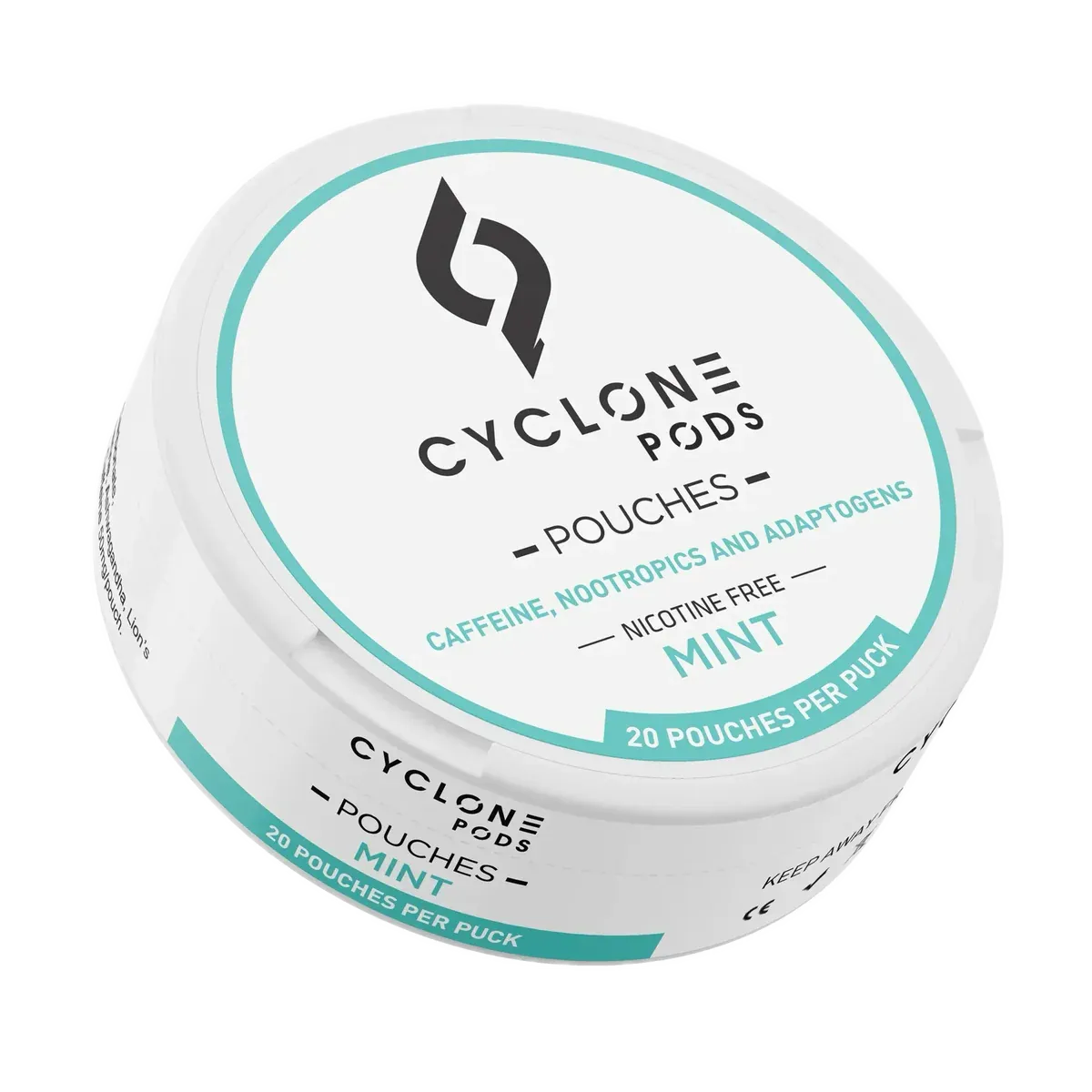
Ingredient-by-Ingredient Breakdown
The adaptogens overview above covers the "what." Here's the full side-by-side with energy drink ingredients, including dosing context and what each compound actually does in your body.
| Ingredient | Found In | What It Does | Notes |
|---|---|---|---|
| Guarana (caffeine) | Focus Pouches (50 mg) | CNS stimulant. Blocks adenosine receptors, increases alertness and reaction time. | Guarana releases caffeine more gradually than synthetic caffeine due to tannin content. |
| Ashwagandha | Focus Pouches | Adaptogen. Associated with lower cortisol and reduced stress-related fatigue in clinical trials. | A systematic review of 5 human trials found greater anxiety and stress improvements than placebo (PMID: 25405876). |
| Lion's Mane | Focus Pouches | Promotes nerve growth factor (NGF) synthesis in laboratory studies. Associated with memory and neuroprotection. | A 2019 12-week trial in adults over 50 found improved cognitive scores (PMID: 31413233). |
| Reishi | Focus Pouches | Immune modulation, stress tolerance. May reduce fatigue in chronic stress states. | Long history in traditional medicine. Clinical evidence growing but still limited for cognitive-specific claims. |
| Cordyceps | Focus Pouches | Studied for cellular energy production (ATP synthesis) and oxygen utilization during physical and mental effort. | Most studied for exercise performance. Cognitive benefits are secondary to improved energy metabolism. |
| Bacopa Monnieri | Focus Pouches | Associated with improved memory consolidation, attention, and information processing speed in clinical trials. | Multiple RCTs show benefits at sustained doses. Effects compound over weeks, not immediate. |
| Caffeine (synthetic) | Energy drinks: Red Bull 80 mg/8.4 oz, Monster 160 mg/16 oz, Celsius 200 mg/12 oz | Same mechanism as guarana caffeine. Higher dose = stronger effect + higher crash risk. | Most energy drinks use synthetic caffeine anhydrous. Faster absorption, sharper spike. |
| Taurine | Energy drinks (1,000–2,000 mg) | Amino acid involved in bile salt formation, cell volume regulation, and antioxidant defense. | Despite prominent placement on energy drink labels, published reviews have not found consistent cognitive enhancement benefits from supplemental taurine at these doses. |
| B Vitamins (B3, B6, B12) | Energy drinks (100–250% DV) | Coenzymes in energy metabolism. Essential for converting food to ATP. | Supplementing above adequate intake does not boost energy in non-deficient adults. You excrete the excess. |
| Sugar / Sucralose | Energy drinks (0–54 g sugar or artificial) | Quick energy (sugar) or zero-cal sweetness (sucralose). Sugar provides a glucose spike followed by an insulin-driven crash. | Focus Pouches contain neither. Zero sugar, zero artificial sweeteners. |
Energy drinks load you with caffeine, sugar, and filler ingredients that sound impressive on labels but lack strong clinical backing. Focus Pouches pair a controlled caffeine dose with five compounds that have published research behind them — and skip everything else. For a deeper look at how buccal delivery works for these ingredients, see our guide to how Focus Pouches work.
Cost per Serving: The Annual Math
We covered the per-serving numbers above, but here's what the math looks like over a month and a year — because the gap compounds fast.
| Product | Per Serving | Per Month (daily) | Per Year (daily) | Caffeine per $ |
|---|---|---|---|---|
| Focus Pouches | $0.50 | $15 | $182 | 100 mg/$1 |
| Drip coffee (home) | $0.25–$0.75 | $8–$23 | $91–$274 | ~130–400 mg/$1 |
| Café coffee | $3–$6 | $90–$180 | $1,095–$2,190 | ~30–65 mg/$1 |
| Monster Energy (16 oz, 160 mg) | $2.50–$3.50 | $75–$105 | $913–$1,278 | ~46–64 mg/$1 |
| Red Bull (8.4 oz, 80 mg) | $2.50–$3.50 | $75–$105 | $913–$1,278 | ~23–32 mg/$1 |
| Celsius (12 oz, 200 mg) | $2.50–$3.50 | $75–$105 | $913–$1,278 | ~57–80 mg/$1 |
Home-brewed coffee is the only option cheaper per serving — but it doesn't come with adaptogens, and it requires a kitchen. If you're buying caffeine outside the house, pouches are 5–7x cheaper per serving than cans or cups. Over a year, that's $700–$1,000 back in your pocket. See our Certificate of Analysis for what goes into each pouch.
One more angle: caffeine per dollar. Red Bull gives you roughly 25 mg of caffeine per dollar. Focus Pouches give you 100 mg per dollar. You're paying for the can, the carbonation, the refrigeration, and the marketing — not the caffeine. For more on how much caffeine is safe per day, we break down the research in a separate guide.
When Energy Drinks Actually Win
We're going to be honest: energy drinks have real advantages in a few situations.
High-dose use cases: If you need 200+ mg of caffeine at once — long-haul driving, extreme endurance training, all-nighters — one can delivers that dose in a single serving. You'd need 4 pouches for the same effect, which is less convenient.
Hydration: Pouches don't hydrate. If you're exercising or in hot weather, liquid matters. An energy drink or sports drink covers both needs.
Social context: Drinking a Celsius in a gym or a Monster at a gas station is normalized. Pouching in some social contexts still raises questions.
Immediate flavor: Cold, carbonated, sweet. Pouches deliver a subtle mint/peach/cinnamon flavor but don't replicate the sensory experience of a cold drink.
Our Take
If your goal is consistent, portion-controlled daily caffeine with adaptogens and no sugar or calories, Focus Pouches are the better format. If you need occasional high-dose caffeine, hydration, or the sensory experience of a cold drink, energy drinks still have a role.
Most of our customers aren't quitting energy drinks entirely — they're replacing the 2 PM can with a pouch. The daily volume drops, calories drop, sugar drops, and they save $700+ per year. That's the realistic use case.
Browse nicotine-free vapes if you want the flavor experience, or grab a Focus Pouches pack to try the pouch format for yourself.
For more on caffeine delivery formats, see our best caffeine pouches comparison and our caffeine vapes vs pouches breakdown. Also worth reading: how to avoid caffeine jitters regardless of delivery format.
When to Use Each: Scenario Guide
Different situations call for different tools. Here's how we'd think about it.
Morning Routine (6–8 AM)
If you already drink coffee in the morning, adding an energy drink on top is caffeine stacking — easy to overshoot 400 mg before noon. A Focus Pouch adds a measured 50 mg alongside your coffee without the extra sugar or volume. It's also faster: pouch in while the coffee brews, and the caffeine is already absorbing before your first sip.
Pre-Workout (30–60 min before exercise)
Energy drinks win on raw caffeine dose here. If your pre-workout protocol calls for 200 mg, one can covers it. Pouches work better for moderate-intensity sessions where 50–100 mg is sufficient — yoga, a lunch run, lifting without maxing out. Honest caveat: if you need hydration during the workout, a pouch doesn't replace liquid intake. Bring water.
Afternoon Focus (1–4 PM)
This is where pouches are designed to shine. The post-lunch energy dip is real — your circadian rhythm dips, blood sugar stabilizes after a meal, and adenosine builds up. A single 50 mg pouch bridges the gap without disrupting sleep later. A 200 mg energy drink at 2 PM means caffeine is likely still in your system at 10 PM (caffeine half-life averages 5–6 hours). That afternoon energy drink may be the reason you can't fall asleep at midnight.
Late-Night Study or Work (10 PM+)
Neither option is ideal — we're not going to pretend otherwise. Caffeine after 6 PM disrupts sleep architecture regardless of source. But if you're pulling an all-nighter, the question is damage control. A 50 mg pouch is easier to manage than a 200 mg energy drink because you can dose incrementally: one pouch at 10 PM, maybe another at 1 AM if needed. With energy drinks, you're locked into the full 200 mg dose, and the sugar crash adds cognitive fog on top of sleep deprivation.
Social Situations and On-the-Go
Energy drinks are more socially normalized — we acknowledged that above. But pouches are more discreet and don't require a fridge, a can, or a trash can. In a meeting, a classroom, or on a plane, a pouch works where a can doesn't. Four flavors — Cinnamon, Mint, Peach, and Wintergreen — cover most taste preferences without the conspicuousness of cracking open a Monster.