The FDA recommends no more than 400 mg of caffeine per day for healthy adults — roughly four 8 oz cups of drip coffee or eight Cyclone Focus Pouches. Beyond that threshold, side effects like anxiety, insomnia, rapid heartbeat, and digestive issues become significantly more likely. A 2017 systematic review of 381 studies confirmed that 400 mg/day poses no increased risk for healthy adults, while higher intakes correlated with cardiovascular, reproductive, and behavioral adverse effects (Wikoff et al., 2017; PMID: 28603504).
But "too much" depends on who you are. Pregnant women, adolescents, people with anxiety disorders, and anyone on certain medications all have lower thresholds. Here's what the science says — and how different caffeine sources compare.
How Much Caffeine Is Too Much Per Day?
For most healthy adults, the line is 400 mg per day. That's the FDA's official guidance, backed by the European Food Safety Authority (EFSA) and the systematic review above. It's not a hard cutoff — individual tolerance varies based on genetics, body weight, and habituation — but it's the best population-level recommendation we have.
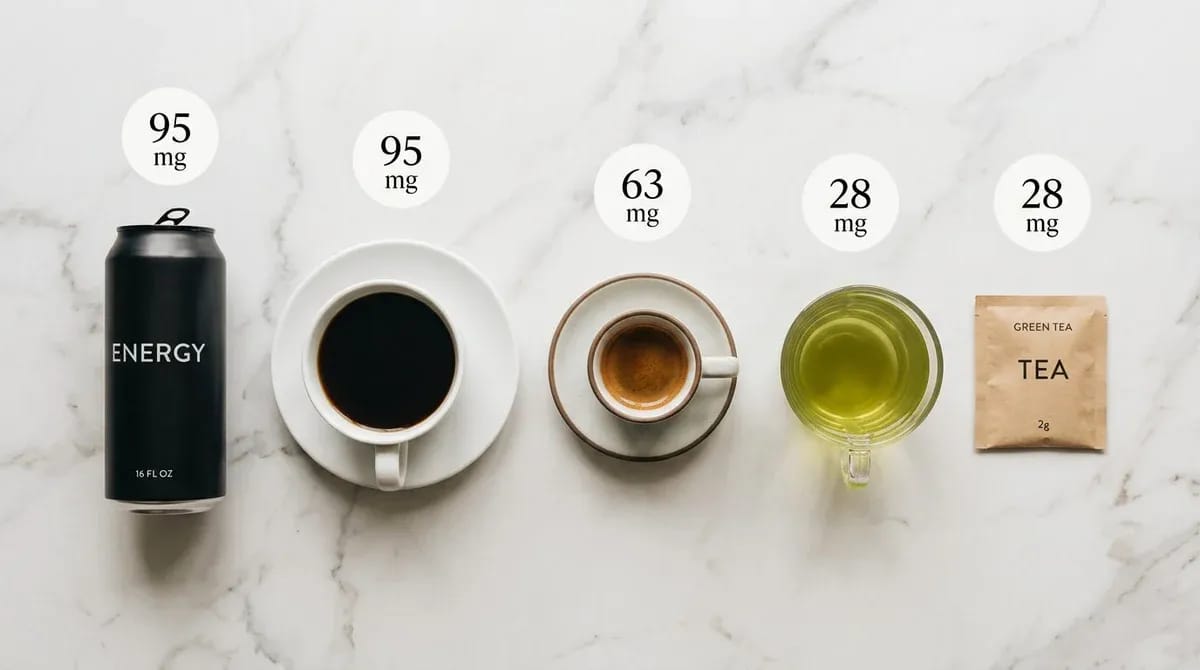
Here's what 400 mg actually looks like across common sources:
| Source | Caffeine (mg) | Sugar | Calories | Portability |
|---|---|---|---|---|
| Espresso (1 shot, 1 oz) | 63 | 0 g | 3 | Low |
| Drip coffee (8 oz) | 95 | 0 g | 2 | Medium |
| Energy drink (16 oz) | 80–300 | 25–55 g | 110–280 | Medium |
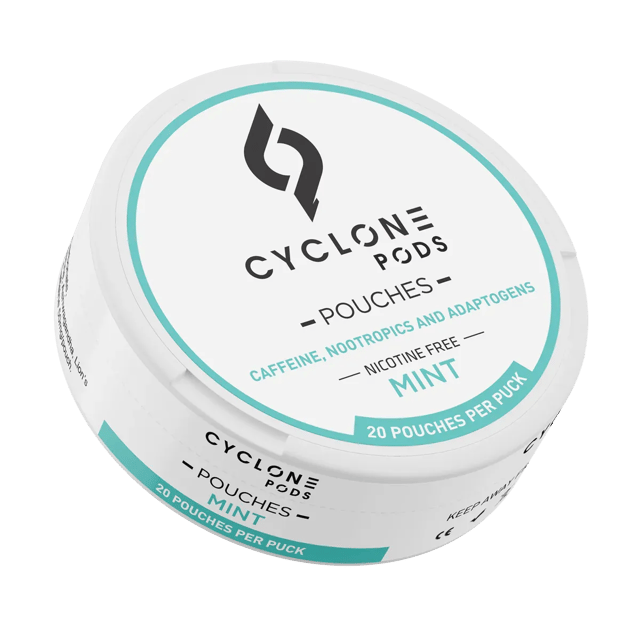
| Cyclone Focus Pouches | 50 | 0 g | 5 | High |
| Green tea (8 oz) | 28 | 0 g | 2 | Medium |
| Cola (12 oz) | 34 | 39 g | 140 | Medium |
| Dark chocolate (1 oz) | 24 | 7 g | 170 | High |
The practical issue isn't usually a single source — it's stacking. A morning coffee (95 mg), an afternoon energy drink (150 mg), a pre-workout (200 mg), and a chocolate bar (24 mg) puts you at 469 mg before you've consciously tried to overcaffeinate.
What Happens When You Have Too Much Caffeine?
Caffeine toxicity isn't binary. Symptoms scale with dose:
Mild overconsumption (400–600 mg):
- Restlessness and jitteriness
- Increased heart rate
- Stomach upset or acid reflux
- Difficulty falling asleep
- Frequent urination
Moderate overconsumption (600–1,000 mg):
- Heart palpitations
- Anxiety and panic symptoms
- Muscle tremors
- Headache
- Nausea or vomiting
Severe toxicity (1,200+ mg):
- Seizures
- Cardiac arrhythmia
- Vomiting
- Emergency medical territory — call 911
Most people will never hit severe toxicity through normal consumption. The danger zone is concentrated caffeine products — caffeine powder and liquid caffeine supplements, which the FDA has specifically warned against. A single teaspoon of pure caffeine powder contains roughly 3,200 mg — eight times the daily limit (FDA, 2018).
How Much Caffeine Is Safe During Pregnancy?
The American College of Obstetricians and Gynecologists (ACOG) recommends pregnant women limit caffeine to 200 mg per day — half the standard adult limit. That's about two 8 oz cups of coffee.
Higher intake has been associated with increased risk of miscarriage and low birth weight in multiple studies, though the evidence isn't perfectly consistent. The 200 mg threshold is the conservative consensus — and when it comes to pregnancy, conservative is the right call.
Breastfeeding women should also stay under 200 mg. Caffeine passes into breast milk and can cause irritability and sleep disruption in infants.
Important: If you're pregnant or breastfeeding, talk to your doctor before using any caffeinated supplement — including caffeine pouches, pre-workouts, or herbal energy products. Some adaptogenic ingredients (ashwagandha, for example) have limited pregnancy safety data.
How Much Caffeine Is Safe for Teenagers?
Adolescents metabolize caffeine differently than adults. The American Academy of Pediatrics (AAP) recommends:
- Under 12: Avoid caffeine entirely
- Ages 12–18: No more than 100 mg per day (roughly one cup of coffee)
The European Food Safety Authority (EFSA) uses a weight-based guideline: 3 mg per kg of body weight. For a 130 lb (59 kg) teenager, that's about 177 mg — still well under the adult limit.
The concern isn't just the stimulant effect. Adolescent brains are still developing, and chronic caffeine use during this window may affect sleep architecture, anxiety levels, and cardiovascular development. Energy drinks are the primary culprit — a single 16 oz can delivers 150–300 mg, blowing past the adolescent limit in one serving.
Caffeine and Medications: What to Watch For
Caffeine is metabolized primarily by the liver enzyme CYP1A2. Several common medications inhibit this enzyme, meaning caffeine stays in your system longer and hits harder:
- Ciprofloxacin (antibiotic) — can increase caffeine's half-life by 40–60%
- Fluvoxamine (SSRI for OCD/anxiety) — dramatically inhibits CYP1A2; even one cup of coffee can feel like three
- Oral contraceptives — roughly double caffeine's half-life
- Cimetidine (heartburn medication) — slows caffeine clearance
Caffeine also interacts with stimulant medications (Adderall, Ritalin) — stacking them increases the risk of elevated heart rate, anxiety, and sleep disruption. If you're on any prescription medication, check with your pharmacist about caffeine interactions before establishing a daily routine.
Conversely, smoking induces CYP1A2, making smokers metabolize caffeine roughly twice as fast as non-smokers. If you quit smoking and keep your caffeine intake the same, you'll suddenly feel it much more strongly — a surprise many people don't anticipate.
Does Caffeine Cause Anxiety?
It can — and for some people, even moderate doses trigger it. Caffeine blocks adenosine receptors in the brain, which increases alertness but also stimulates the release of adrenaline and cortisol. In people with anxiety disorders or panic disorder, this amplified stress response can provoke or worsen symptoms.
Research consistently links higher caffeine intake to increased anxiety symptoms in susceptible individuals. The general pattern: moderate doses (under 200 mg) rarely cause issues, while heavier consumption (above 400 mg) frequently does. If you're anxiety-prone, staying in the 100–200 mg range is a reasonable starting point.
If you experience caffeine-related anxiety, two options:
- Reduce dose — switch from coffee (95 mg) to lower-caffeine sources like green tea (28 mg) or caffeine pouches (50 mg)
- Pair with L-Theanine — this amino acid (found in green tea and some nootropic supplements, though not in Cyclone Focus Pouches) smooths caffeine's stimulant edge without reducing alertness
How Long Does Caffeine Stay in Your System?
Caffeine's half-life in healthy adults is approximately 5 hours — meaning if you consume 200 mg at noon, you'll still have ~100 mg active at 5 PM and ~50 mg at 10 PM. That's why sleep researchers recommend a caffeine cutoff 8–10 hours before bedtime.
Several factors extend caffeine's half-life:
- Pregnancy: Half-life increases to 9–11 hours in the third trimester
- Oral contraceptives: Roughly double the half-life
- Liver conditions: Can extend half-life to 96+ hours
- Genetics: CYP1A2 gene variants make some people "slow metabolizers" — caffeine hits harder and lasts longer
If you're a slow metabolizer (you know because even one cup makes you wired for hours), your effective daily limit is lower than 400 mg — possibly closer to 200 mg.
Caffeine and Exercise: How Much for Performance?
Caffeine is one of the most studied ergogenic aids in sports science. The International Society of Sports Nutrition (ISSN) position stand identifies 3–6 mg/kg of body weight as the effective performance dose — taken 30–60 minutes before exercise.
For a 170 lb (77 kg) person, that's 231–462 mg. The sweet spot for most people is around 200–300 mg pre-workout — enough to improve endurance, reaction time, and perceived effort without crossing into jitter territory.
The catch: many pre-workout supplements contain 200–400 mg of caffeine per serving. If you've already had morning coffee (95 mg) and then take a pre-workout (300 mg), you're at 395 mg before lunch — essentially maxing out your daily budget in two beverages. Lower-caffeine options like caffeine pouches (50 mg) give you more room to spread intake across the day.
Caffeine Pouches vs Coffee vs Energy Drinks
Not all caffeine delivery is equal. How you consume it affects absorption speed, crash potential, and total intake control.
Coffee delivers caffeine through the GI tract. Onset takes 20–45 minutes, peaks around 60 minutes. Relatively consistent dosing if you stick to the same brew. Downside: acid reflux, teeth staining, not portable for meetings or workouts.
Energy drinks combine caffeine with sugar and other stimulants (taurine, guarana, B-vitamins). Faster spike, harder crash. The sugar load (25–55 g per can) adds empty calories and blood glucose volatility. A 2026 review in the American Journal of Medicine noted that randomized trials in young people document acute changes in blood pressure and heart rhythm at commercially available doses (PMID: 42556491).
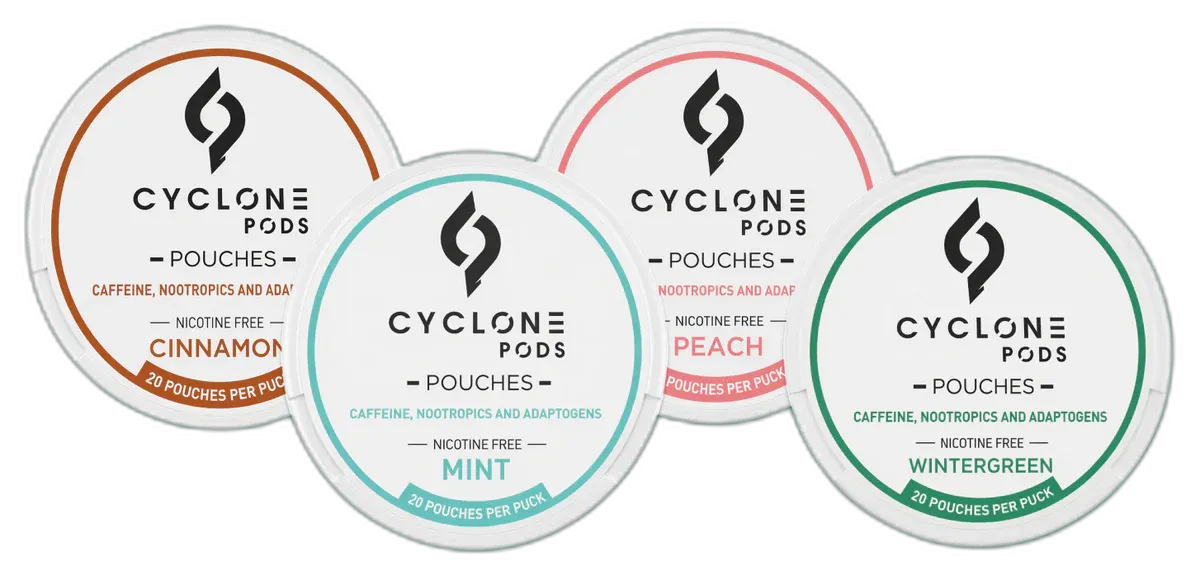
Caffeine pouches have zero sugar, zero calories, fully portable. Cyclone Focus Pouches add adaptogenic mushrooms and nootropics (ashwagandha, lion's mane, reishi, cordyceps, bacopa monnieri) alongside 50 mg of caffeine (label) from guarana.
See our full breakdown: Best Caffeine Pouches in 2026.
How to Reduce Caffeine Intake Without Withdrawal
Caffeine withdrawal is real and unpleasant — headaches, fatigue, irritability, difficulty concentrating. Symptoms typically start 12–24 hours after your last dose and peak at 1–2 days. The good news: they're avoidable if you taper gradually.
The taper protocol:
- Week 1: Cut your daily intake by 25%. If you drink 4 cups of coffee (380 mg), drop to 3 cups (~285 mg).
- Week 2: Cut another 25%. Down to ~210 mg.
- Week 3: Cut to your target level. If that's 100–200 mg, switch to lower-caffeine sources — green tea, nootropic pouches, or half-caf coffee.
- Week 4: Stabilize. Your adenosine receptors will have recalibrated by now.
Substitution strategies:
- Replace one coffee with green tea (you still get caffeine, just less)
- Use nootropic energy pouches for the oral ritual + controlled caffeine (50 mg vs coffee's 95 mg)
- Consider adaptogens like ashwagandha, which has been associated with reduced cortisol levels in a 2019 randomized controlled trial (PMID: 31517876) — some people find this helps with the transition
- Hydrate aggressively — dehydration mimics caffeine withdrawal symptoms
The Bottom Line
400 mg per day is the safe upper limit for most healthy adults. Under 200 mg for pregnant women and adolescents. If you have anxiety, heart conditions, or are a slow caffeine metabolizer, err on the lower end.
The bigger issue isn't any single caffeine source — it's unconscious stacking from multiple sources throughout the day. Track your intake for a week. Most people are surprised how quickly it adds up.
If you want controlled caffeine with cognitive-support ingredients and zero sugar, Cyclone Focus Pouches are labeled at 50 mg per pouch — enough to feel it, low enough to use multiple times daily without overshooting. New to them? Start with the 4-flavor trial pack. Each pouch also includes ashwagandha, lion's mane, cordyceps, bacopa monnieri, and reishi — adaptogens with clinical evidence behind them. Lab tested by Certified Laboratories (A2LA / ISO 17025 accredited).