On average, it takes 10 to 15 puffs to smoke one cigarette — so a pack of 20 runs roughly 200 to 300 puffs. But that "puff count" answer is almost never what people actually want. If you're comparing a vape to cigarettes, the number that matters is nicotine, not draws — and by that measure a single cigarette is closer to 30 to 50 puffs of a 5% (50 mg/mL) vape. The two numbers are wildly different, and mixing them up is why every answer you find online seems to contradict the last one.
We make zero-nicotine vapes, so we have a stake in one clean fact here: if a vape contains 0 mg of nicotine, no number of puffs equals a cigarette in the way that counts. You get the hand-to-mouth ritual and none of the drug. Here's the honest math on both questions.
How many puffs does it take to smoke one cigarette?
Counting draws, a cigarette lasts about 10 to 15 puffs over five to eight minutes. That's the figure Google's AI Overview leads with, and it's the consensus across vape retailers, forums, and quit-smoking sites. Call it ~12 puffs as a working average.
It's a soft number because a cigarette burns whether you pull on it or not, so how you smoke changes the count:
- Deep, long drags burn the tobacco down faster — fewer, bigger puffs.
- Short, frequent sips stretch a cigarette to the higher end.
- King-size or 100s give a few extra puffs than a standard cigarette.
If all you're asking is "how many draws until this cigarette is done," 10 to 15 is your answer. But a vape puff and a cigarette puff don't deliver the same thing, which is where this gets interesting.
The real question is nicotine, not puffs
A cigarette contains roughly 10 to 12 mg of nicotine, of which a smoker actually absorbs about 1 to 1.5 mg — the rest burns off or stays in the butt. A vape puff delivers nicotine too, but how much depends entirely on the e-liquid's strength, measured in milligrams per milliliter (mg/mL) or as a percentage.
That's the variable nobody controls for. "How many puffs equal a cigarette" has no fixed answer because a puff of 50 mg/mL salt nic and a puff of 3 mg/mL freebase are not remotely the same dose. So there are two separate ratios, and honest math keeps them apart:
| What you're comparing | One cigarette ≈ | What it measures |
|---|---|---|
| Puffs to finish it (draws) | 10–15 vape puffs | The physical hand-to-mouth motion |
| Nicotine, 5% / 50 mg/mL vape | ~30–50 puffs | Roughly matched nicotine dose |
| Nicotine, 2% / 20 mg/mL vape | ~60–100 puffs | Half the strength, so twice the puffs |
| Nicotine, 0 mg vape | Never | Zero nicotine, no matter the puff count |
How many cigarettes are in a whole disposable vape?
This is the version most searches are really after — "10,000 puffs equals how many cigarettes?" Work it by nicotine content, not puff count, and the numbers are large. The math is simple: total nicotine in the device, divided by the ~12 mg in a cigarette.
A disposable holds a set volume of e-liquid at a set strength. Multiply them and you get the total nicotine:
| Disposable (at 5% / 50 mg/mL) | Approx. e-liquid | Total nicotine | ≈ cigarettes (by content) |
|---|---|---|---|
| 600-puff bar | ~2 mL | ~100 mg | ~8 (under half a pack) |
| 5,000-puff | ~10 mL | ~500 mg | ~42 (about 2 packs) |
| 10,000-puff | ~18 mL | ~900 mg | ~75 (nearly 4 packs) |
| 20,000-puff | ~20 mL | ~1,000 mg | ~83 (about 4 packs) |
| 50,000-puff | ~20 mL | ~1,000 mg | ~83 (about 4 packs) |
How Many Cigarettes Is a 50,000-Puff Vape?
About 83 by nicotine content, if it is a 5% device, which is the same as a 20,000-puff bar. The iJoy XP50000, one of the first 50K disposables, holds 20 mL of 5% e-liquid (retailer listing, checked October 1, 2026). The puff rating went up; the tank barely did. A zero-nicotine device comes to zero cigarettes however long it lasts: our 50,000-puff Gust Core holds 18 mL at 0 mg.
An Australian health group, Clear the Air, ran the same content-based math and landed in the same place: a 6,000-puff 5% vape holds about as much nicotine as three packs of cigarettes. Treat these as content comparisons, not "you'll absorb this much" — absorbed nicotine is lower and depends on how you vape. But they explain why a single high-strength disposable can carry the nicotine of dozens of cigarettes, and why running through one in two days is not the light habit it feels like.
Where zero-nicotine vapes land
Every ratio above collapses to one number when the nicotine is zero. Our nicotine-free vapes contain 0 mg, so in nicotine terms no quantity of puffs equals a cigarette — not 15, not 15,000. What transfers is the part that's a habit rather than a chemical: the draw, the exhale, the something-to-reach-for.
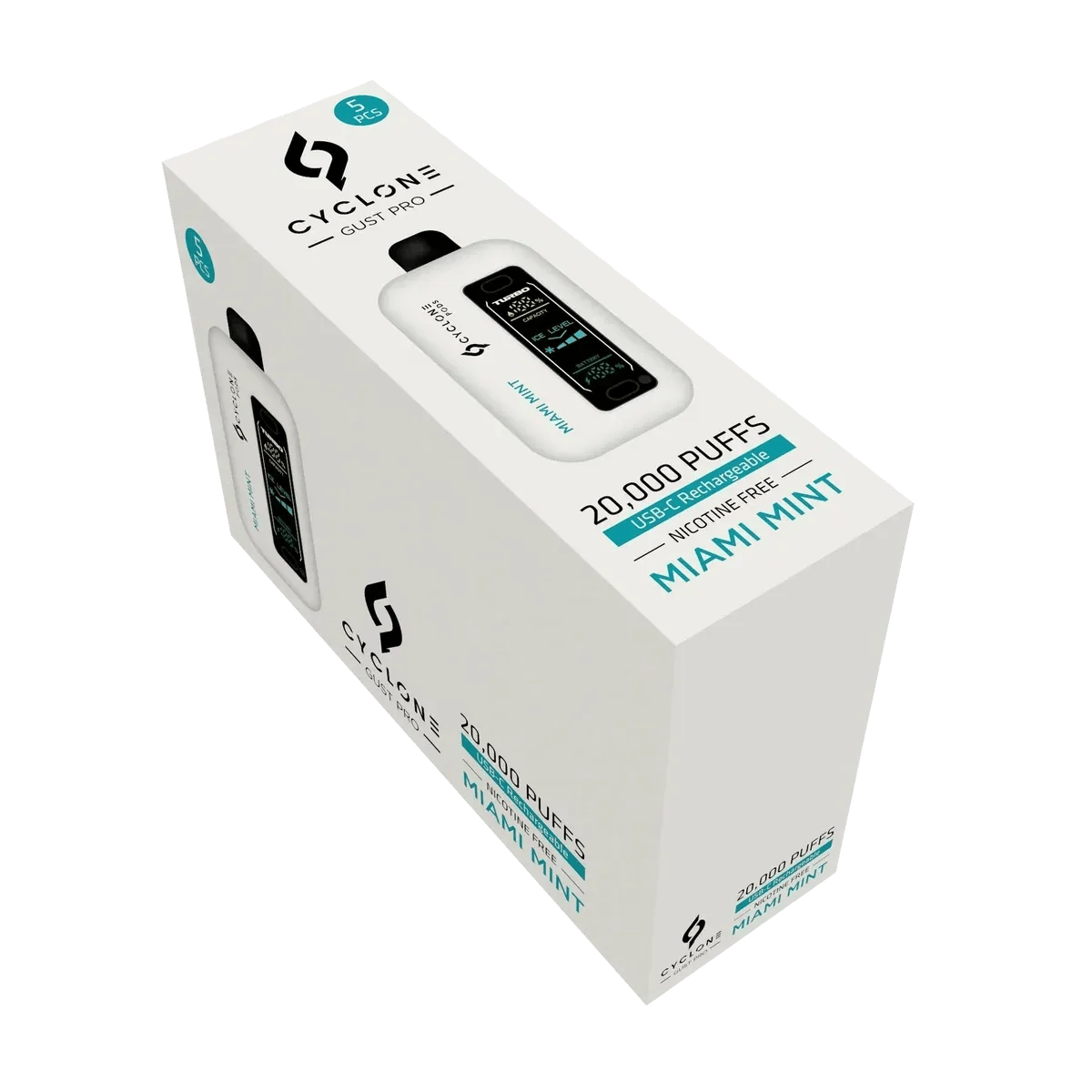
That's the honest pitch and the honest limit. A zero-nicotine disposable like the Gust Pro (20,000 puffs, USP-grade VG, PG, and food-grade flavoring, third-party tested) matches the ritual of smoking without the addictive load — but it still keeps you inhaling, and long-term data on inhaling flavored VG/PG is thin. It's a tool for dropping nicotine while holding the motion, not a lung-safe free pass. We publish our full lab results so you can see exactly what is and isn't in the vapor.