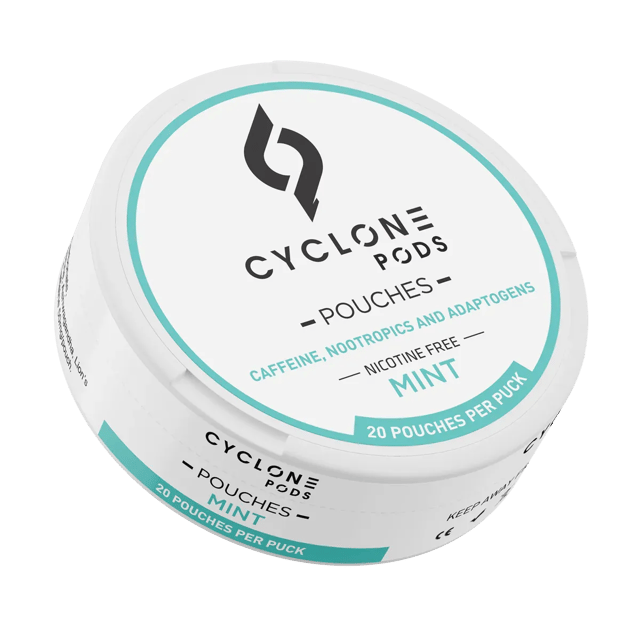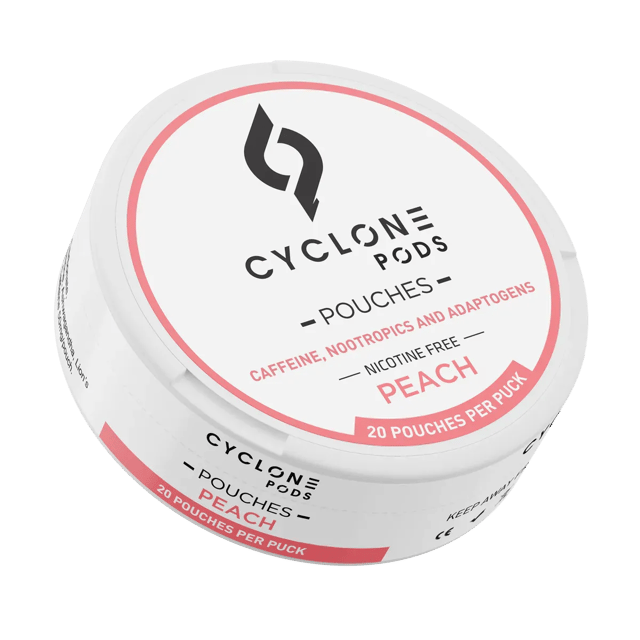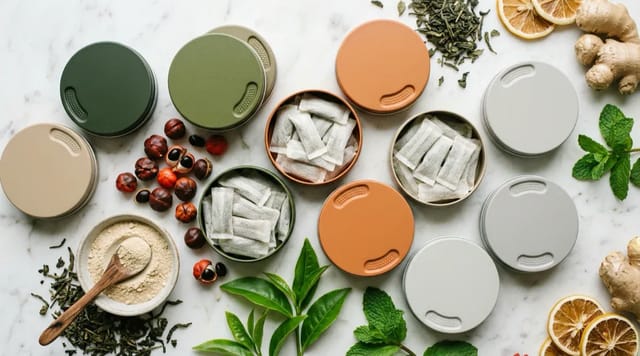

Nootropic pouch ingredients are cognitive-enhancing compounds — like lion's mane, ashwagandha, and guarana caffeine — in a pouch you place between your gum and cheek.
The ingredients inside vary wildly between brands. Some use well-studied compounds with decades of clinical data. Others lean on marketing terms with thin evidence. This article breaks down the six ingredients in Cyclone Pods Focus Pouches, what the research actually says about each one, and how our stack compares to the competition.
Key Takeaway: Most nootropic pouches contain 1–3 cognitive-enhancing ingredients. Cyclone Pods Focus Pouches combine five nootropic compounds (ashwagandha, lion's mane, reishi, cordyceps, and bacopa monnieri) plus 50 mg guarana caffeine, at $9.99 for a 20-pack.
What's in a Nootropic Pouch? Ingredients Compared
The nootropic pouch market splits into two camps: brands that use one or two synthetic nootropics (Alpha-GPC, L-Tyrosine, GABA) and brands that use adaptogenic herbs and mushrooms. Neither approach is inherently better — they target different mechanisms. Synthetic nootropics tend to act on specific neurotransmitter pathways. Adaptogens modulate broader stress-response systems.
Here's how the ingredient stacks compare across the four major brands. For prices, per-pouch doses and lab results across eight brands, see our best nootropic pouches comparison.
| Brand | Caffeine | Key Nootropics | Nootropic Count | Price |
|---|---|---|---|---|
| Cyclone Pods Focus Pouches | 50 mg (guarana) | Ashwagandha, Lion's Mane, Reishi, Cordyceps, Bacopa Monnieri | 5 | $9.99/20 |
| Grinds Focus | 0 mg | Alpha-GPC, L-Theanine | 2 | ~$8/can |
| NZE | 50 mg | Citicoline (select SKUs) | 1 | ~$7/can |
| Fully Loaded ALPHA | 0 mg | Alpha-GPC, L-Tyrosine, GABA | 3 | ~$5/can |
A few things stand out. Grinds and Fully Loaded both use Alpha-GPC, a choline precursor that supports acetylcholine production — a legitimate cognitive mechanism, though most human studies use higher doses than what fits in a pouch. NZE's citicoline works through a similar choline pathway. Our approach is different: we stack five adaptogenic and nootropic compounds that target multiple systems — stress response, neurogenesis, blood flow, and memory consolidation — alongside a moderate caffeine dose.
The tradeoff is real. Synthetic nootropics like Alpha-GPC may produce more immediate, perceptible effects at adequate doses. Adaptogens tend to build effects over consistent use. We chose the stack we did because the compounds have longer safety track records and more overlap with how people actually use focus pouches — daily, not once in a while.
Lion's Mane: The Focus Mushroom
Lion's mane (Hericium erinaceus) is the most studied nootropic mushroom for cognitive performance. The active compounds — hericenones (fruiting body) and erinacines (mycelium) — stimulate nerve growth factor (NGF) production, a protein your brain uses to maintain, grow, and repair neurons.
The strongest recent evidence comes from Docherty et al., 2023, published in Nutrients (PMC10675414). Healthy young adults (ages 18–45) received lion's mane extract or placebo for 28 days. The lion's mane group showed improved speed of performance on cognitive tasks and reduced subjective stress. Sample size was modest (41 participants), so this isn't definitive — but it's among the better-designed human trials in the functional mushroom space.
Mori et al., 2009 (Phytotherapy Research) found that older adults with mild cognitive impairment scored significantly higher on cognitive function scales after 16 weeks of lion's mane supplementation. Scores declined after stopping, suggesting the effect requires ongoing intake.
Honest limitation: most studies use concentrated extracts at 750–3,000 mg/day. A single pouch delivers less than that. The mechanism is well-established and the safety profile is strong, but we won't claim pouch-level doses replicate clinical trial results.
Ashwagandha: The Cortisol Controller
Ashwagandha (Withania somnifera) is an adaptogen that helps regulate your stress response. The focus mechanism is cortisol reduction — when cortisol stays elevated from chronic stress, it impairs working memory, attention, and decision-making. Ashwagandha brings cortisol back toward baseline, removing a cognitive obstacle rather than adding a stimulant.
Chandrasekhar et al., 2012, published in the Indian Journal of Psychological Medicine, randomized 64 adults with chronic stress to ashwagandha root extract (300 mg twice daily) or placebo for 60 days. The ashwagandha group showed a 27.9% reduction in serum cortisol versus the placebo group's 7.9%. A systematic review by Bonilla et al., 2021 (Health Science Reports) analyzed five RCTs and found consistent cortisol-lowering effects, though effect sizes were moderate.
This matters for the focus pouches vs. energy drinks comparison. Energy drinks boost alertness through caffeine and sugar but don't touch cortisol. If your focus problem is stress-driven — and for most working adults, it is — an adaptogen addresses the root cause. That said, ashwagandha isn't instant. The Chandrasekhar trial and others used 60+ days of consistent supplementation before measuring results.
Guarana Caffeine: 50 mg Per Pouch
Each Focus Pouch contains 50 mg of caffeine (label) from guarana — about half a standard cup of coffee. We use guarana rather than synthetic caffeine anhydrous.
The FDA considers up to 400 mg of caffeine per day generally safe for healthy adults. At 50 mg per pouch, you'd need eight to hit that ceiling. For context on daily caffeine limits, we've written a detailed breakdown.
Haskell et al., 2007 (Psychopharmacology) found that low-dose caffeine (37.5–75 mg) improved attention and reaction time in rested adults. Our 50 mg sits in that range. Higher doses improved alertness further but also increased anxiety — which is why we paired moderate caffeine with ashwagandha rather than loading up on stimulant.
The caffeine molecule is identical regardless of source. What guarana offers is a standardized, portable dose without the liquid volume, sugar, or acidity of coffee or energy drinks.
Cordyceps: Oxygen and Endurance
Cordyceps (Cordyceps militaris) has been used in traditional Chinese and Tibetan medicine for centuries for energy and stamina. The proposed mechanism involves increased ATP production and improved oxygen utilization. Cordyceps contains cordycepin (3'-deoxyadenosine), which has structural similarity to adenosine and may influence cellular energy metabolism.
We need to be upfront: cordyceps has less rigorous human data than lion's mane or ashwagandha. Chen et al., 2010 (Journal of Alternative and Complementary Medicine) found that older adults taking cordyceps for 12 weeks showed improved oxygen uptake versus placebo — but the sample was small (20 participants). Hirsch et al., 2018 (Journal of Dietary Supplements) found no significant VO2max improvement in younger, trained athletes after three weeks. Most positive results come from preclinical studies.
We include cordyceps because the safety profile is well-established and the mechanistic rationale (ATP support) is sound, even if human data hasn't caught up. If cordyceps were the only ingredient, the clinical case would be thin. It's a supporting player in a six-ingredient stack.
Reishi: The Adaptogen Mushroom
Reishi (Ganoderma lucidum) is sometimes called the "mushroom of immortality" in traditional Chinese medicine — a name that oversells what modern science has confirmed. The bioactive compounds are triterpenes (ganoderic acids) and polysaccharides (beta-glucans), which have demonstrated anti-inflammatory and immune-modulating activity in lab studies.
Reishi's role in our stack is indirect — it's a stress-modulating complement to ashwagandha, not a direct cognitive enhancer. Some preclinical studies suggest it modulates the HPA axis (hormonal stress-response system). Tang et al., 2012 (Journal of Medicinal Food) found that reishi extract reduced fatigue and improved well-being scores, though the study population was cancer patients — different from healthy adults seeking focus.
Honest assessment: reishi has less human cognitive data than any other ingredient in our stack. We include it for its long safety record and immune-modulating benefits. But if you're evaluating nootropic pouches purely on cognitive enhancement evidence, reishi is the weakest link in our lineup.
Bacopa Monnieri: Memory and Attention
Bacopa monnieri is an Ayurvedic herb used for centuries for memory and learning. The active compounds — bacosides A and B — enhance synaptic communication by modulating acetylcholine, serotonin, and dopamine activity. Unlike caffeine, bacopa's cognitive effects emerge over weeks of consistent use.
Kongkeaw et al., 2014, published in the Journal of Ethnopharmacology, pooled nine RCTs and found that bacopa improved attention, cognitive processing speed, and working memory, with small to moderate effect sizes. Pase et al., 2012 (Journal of Alternative and Complementary Medicine) reached similar conclusions across six trials, with strongest effects after 12+ weeks of daily use.
Bacopa makes the most sense for daily users. One-time use won't produce noticeable cognitive effects — the benefits are cumulative. The pouch format actually helps here: because pouches are convenient enough for daily use, you're more likely to maintain the consistent intake bacopa requires compared to capsules or tea. For more on safe daily intake, see our caffeine pouch safety guide.
How Our Stack Compares
When you line up the nootropic pouch market, a pattern emerges. Most brands build around one or two ingredients — typically Alpha-GPC (choline pathway) or caffeine alone. Cyclone Pods Focus Pouches are the only brand combining caffeine with five distinct nootropic compounds targeting different cognitive mechanisms:
- Stress reduction: Ashwagandha (cortisol modulation) + Reishi (HPA axis support)
- Neurogenesis: Lion's Mane (NGF stimulation)
- Memory consolidation: Bacopa Monnieri (synaptic communication)
- Cellular energy: Cordyceps (ATP production)
- Acute alertness: Guarana caffeine (50 mg, adenosine receptor antagonism)
The Alpha-GPC approach used by Grinds and Fully Loaded has merit — choline is a direct acetylcholine precursor, and acetylcholine is central to memory and attention. But Alpha-GPC addresses one pathway. Our stack targets multiple systems simultaneously: stress, neurogenesis, memory, energy, and alertness. For the full brand-by-brand breakdown of the Fully Loaded lineup, see our Alpha pouches review.
Fully Loaded ALPHA combines GABA, Alpha-GPC, and L-Tyrosine — a thoughtful stack at ~$5/can. The tradeoff: zero caffeine, so no acute alertness. NZE keeps it minimal with caffeine plus citicoline in select SKUs.
At $9.99 for 20 pouches ($0.50/pouch), Focus Pouches cost more per unit than Fully Loaded (~$0.33) but less than a daily coffee habit ($3–6) and about the same as Grinds (~$0.53). Whether the broader ingredient stack justifies the price depends on whether you value ingredient diversity or ingredient concentration.
If you're still deciding, the Focus Pouches collection lists all four flavors.
What the Science Doesn't Tell Us Yet
We've cited real studies throughout this article, but honesty requires acknowledging what we don't know:
Dose-response gaps. Most clinical trials use isolated, high-dose extracts (500–3,000 mg). A pouch blends six ingredients at lower individual doses. Whether the combination produces synergistic effects that compensate hasn't been studied in this format.
Long-term combination data doesn't exist. Individual safety profiles are well-documented, but no one has funded a multi-year trial on a consumer pouch product. We haven't received adverse event reports beyond expected caffeine sensitivity — not the same as a controlled study, but relevant context.
Focus Pouches are tested by Certified Laboratories (Burbank, CA; A2LA-accredited to ISO 17025). View the Focus Pouches lab results.