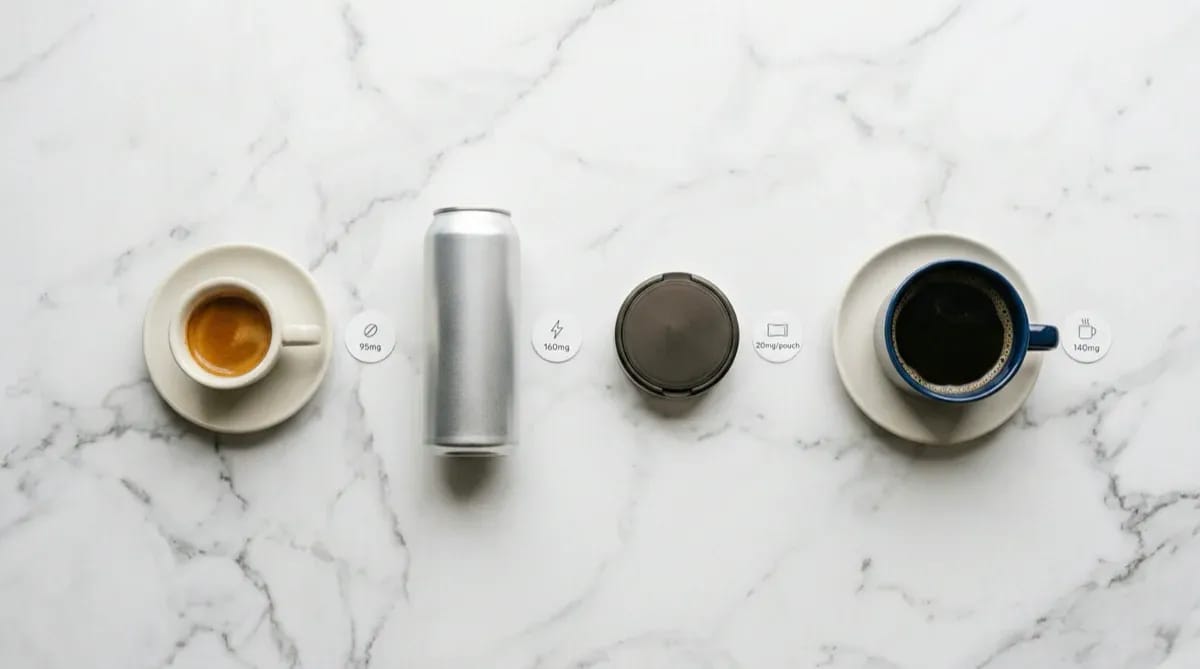
The daily caffeine limit for most healthy adults is 400 milligrams, according to the FDA and confirmed by Mayo Clinic research. That equals roughly four 8-ounce cups of brewed coffee, ten cans of cola, or eight Cyclone Pods Focus Pouches. Go past that threshold regularly and you risk insomnia, elevated heart rate, and anxiety.
But 400mg is not a universal number. Your actual safe limit depends on your age, body weight, pregnancy status, and sensitivity to caffeine. Here is what the science says about how much caffeine per day is actually safe — and how to stay under the line without guessing.
How Much Caffeine Per Day Is Safe?
The 400mg guideline comes from an extensive 2017 systematic review published in Food and Chemical Toxicology (PMID: 28438661). Researchers analyzed over 700 studies and concluded that 400mg per day is not associated with adverse health effects in healthy adults. The FDA adopted this as its recommended daily caffeine intake benchmark.
That said, the number shifts for specific populations:
Healthy Adults (19+)
Limit: 400mg per day. This applies to most adults without underlying health conditions. The European Food Safety Authority (EFSA) reached the same conclusion in their 2015 scientific opinion, adding that single doses should stay at or below 200mg to avoid acute effects.
Pregnant and Breastfeeding Women
Limit: 200mg per day. The American College of Obstetricians and Gynecologists (ACOG) recommends no more than 200mg daily during pregnancy. A 2020 review in BMJ Evidence-Based Medicine (PMID: 32843532) suggested that no safe level of caffeine consumption exists during pregnancy, though this remains debated. The conservative 200mg guideline persists in clinical practice.
Adolescents (12–18)
Limit: 100mg per day. The American Academy of Pediatrics recommends adolescents consume no more than 100mg daily. That is roughly one 8-ounce cup of coffee or two 12-ounce cans of cola. Energy drinks with 150–300mg per can can push teens well over this limit with a single serving.
Children Under 12
Limit: No established safe amount. The FDA has not set a guideline for children, and the American Academy of Pediatrics discourages caffeine consumption entirely for this age group. Health Canada recommends no more than 2.5mg per kilogram of body weight — about 45mg for a 40-pound child.
| Age Group | Daily Limit | Source |
|---|---|---|
| Healthy adults (19+) | 400mg | FDA / EFSA |
| Pregnant women | 200mg | ACOG |
| Breastfeeding women | 200–300mg | CDC |
| Adolescents (12–18) | 100mg | American Academy of Pediatrics |
| Children (under 12) | Not recommended | AAP / Health Canada |
What Does 400mg of Caffeine Actually Look Like?
The problem with "400mg" is that most people have no idea how much caffeine is in what they drink. A "cup of coffee" varies wildly — a Starbucks Grande drip is 310mg, while a homemade 8-ounce pour might be 95mg. Energy drinks range from 80mg (Red Bull) to 300mg (Reign, Bang). And caffeine pouches deliver anywhere from 3mg to 12mg per pouch for nicotine brands, or 50mg per pouch for caffeine-specific pouches like Cyclone Pods Focus Pouches.
Here is a breakdown of common caffeine sources and exactly how much caffeine each delivers:
| Source | Serving Size | Caffeine (mg) | Servings to Hit 400mg |
|---|---|---|---|
| Brewed coffee (drip) | 8 oz | 80–100 | 4–5 cups |
| Starbucks Grande Pike Place | 16 oz | 310 | ~1.3 cups |
| Espresso shot | 1 oz | 63 | ~6 shots |
| Cold brew coffee | 16 oz | 200 | 2 cups |
| Black tea | 8 oz | 47 | ~8.5 cups |
| Green tea | 8 oz | 28 | ~14 cups |
| Red Bull | 8.4 oz | 80 | 5 cans |
| Monster Energy | 16 oz | 160 | 2.5 cans |
| Celsius | 12 oz | 200 | 2 cans |
| Reign / Bang | 16 oz | 300 | ~1.3 cans |
| Cyclone Pods Focus Pouch | 1 pouch | 50 | 8 pouches |
| Coca-Cola | 12 oz | 34 | ~12 cans |
| Diet Coke | 12 oz | 46 | ~9 cans |
| Dark chocolate | 1 oz | 12 | ~33 oz |
| Excedrin (OTC pain reliever) | 2 tablets | 130 | ~3 doses |
The takeaway: one large energy drink or two 16-ounce cold brews can get you to 400mg before lunch. If you are stacking caffeine sources — morning coffee plus an afternoon energy drink plus a pre-workout — you are likely over the daily recommended caffeine intake without realizing it.
Signs You're Having Too Much Caffeine
Caffeine intoxication is a real clinical diagnosis. The Diagnostic and Statistical Manual of Mental Disorders (DSM-5) recognizes caffeine intoxication at doses exceeding 250mg, with symptoms including:
- Restlessness and nervousness — the classic "jitters." Your hands shake, your leg bounces, and sitting still feels impossible.
- Insomnia — caffeine has a half-life of roughly 5 hours in most adults, though it varies widely from person to person. A 200mg dose at 3 PM means roughly 100mg is still circulating at 8–9 PM.
- Digestive issues — caffeine increases gastric acid secretion. Stomachaches, acid reflux, and loose stools are common at higher doses.
- Elevated heart rate — tachycardia (heart rate above 100 bpm) can occur at doses above 300mg in sensitive individuals.
- Headaches — paradoxically, both too much caffeine and caffeine withdrawal cause headaches. If you get headaches when you skip coffee, that is a withdrawal signal.
- Anxiety and panic attacks — a 2022 meta-analysis in General Hospital Psychiatry (PMID: 34871964) found that about half of people with panic disorder had a panic attack after a caffeine challenge, versus under 2% of healthy controls.
- Muscle tremors — involuntary twitching, especially in the eyelids and hands.
- Frequent urination — caffeine is a mild diuretic at doses above 300mg.
If you experience three or more of these symptoms regularly, you are likely exceeding your personal caffeine threshold — even if you are under 400mg. Individual tolerance varies significantly based on genetics, liver enzyme activity (specifically CYP1A2), and habitual consumption.
Does Caffeine Tolerance Affect Your Limit?
Yes, but not in the way most people assume.
Caffeine tolerance is real and develops quickly. Within 1–4 days of regular consumption, your brain upregulates adenosine receptors to compensate for caffeine blocking them. This is why your first cup of coffee felt electric and your fourth of the day barely registers.
But tolerance affects how caffeine feels, not what it does. A 2005 study in Psychosomatic Medicine (PMID: 16204431) found that daily caffeine use at 300–600mg reduced, but did not eliminate, caffeine's cortisol response, even though regular users felt "normal." You stop noticing the stimulation, but the cardiovascular and endocrine effects persist.
This creates a trap: high-tolerance users consume more caffeine to get the same subjective effect, while still accumulating the physiological downsides. The 400mg ceiling is a health guideline, not a performance guideline. Tolerance does not raise it.
There is also a genetic component. About 50% of the population carries a variant of the CYP1A2 gene that makes them "slow metabolizers" of caffeine. These individuals clear caffeine from their system significantly more slowly, meaning 200mg can feel — and behave — like 400mg in a fast metabolizer. A 2006 study in JAMA (PMID: 16522833) found that slow metabolizers who drank four or more cups of coffee per day had a significantly higher risk of heart attack compared to fast metabolizers at the same dose. If caffeine lingers in your system longer than average — you still feel wired 8 hours after a cup — your functional daily limit may be lower than 400mg.
Caffeine and Health Conditions
The 400mg guideline assumes you are a healthy adult with no relevant medical conditions. Several conditions lower that ceiling substantially.
Anxiety Disorders
Caffeine blocks adenosine, which increases norepinephrine and dopamine activity. For people with generalized anxiety disorder (GAD) or panic disorder, even 200mg can trigger or worsen symptoms. The DSM-5 includes "caffeine-induced anxiety disorder" as a recognized diagnosis. If you have anxiety, understanding the relationship between caffeine and overconsumption is worth your time.
Heart Conditions
For most people, moderate caffeine consumption (up to 400mg) does not increase the risk of arrhythmias. A 2021 study in JAMA Internal Medicine (PMID: 34279564) followed over 386,000 participants and found no association between habitual coffee consumption and incident arrhythmias. However, if you have a pre-existing arrhythmia or are taking antiarrhythmic medications, consult your doctor before relying on general guidelines.
Gastroesophageal Reflux (GERD)
Caffeine relaxes the lower esophageal sphincter, which can worsen acid reflux. If you manage GERD, your effective caffeine limit may be well below 400mg — some gastroenterologists recommend capping at 200mg or eliminating caffeine entirely.
Medication Interactions
Several common medications interact with caffeine metabolism. Fluvoxamine (an SSRI) can increase caffeine's half-life from 5 hours to over 30 hours. Ciprofloxacin (an antibiotic) and oral contraceptives both slow caffeine clearance. Cimetidine (Tagamet, for heartburn) and certain antifungal medications (ketoconazole) also inhibit CYP1A2, the primary enzyme responsible for caffeine breakdown. If you take any prescription medication, check with your pharmacist about caffeine interactions — the 400mg limit may not apply to you.
How Caffeine Pouches Compare to Coffee and Energy Drinks
Caffeine delivery method matters more than most people think. A 200mg caffeine pill, a 200mg energy drink, and four 50mg caffeine pouches all deliver the same total dose — but the experience differs.
Coffee
Coffee delivers caffeine through liquid ingestion. Absorption peaks at about 45 minutes, and the full dose hits your bloodstream relatively quickly. The downside: coffee is acidic (pH 4.85–5.10), causes gastric distress in many people, stains teeth, and varies wildly in caffeine content depending on brew method, bean origin, and serving size. You are often guessing how much caffeine you actually consumed.
Energy Drinks
Energy drinks deliver caffeine with sugar (or artificial sweeteners), taurine, B-vitamins, and other additives. A 16-ounce Monster has 160mg of caffeine plus 54 grams of sugar. A Celsius has 200mg of caffeine with no sugar but includes sucralose. The large liquid volume means fast gastric emptying and rapid absorption — which is why energy drinks often produce a sharper spike and crash than coffee. For a deeper comparison, see our focus pouches vs energy drinks breakdown.
Caffeine Pouches
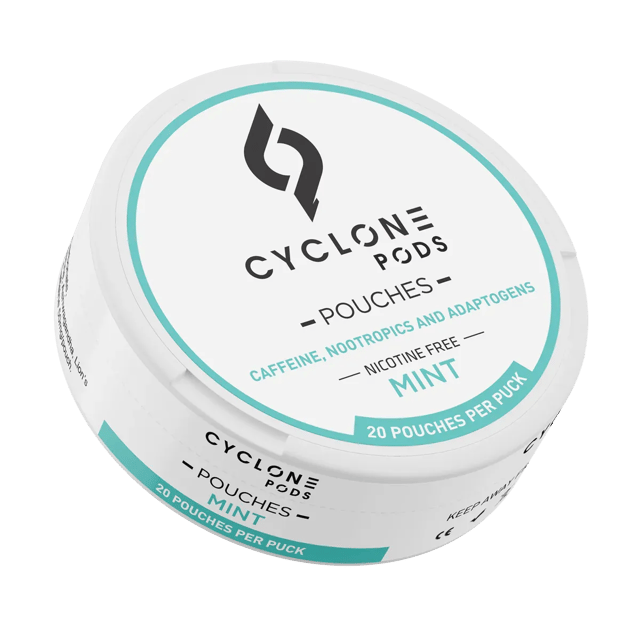
Cyclone Pods Focus Pouches contain 50mg of caffeine from guarana per pouch (label). Place one pouch between your gum and cheek and keep it in 20–30 minutes, until the pouch is empty.
Each pouch also contains functional mushroom extracts: ashwagandha, lion's mane, reishi, cordyceps, and bacopa monnieri. These adaptogens and nootropics are included for cognitive support, though their effects operate on a different timescale than caffeine.
At the labeled 50mg per pouch, the math is straightforward. Two pouches equals a small cup of coffee. Four equals a moderate energy drink. Eight pouches reach the 400mg daily limit. Because each pouch is labeled at 50mg (our lab results for lot 202605 ran 39–48mg), counting is simple — no guessing about brew strength or serving sizes.
They are $9.99 per pack of 20 pouches and come in four flavors: Cinnamon, Mint, Peach, and Wintergreen. No nicotine, no tobacco, no sugar, no calories. For a full review of how they stack up against other brands, see our best caffeine pouches guide.
Why Counting Your Dose Matters for Staying Under the Limit
The biggest practical challenge with the daily caffeine limit is tracking intake. Coffee varies by 80mg per cup depending on how it is made. Energy drinks come in confusing serving sizes — some cans contain two "servings" but everyone drinks the whole can. Pre-workout supplements sometimes bury caffeine content in "proprietary blends."
Discrete-dose formats like caffeine pouches remove this variable entirely. Each pouch is labeled 50mg. You count pouches, not ounces. If you have used three pouches and two cups of coffee, you have consumed approximately 340–350mg and can make an informed decision about your next dose.
This is not about one delivery method being "better" than another. It is about knowing your number. The daily caffeine limit only works as a guardrail if you can actually track where you are.
What Happens If You Go Over the Daily Caffeine Limit?
Exceeding 400mg occasionally is unlikely to cause serious harm in healthy adults. The real risk comes from chronic overconsumption or acute megadoses.
Chronic overconsumption (500–600mg daily): Regular intake above the recommended daily caffeine limit leads to physical dependence within days. You will not necessarily feel "addicted" — but try stopping abruptly and you will experience withdrawal symptoms: headaches, fatigue, irritability, difficulty concentrating, and depressed mood. Withdrawal symptoms peak 12–24 hours after your last dose and can last 2–9 days (PMID: 15448977).
Acute megadoses (above 1,200mg): Caffeine toxicity becomes a medical concern above roughly 1,200mg in a short window. Symptoms include vomiting, seizures, and dangerously rapid or irregular heartbeat. Fatal caffeine overdoses are rare but documented — they typically involve caffeine pills or powder, not beverages. The estimated lethal dose is approximately 10 grams (10,000mg), though individual tolerance varies. This is roughly 100 cups of coffee or 25 energy drinks consumed rapidly — impractical via normal consumption but achievable with concentrated caffeine products.
The practical risk is not acute toxicity. It is the gradual creep of tolerance and dependence that pushes daily intake from 300mg to 500mg to 700mg over months, eroding sleep quality and baseline energy levels along the way.
How to Track Your Daily Caffeine Intake
Most people underestimate their caffeine consumption by 20–30%. Here is a practical framework:
- Audit your morning routine. Write down every caffeine source from wake-up to noon for three days. Include coffee, tea, energy drinks, soda, chocolate, medications, and supplements.
- Use actual milligrams, not "cups." A "cup" of coffee is technically 8 ounces, but most mugs hold 12–16 ounces. Measure once with a measuring cup. You will probably be surprised.
- Check medication labels. Excedrin contains 130mg per two-tablet dose. Midol has 60mg. Some cold medicines include caffeine. These add up.
- Set a cutoff time. Given caffeine's 5–6 hour half-life, your last caffeine intake should be at least 8–10 hours before bedtime for optimal sleep quality. For most people, that means no caffeine after 1–2 PM.
- Count, do not estimate. If you use measured-dose products — espresso shots (63mg each), caffeine pouches (50mg each), or caffeine pills (100–200mg each) — simple multiplication replaces guesswork.
The Bottom Line
The daily caffeine limit for healthy adults is 400mg — about four standard cups of coffee, two energy drinks, or eight Cyclone Pods Focus Pouches. Pregnant women should stay under 200mg. Adolescents should stay under 100mg. Children should avoid caffeine entirely.
But 400mg is a population-level ceiling, not a personalized target. Your genetics, health conditions, medications, and caffeine sensitivity all factor in. If you regularly experience jitters, insomnia, or anxiety, your personal limit is lower than 400mg — regardless of what the FDA says.
The practical challenge is tracking intake, not knowing the number. Coffee varies. Energy drinks vary. Pre-workouts hide caffeine behind label jargon. The easiest way to manage your daily caffeine budget is to use sources where the dose is known and consistent — whether that is espresso shots, caffeine pills, or caffeine pouches at 50mg each.
We make Focus Pouches at Cyclone Pods because we wanted a caffeine source that was simple to dose, portable, and did not require a cup or a can. Founded in 2018 in Santa Monica, California, we built the brand around transparency — our Focus Pouches are independently tested by Certified Laboratories (A2LA accredited, Burbank, CA) for pesticides, solvents, heavy metals, and caffeine accuracy. Caffeine should be a tool you control, not a variable you guess at.