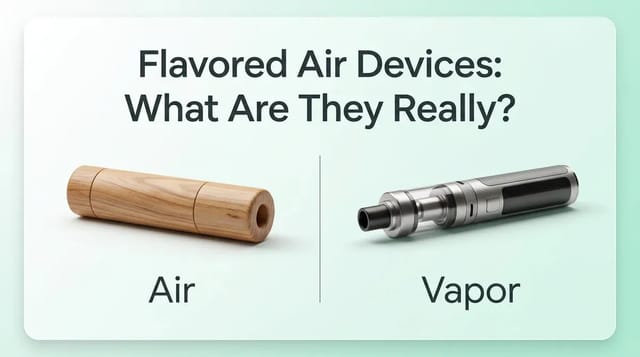
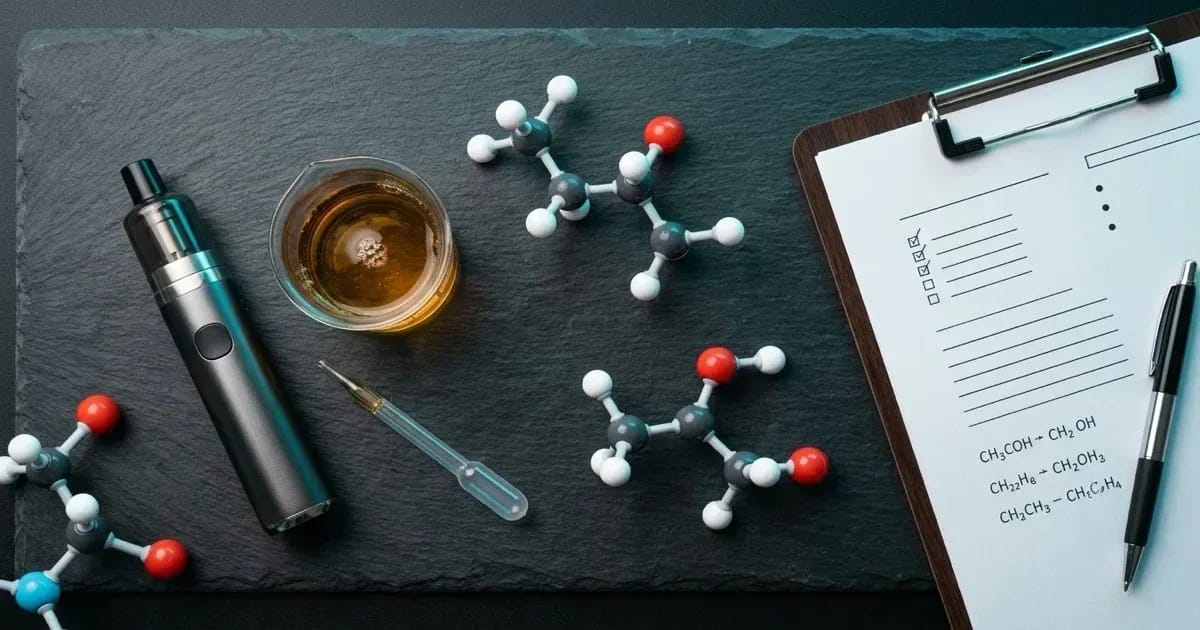
Vaping heats a liquid into an aerosol you inhale instead of burning plant matter. That single difference — heat vs. combustion — drives almost every health distinction between vaping and smoking, and it's the reason most of the "facts" you'll find online are either outdated, incomplete, or flat-out wrong.
We sell nicotine-free vapes, so we have a stake in this. We're also going to tell you things that aren't flattering to vaping as a category — because cherry-picking facts is how trust erodes. Here are 10 things you should actually know.
1. Vaping Is Estimated at 95% Less Harmful Than Smoking
In August 2015, Public Health England (PHE) published an independent evidence review led by Prof. Ann McNeill and Prof. Peter Hajek. The headline finding: e-cigarettes are around 95% less harmful than combustible cigarettes. That estimate has been reaffirmed in subsequent PHE updates through 2021.
The 95% figure comes from a multi-criteria decision analysis (MCDA) comparing 12 harm domains across different nicotine products. It's an estimate, not a precise measurement — the authors have said so themselves. But no subsequent study has overturned the basic finding: removing combustion removes the vast majority of toxic byproducts.
Two caveats. First, 95% less harmful than cigarettes doesn't mean harmless. A brick to the shin is less harmful than a brick to the head. You'd still prefer neither. Second, this comparison is cigarettes vs. e-cigarettes — not "never using anything" vs. e-cigarettes. If you don't smoke, vaping doesn't hand you a health upgrade.
2. Most Vape Liquids Have 4 Ingredients or Fewer
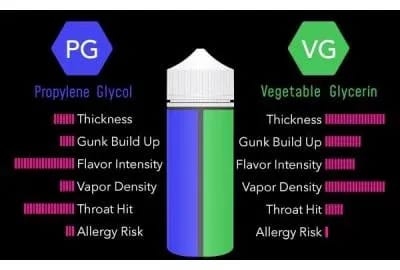
The base formula for nearly every commercial e-liquid is the same:
- Vegetable glycerin (VG) — CAS 56-81-5. Produces the visible vapor cloud. Derived from vegetable oils.
- Propylene glycol (PG) — CAS 57-55-6. Carries flavor and produces the "throat hit." Both VG and PG are FDA-recognized as GRAS (generally recognized as safe) for ingestion.
- Food-grade flavorings — the same compounds used in food manufacturing, though "safe to eat" and "safe to inhale" are different regulatory questions.
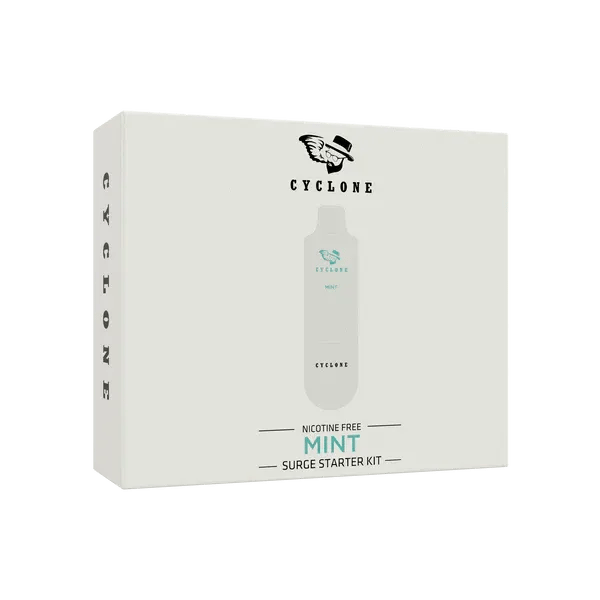
- Nicotine — present in most vapes, absent in nicotine-free products like ours.
That's it. If you see a brand adding vitamins, botanicals, caffeine to an inhalable liquid, or other supplements, those are additions beyond the standard formula. Our vapes use USP-grade VG, USP-grade PG, and food-grade flavorings. Nothing else. We break down each component in our vape juice ingredients guide.
3. Nicotine Is Addictive — But It's Not the Primary Carcinogen in Cigarettes
Nicotine gets treated as the villain in every anti-smoking campaign, and it earns part of that reputation: it's addictive, it raises heart rate and blood pressure, and it's the reason people keep buying cigarettes.
But nicotine itself is not what gives you lung cancer. Combustion does.
When tobacco burns, it produces roughly 7,000 chemicals, including at least 70 known carcinogens — formaldehyde, benzene, acrolein, polycyclic aromatic hydrocarbons, according to the CDC. Nicotine isn't on that carcinogen list. The Royal College of Physicians stated in their 2016 report Nicotine Without Smoke that "the hazard to health arising from long-term vapour inhalation from the e-cigarettes available today is unlikely to exceed 5% of the harm from smoking tobacco."
This distinction matters because it's the reason nicotine replacement therapies (patches, gum, lozenges) exist at all. Nicotine delivered without combustion is a fundamentally different risk profile.
4. No Long-Term Vaping Studies Exist Yet
E-cigarettes entered the US market around 2007. That gives us roughly 19 years of use data as of 2026 — not enough for the kind of 20-to-30-year longitudinal studies that definitively linked smoking to lung cancer in the mid-20th century.
We know short-term and medium-term outcomes. A randomized clinical trial published in the New England Journal of Medicine in 2019 (PMID: 30699054) found that e-cigarettes were nearly twice as effective as nicotine replacement therapy for smoking cessation at one year. A 2022 Cochrane systematic review (PMID: 36384212) found high-certainty evidence that nicotine e-cigarettes help people quit smoking more effectively than traditional NRT.
What we don't know: what happens to lung tissue after 30 years of daily vaping. Anyone who tells you vaping is definitively safe long-term is guessing. Anyone who tells you it's definitively dangerous long-term is also guessing. The data doesn't exist yet.
5. Not All Vapes Contain Diacetyl — And You Can Verify
Diacetyl is a flavoring compound (CAS 431-03-8) that adds a buttery or sweet taste. In the early 2000s, NIOSH linked occupational diacetyl exposure to bronchiolitis obliterans — severe, irreversible airway obstruction — in microwave popcorn factory workers. The compound later appeared in some e-cigarette liquids used for flavor.
The key word is "some." A 2015 study from Harvard T.H. Chan School of Public Health (PMID: 26642857) found diacetyl in 39 of 51 flavored e-cigarette products tested. That was a real problem. But it's not universal — brands that test for it and publish results can demonstrate its absence.
Cyclone Pods' vape products are tested by Legend Technical Services in St. Paul, Minnesota — an ISO 17025 accredited lab using LC-MS/MS methodology with a detection limit of 0.063 µg/g. Work Order #2503988. Result: 0% diacetyl across all products tested. You can read the full certificate of analysis.
We extended that record in July 2026 with a second work order (#2602062): six Gust Pro and Lightning flavors, all non-detect for diacetyl and 2,3-pentanedione, plus non-detect for arsenic, cadmium, lead, and mercury by ICP/MS.
That's what verification looks like: a named lab, an accreditation standard, a method, a detection limit, and a work order number you could call to check. If a brand says "diacetyl-free" without publishing a COA, you're trusting marketing copy. We wrote a deeper breakdown of how diacetyl testing works and what to look for.
6. Nicotine-Free Vapes Remove the Addictive Component
This one's straightforward. If nicotine is what makes vapes addictive, removing nicotine removes the addictive substance. That's not a marketing angle — it's pharmacology.
Nicotine-free vapes use the same VG/PG/flavoring base as standard e-liquids. They produce the same vapor, deliver the same flavors, replicate the same hand-to-mouth motion. What they don't deliver is a nicotine hit.
There are two populations these matter for. First: people quitting nicotine who've stepped down from high-strength products and want to drop the last chemical dependency while keeping the behavioral habit. Second: people who never used nicotine and want the sensory experience without starting a dependency.
Our Gust Pro delivers 20,000 puffs at $20 with 14 flavors and USB-C recharging. The Lightning system runs 10,000 puffs per pod at $14/pod with magnetic pod swapping. Both are zero nicotine, zero tobacco. Available at cyclonepods.com and in retail stores nationwide.
7. Most Vapes on the US Market Lack FDA Authorization
The FDA's Premarket Tobacco Product Application (PMTA) process requires manufacturers to demonstrate that a product is "appropriate for the protection of public health." As of early 2026, the FDA has issued marketing granted orders (MGOs) to a handful of tobacco-flavored and menthol-flavored nicotine e-cigarettes — primarily from companies like R.J. Reynolds (Vuse).
The vast majority of flavored and disposable vapes currently sold in the United States have not received PMTA authorization. The FDA has issued millions of warning letters and initiated enforcement actions, but the market moves faster than the agency's capacity.
Nicotine-free vapes occupy a regulatory gray area. The FDA's authority over "tobacco products" under the Family Smoking Prevention and Tobacco Control Act (2009) extends to products "made or derived from tobacco." A product containing zero tobacco and zero nicotine doesn't fit cleanly into that definition — though the FDA has signaled interest in broadening its scope.
Bottom line: if you're using a flavored nicotine vape in the US, there's a high probability it hasn't gone through PMTA review. That doesn't automatically make it dangerous, but it means no federal agency has evaluated the specific product for public health impact.
8. Secondhand Vapor Contains Fewer Toxicants Than Cigarette Smoke
Cigarette sidestream smoke contains the same 7,000+ chemicals as inhaled smoke, including carbon monoxide, tar, and dozens of carcinogens. It lingers in enclosed spaces, settles on surfaces (thirdhand smoke), and has been linked to increased cancer and cardiovascular disease risk in nonsmokers.
E-cigarette aerosol is different. Indoor air measurements taken during e-cigarette use have found volatile organic compound (VOC) levels well below those from cigarette smoke. PHE's evidence reviews have consistently noted that "there is no evidence so far that e-cigarette vapour is harmful to bystanders."
That doesn't mean secondhand vapor is zero-risk. The aerosol can contain ultrafine particles, propylene glycol, glycerin, nicotine (if present), and flavoring compounds. Indoor air sampling during vaping has detected formaldehyde and acetaldehyde, though at levels far below occupational exposure limits.
For more context on what's actually in exhaled vapor, we wrote a detailed piece on secondhand exposure from vaping.
9. Vaping Can Cause Dry Mouth and Throat Irritation
This is the most common side effect vapers report, and the mechanism is simple: propylene glycol is hygroscopic. It absorbs moisture from surrounding tissue. Inhale PG vapor repeatedly and it pulls water from your mouth and throat lining.
When e-cigarette users are surveyed about side effects, dry mouth/throat, cough, and headache top the list. These effects are generally mild and dose-dependent — higher PG ratios and longer sessions mean more drying.
The fix is unglamorous: drink water. Higher-VG liquids produce less throat drying than high-PG formulas. If you're vaping heavily and experiencing persistent dry mouth, cutting session frequency usually resolves it.
We won't pretend side effects don't exist. They do. They're also not in the same category as the 480,000+ annual deaths the CDC attributes to cigarette smoking in the United States.
10. The EVALI Crisis Was Caused by THC Cartridges — Not Commercial Nicotine Vapes
In 2019, the CDC tracked a sudden spike in severe lung injuries among vapers — 2,807 hospitalizations and 68 deaths as of February 2020. The condition was named EVALI (e-cigarette or vaping product use-associated lung injury).
The cause was identified as vitamin E acetate (tocopheryl acetate), used as a thickening and cutting agent in illicit THC vape cartridges. The CDC's November 2019 update stated: "laboratory data show vitamin E acetate, an additive in some THC-containing e-cigarette, or vaping, products, is strongly linked to the EVALI outbreak."
This was not a failure of commercial nicotine or nicotine-free vape products. It was a contamination problem in unregulated THC cartridges sold outside licensed dispensaries. The distinction matters because EVALI is still cited in anti-vaping campaigns without context, conflating regulated products with black-market THC carts.
Our e-liquids are made without vitamin E acetate (USP-grade VG, PG and food-grade flavorings). Work Order #2503988 covers nicotine only, so we don't cite a lab result for vitamin E acetate. Our published lab results are on the lab testing page.
What Does This Mean If You're Choosing a Vape?
These 10 facts point to the same conclusion: the details matter more than the category label. "Vaping" covers everything from a $4 gas station disposable with no COA to a lab-tested, nicotine-free product with published third-party results. Treating them as the same thing is like comparing tap water to river water because both are wet.
If you're evaluating options, here's what to check:
| Question | What to look for |
|---|---|
| Is the product lab tested? | Named lab, ISO 17025 accreditation, published COA with work order number |
| What's in the liquid? | USP-grade VG and PG, food-grade flavorings. Shorter ingredient lists are better. |
| Does it contain nicotine? | Check the label. If you don't want dependency, choose zero-nicotine. |
| Is diacetyl tested? | Published COA showing ND, not just a website claim |
| Is vitamin E acetate tested? | Published COA showing ND |
If you already know you want nicotine-free, we built a decision guide that walks through the tradeoffs between our products. If you want to see what lab-tested, zero-nicotine vaping actually looks like, start here.
Where Do We Go From Here?
The vaping industry is still young. The long-term data doesn't exist yet. Regulation is catching up slowly. And the gap between the best and worst products on the market is enormous.
What we can control is transparency. We publish our lab results. We list our ingredients. We tell you what we don't know — like what 30 years of daily vaping does to lung tissue — instead of pretending the question doesn't exist.
If you want the safest option we've found, we wrote a separate deep-dive on what makes a vape safe that goes further than what we can cover here.
The facts aren't all flattering to vaping. Some are. The honest version — the one with PMIDs and lab work orders and regulatory caveats — is the one worth reading.
Related reading: our deep-dive on popcorn lung and diacetyl covers the evidence in full, and our benefits of quitting vaping guide walks through the week-by-week recovery timeline if you are considering stopping.