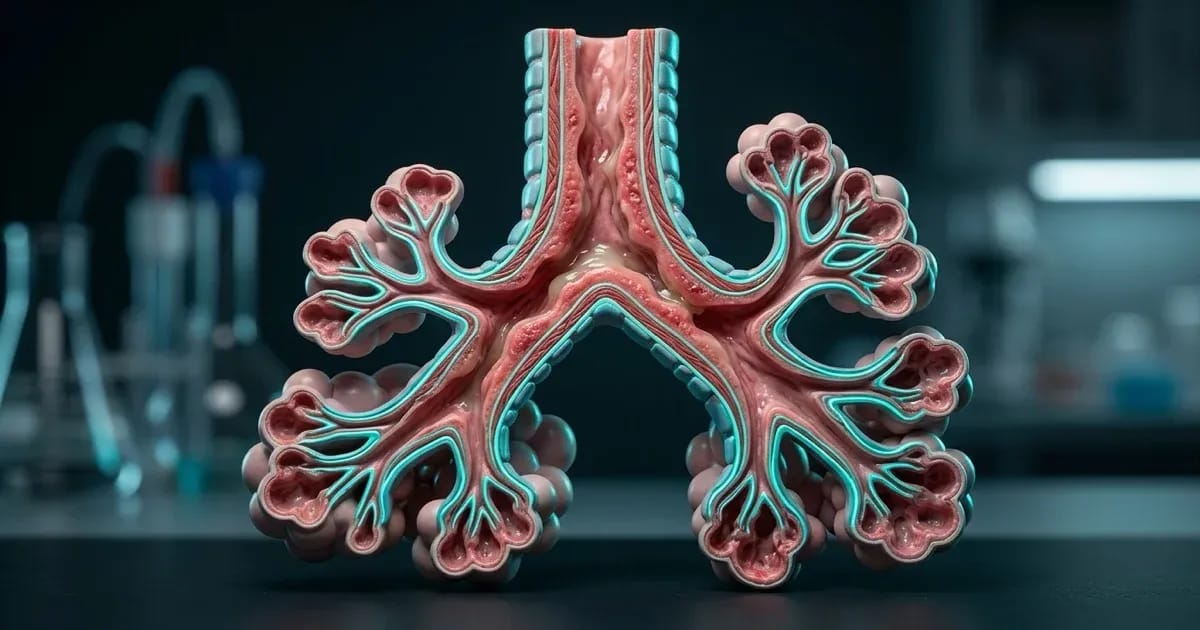
Popcorn lung is bronchiolitis obliterans — an irreversible scarring of the smallest airways in your lungs, caused by inhaling diacetyl. It got its name from the microwave popcorn factory workers who developed it in the early 2000s.
Can vaping cause it? As of 2026, no confirmed case of popcorn lung has been attributed to e-cigarette use in published medical literature. But diacetyl was found in e-liquids, which is why the concern exists — and why it matters what's actually in your vape.
We've spent eight years formulating nicotine-free vapes at Cyclone Pods. In our July 2026 lab panel, all six Gust Pro and Lightning flavors tested came back non-detect for diacetyl. Here's what the science says, where the real risks are, and how to verify whether your vape is actually diacetyl-free.
What Is Popcorn Lung?
Bronchiolitis obliterans is a condition where the bronchioles — the tiniest branches of your airway tree — become inflamed, scarred, and permanently narrowed. The damage is irreversible. Once those airways scar shut, they don't reopen.
The name "popcorn lung" comes from a cluster of cases at the Gilster-Mary Lee microwave popcorn plant in Jasper, Missouri. In 2000, a local pulmonologist noticed an unusual number of workers with the same rare lung disease. NIOSH investigated. The culprit was diacetyl (2,3-butanedione) — a flavoring chemical that gives microwave popcorn its buttery taste.
Kreiss et al. published the landmark study in 2002 in the New England Journal of Medicine (PMID: 12151470). Of the workers evaluated, those in the mixing rooms — where diacetyl vapor concentrations were highest — had the most severe lung function decline. The dose-response relationship was clear: more diacetyl exposure meant worse lung damage.
OSHA later confirmed the hazard extended beyond popcorn factories. Workers in flavoring manufacturing plants that used diacetyl in candy, bakery, and dairy flavorings developed the same condition. By 2007, the National Toxicology Program and NIOSH both classified diacetyl inhalation as a serious occupational hazard.
Symptoms of Bronchiolitis Obliterans
- Chronic dry cough — often the first symptom, persistent over weeks
- Shortness of breath — progressive, especially during physical activity
- Wheezing — audible on exhalation
- Fatigue — from reduced oxygen exchange
These symptoms mimic asthma or COPD, which makes bronchiolitis obliterans easy to misdiagnose. Definitive diagnosis typically requires a surgical lung biopsy or high-resolution CT scan showing the characteristic mosaic pattern of air trapping.
Can Vaping Cause Popcorn Lung?
No confirmed case of popcorn lung from vaping has been documented in peer-reviewed medical literature as of 2026. That's the factual baseline. But the story is more complicated than that single sentence.
In 2015, Allen et al. at the Harvard T.H. Chan School of Public Health tested 51 flavored e-cigarette products and found diacetyl in 39 of them — 76% (PMID: 26642857). Two related flavoring chemicals also turned up: 2,3-pentanedione, another alpha-diketone, in 23 products, and acetoin in 46. At least one of the three was present in 47 of the 51.
That study didn't prove vaping causes popcorn lung. What it proved is that vapers were inhaling the same chemical that caused popcorn lung in factory workers. The question became: is the dose high enough to cause damage?
The Dose Argument
Proponents of the "low-dose" argument point out that popcorn factory workers were exposed to diacetyl concentrations far higher than what a typical vaper inhales. That's true. The mixing-room workers breathed diacetyl vapor at occupational levels for 8-hour shifts, 5 days a week.
But there are problems with using this to dismiss vaping risk entirely:
- Duration matters. Factory workers developed symptoms in months to years. A daily vaper might use their device for a decade. Long-term low-dose inhalation data simply doesn't exist yet.
- Heating changes the equation. Vape coils heat e-liquid to 200-300 degrees Celsius. Thermal decomposition can generate new compounds not present in the unheated liquid. Farsalinos et al. (PMID: 25180080) found diacetyl or acetyl propionyl in 74% of the sweet-flavored e-liquid samples they tested, at similar levels in the liquid and the aerosol.
- Pattern of exposure differs. Factory workers breathed ambient diacetyl in air. Vapers inhale concentrated aerosol directly into their lungs. The delivery mechanism is fundamentally different.
The honest answer: we don't have enough long-term data to say vaping diacetyl-containing e-liquids is safe. We also don't have evidence it has caused popcorn lung. Both things are true at the same time.
Popcorn Lung vs. EVALI — Different Conditions, Different Causes
People confuse these two. They shouldn't.
| Factor | Popcorn Lung (Bronchiolitis Obliterans) | EVALI |
|---|---|---|
| Primary cause | Diacetyl inhalation | Vitamin E acetate in illicit THC cartridges |
| Mechanism | Chronic scarring of bronchioles | Acute inflammatory lung injury |
| Onset | Gradual (months to years) | Rapid (days to weeks) |
| Reversible? | No — permanent scarring | Partially — with treatment |
| Confirmed vaping cases | Zero as of 2026 | 2,807 hospitalizations, 68 deaths (CDC, 2019-2020) |
| Peak media attention | 2015 (Harvard study) | 2019 (CDC outbreak investigation) |
EVALI was a real crisis with real deaths. It was also overwhelmingly linked to illicit THC products, not commercial nicotine or nicotine-free vapes. The CDC's final report identified vitamin E acetate as the primary culprit, not diacetyl.
When news outlets ran "vaping causes lung disease" headlines in 2019, they often blurred the distinction between EVALI and popcorn lung. The conditions share almost nothing except that both involve lungs and vaping. If you want to understand what's actually in vape juice and which ingredients carry real risk, those are two separate conversations.
Which Vapes Contain Diacetyl?
Far fewer than in 2015. The Harvard study prompted most major brands to reformulate. But "most" is doing a lot of work in that sentence.
Here's the problem: the FDA does not require diacetyl testing for e-cigarettes. There is no federal mandate that vape manufacturers test for diacetyl, publish results, or even disclose whether their flavoring concentrates contain it. Brands self-regulate — which means the ones who test do it voluntarily, and the ones who don't face no consequences.
Where Diacetyl Still Shows Up
- Custard, cream, and butter flavors — diacetyl is what makes these taste "buttery." Some manufacturers have replaced it with 2,3-pentanedione, which NIOSH has flagged as carrying similar respiratory risk.
- Cheap disposables from unverified manufacturers — the $5 gas station vapes with no brand website, no ingredient list, no lab data. These are often manufactured overseas with minimal quality control.
- DIY e-liquid flavoring concentrates — some flavoring suppliers still use diacetyl. Mixers who don't check their supplier's safety data sheets may not realize it's present.
How to Read a Diacetyl Test
Not all testing claims are equal. Here's what to look for:
| What the brand says | What it actually means | Trust level |
|---|---|---|
| "Diacetyl-free" | Self-reported claim, no lab data | Low — unverifiable |
| "Third-party tested" | A lab was involved, but results aren't published | Medium — ask for the COA |
| "Tested by [named lab], ND result" | Specific lab, published non-detect result | High — if the lab is accredited |
| "ISO 17025 lab, LC-MS/MS, published COA" | Gold standard: accredited lab, precise method, public results | Highest — fully verifiable |
The method matters. LC-MS/MS (liquid chromatography tandem mass spectrometry) can detect diacetyl at parts-per-billion levels. GC-MS works too, but with higher detection limits. If a brand says "tested" but doesn't name the method, you can't evaluate the sensitivity of the test.
How to Avoid Diacetyl in Vapes
Five things to check before you buy:
1. Ask for the certificate of analysis (COA). A COA is a lab report showing exactly what was tested and what was found. It should name the lab, list the testing method, state the detection limit, and show the result for diacetyl specifically. If a brand can't produce one, that tells you something.
2. Check the lab's accreditation. ISO 17025 is the international standard for testing laboratory competence. It's specific to labs — different from ISO 9001, which is a general quality management standard. An ISO 17025 lab undergoes regular audits of its testing procedures, equipment calibration, and result accuracy.
3. Look for the detection limit. A diacetyl result of "not detected" only means something if you know how hard the lab looked. A detection limit of 0.063 µg/g (the limit on the LC-MS/MS nicotine panel run on our Gust Pro and Lightning flavors) means a test can find a compound at 63 parts per billion. A detection limit of 10 µg/g misses a lot more.
4. Avoid custard and cream flavors from untested brands. These flavor profiles historically use diacetyl. If a brand doesn't test and publishes no COA, butter and cream flavors carry more risk than fruit or menthol.
5. Skip no-name disposables. If a vape has no brand website, no ingredient list, no lab data, and costs $5 at a gas station — you're gambling on what's inside. The nicotine-free vape market has options with actual transparency. Use them.
Not sure where to start? Our product quiz matches you to a device based on what you actually care about — flavor, puff count, price, or portability.
Cyclone Pods Diacetyl Testing
We test our Gust Pro and Lightning e-liquid through Legend Technical Services in St. Paul, Minnesota. Here are the specifics:
| Detail | Our Testing |
|---|---|
| Lab | Legend Technical Services, Inc. — St. Paul, MN |
| Accreditation | ISO 17025 |
| Method | LC-MS/MS for nicotine; UPLC/UV for diacetyl and 2,3-pentanedione |
| Detection limit | 0.063 µg/g for nicotine (63 parts per billion) |
| Work order | #2503988 (nicotine, Dec 2025); #2602062 (diacetyl, July 2026) |
| Diacetyl result | ND (not detected) in all 6 flavors tested (WO #2602062) |
| Vitamin E acetate | Not used in our formula (not part of either panel) |
| Nicotine | 13 of 16 flavors ND; trace in 3 (Gust Pro Lush Ice 0.85, Lightning Bold Tobacco 24, Lightning Tobacco 26 µg/g) |
In July 2026 we ran a fresh panel with the same lab under Work Order #2602062. Six flavors — Gust Pro Blue Razz, Piña Colada, and Lychee Aloe, plus Lightning Watermelon Raspberry, Strawberry Banana, and Cinnamon Churro — all came back non-detect for diacetyl and 2,3-pentanedione, the two diketones actually linked to bronchiolitis obliterans.
We publish these results on our lab testing transparency page because we think you should be able to verify what you're inhaling. Not from our marketing. From the lab data itself.
Our vape ingredients are USP-grade vegetable glycerin, propylene glycol, and food-grade flavorings. That's it. No added nicotine, no tobacco derivatives, no diacetyl, no vitamin E acetate, no botanical extracts, no vitamins. We wrote a full breakdown of what goes into our vape juice and a dedicated piece on diacetyl-free vape juice if you want the deep dive.
What About the Flavoring Itself?
Fair question. We use food-grade flavorings, and "food-grade" means safe to eat — not necessarily safe to inhale. We're transparent about that gap. No regulatory body has certified any vape flavoring as safe for inhalation. What we can tell you is that the July 2026 panel shown above also found trace formaldehyde (0.74–13 µg/g), acetone (6.0–9.3 µg/g) and acrolein (up to 1.1 µg/g), and those numbers are on our lab page too. Vitamin E acetate is not in our formula.
Does that eliminate all risk? No. Inhaling heated aerosol of any composition carries unknowns. We won't pretend it doesn't. But between a product with published lab data and one with a "trust us" on the label, the difference is the data.
Our Products
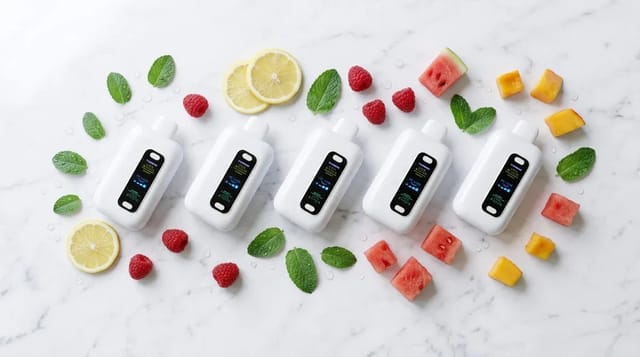
The two Cyclone Pods devices in these lab reports share the same formulation:
- Gust Pro — 20,000 puffs, rechargeable via USB-C, turbo mode, four ice settings, screen display. 14 flavors. $20.
- Lightning — pod system, 10,000 puffs per pod, magnetic connection, LED screen. 13 flavors. $14 per pod, $20 for a starter kit.
Both are made with no added nicotine and no diacetyl, and both are covered by the same Legend Technical Services reports. You can see the full safest vape breakdown for how we compare to other brands on testing, transparency, and ingredients.
The Bottom Line
Popcorn lung is a real condition caused by diacetyl inhalation. It was first documented in factory workers, and diacetyl was later found in e-cigarette liquids. No confirmed case of popcorn lung from vaping has appeared in medical literature, but the absence of evidence isn't evidence of absence — it means we're still waiting on long-term data.
The risk factor you can control is whether your vape contains diacetyl in the first place. The FDA doesn't require brands to test. Most don't publish results. Some don't test at all.
If you vape, pick a product where you can trace the ingredients back to a lab report with a work order number and a detection method. Not a marketing claim. Not a label. A report from an accredited lab that you can verify independently.
That's the standard we hold ourselves to. It should be the minimum for the industry.
For more on what goes into vape liquid and how to evaluate ingredient lists, read our 10 evidence-based vaping facts. If you are considering quitting nicotine vaping entirely, our benefits of quitting vaping timeline covers what to expect week by week. And if you are concerned about oral health effects, see what dentists actually look for when they examine a vaper's mouth.