No — vaping without nicotine is not risk-free, and any honest answer has to start there. Taking out the nicotine removes the addictive drug and the tar and carbon monoxide of burning tobacco, but you're still heating propylene glycol, vegetable glycerin, and flavorings into an aerosol and pulling it into your lungs. In a 2019 Radiology study (PMID: 31429679), a single nicotine-free vaping session temporarily reduced blood flow and stiffened the arteries of healthy adults who had never smoked. "Nicotine-free" means lower risk than a cigarette or a nicotine vape. It does not mean safe.
We've sold nicotine-free vapes since 2018, and we'd rather tell you this straight than sell you a fantasy. Below is what the research actually shows, where the real risks are, why some products labeled "0mg" aren't, and what separates a tested nicotine-free vape from a mystery one.
Is Vaping Without Nicotine Safe?
The short answer: safer than smoking or nicotine vaping, but not safe in absolute terms. "Safe" and "safer" are different words, and most marketing blurs them on purpose.
Cleveland Clinic puts it plainly in its 2026 review of nicotine-free vaping: even without nicotine, vapes can contain volatile organic compounds that may damage your lungs and enter your bloodstream. A 2025 systematic review in the Journal of Clinical Medicine (PMID: 41464617) reviewed the cardiovascular evidence and concluded that nicotine-free e-cigarettes "produce reproducible acute cardiovascular effects" and "should not be regarded as risk-free."
Think of it as a ladder, not a light switch:
- Combustible cigarettes — the most harmful. Tar, carbon monoxide, 7,000+ combustion chemicals.
- Nicotine vapes — no combustion, but the nicotine is addictive and raises heart rate and blood pressure.
- Nicotine-free vapes — no addictive drug, no combustion, but still an inhaled aerosol with its own risks.
- Not vaping at all — the only zero-risk option, and we'll say that even though we sell vapes.
What "Nicotine-Free" Removes — and What It Doesn't
Removing nicotine takes away two big things: chemical addiction and the cardiovascular load nicotine itself puts on your heart. That's real, and it matters. What it leaves behind is the delivery system: a heated aerosol of PG, VG, and flavor compounds.
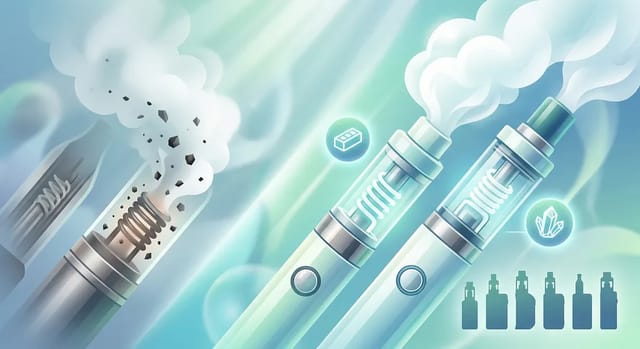
Your lungs evolved for gas exchange — oxygen in, carbon dioxide out — not for processing warm propylene glycol and aerosolized flavoring. That's the part "0mg" on the label doesn't change. If you want the full breakdown of what's actually in the cloud, we cover it in is vaping just water vapor — spoiler: it isn't.
What the Research Shows About Nicotine-Free Vaping
Three findings are worth knowing before you decide, and each comes from a named, peer-reviewed source rather than a vibe.
It affects your blood vessels — even in one session
The 2019 Radiology study (PMID: 31429679), covered by the NIH's National Heart, Lung, and Blood Institute, used MRI to measure blood flow before and after 31 healthy adults vaped a nicotine-free e-cigarette once. Flow through the femoral artery dropped and the vessel lining showed reduced function immediately after. One session. No nicotine. The effect was temporary, but it tells you the aerosol itself — not just the nicotine — does something to your circulation.
Heated flavorings can form new compounds
A 2015 New England Journal of Medicine letter (PMID: 25607446) found that at higher power settings, e-liquid can generate formaldehyde-releasing agents that aren't in the liquid you pour in — they're created by heating it. The dose depends heavily on the device and wattage, and the finding was debated, but the mechanism is real: the aerosol you inhale is not identical to the liquid in the tank.
Some flavorings carry their own risk
A 2016 study in Environmental Health Perspectives (PMID: 26642857) tested 51 flavored e-cigarettes and detected diacetyl — a buttery flavoring chemical linked to the irreversible lung disease bronchiolitis obliterans, nicknamed "popcorn lung" — in 39 of them. Diacetyl is safe to eat and dangerous to inhale, and it has nothing to do with nicotine. It's about what's in the flavor.
That last one is exactly where a tested product and an untested one stop being interchangeable — which brings us to the label problem.
The Label Problem: "Nicotine-Free" Vapes That Aren't
Here's the risk almost no brand will tell you about: a vape labeled "0mg" or "nicotine-free" is only nicotine-free if someone actually tested it. Shared manufacturing lines, poor cleaning between batches, and false labeling all mean some "nicotine-free" products contain measurable nicotine. Google's own AI summary on this question lists "unregulated labels" as the first hidden danger, and it's right.
This is the one place we can point to our own numbers instead of someone else's. We sent 16 Gust Pro and Lightning flavors to Legend Technical Services, an ISO 17025-accredited lab in St. Paul, Minnesota, for nicotine testing by LC-MS/MS with a detection limit of 0.063 µg/g (work order #2503988). 13 came back non-detect for nicotine. Three showed trace amounts — Lush Ice at 0.85, and two tobacco-flavored pods at 24 and 26 µg/g — almost certainly shared-line carryover, which is exactly why testing matters. That panel tested nicotine only. Our e-liquids are made without diacetyl and without vitamin E acetate, the additive tied to the 2019 EVALI lung-injury outbreak.
We publish the full results because "trust us, it's clean" is not a lab report. When you shop any nicotine-free vape — ours or anyone's — the question that separates a real product from a gamble is: can they show you the test? If they can't, you don't actually know what's in the 0mg.
Is Vaping Without Nicotine Safe During Pregnancy?
No. There is no established safe level of vaping during pregnancy, with or without nicotine. Even nicotine-free aerosol exposes a developing fetus to propylene glycol, vegetable glycerin, and heated flavorings, and the ultrafine particles themselves are a concern. Major obstetric guidance advises against vaping of any kind during pregnancy. If you're pregnant and using vaping to stay off cigarettes, that's a conversation for your OB, not a product page.
Are Nicotine-Free Vapes Addictive?
Chemically, no — without nicotine there's no drug to build a dependence on. Behaviorally, it's more complicated. The hand-to-mouth motion, the routine, the thing to do with your hands when stressed: that habit loop is real, and a nicotine-free vape keeps it running. For someone stepping down off nicotine, that can be the whole point. For someone who never vaped, it's a habit worth not starting. We walk through the behavioral side in our vape withdrawal timeline.
What's the Point of a Zero-Nicotine Vape, Then?
People pick them for three reasons, and there's one thing they're not.
- Stepping down off nicotine. Some people drop their nicotine strength to zero while keeping the ritual, then work on the ritual separately. Note that zero-nicotine vapes are not FDA-approved cessation devices, and no study to date proves them as a quit tool — they're a bridge some people use, not approved medicine.
- Flavor and ritual without the drug. If you like the act and don't want addiction, 0mg gives you the experience minus the dependence.
- Never wanting nicotine in the first place. Plenty of people just never want the addictive part.
What it's not: a health product. A zero-nicotine vape is a lower-risk choice than smoking, not a wellness upgrade. If your goal is a calmer nervous system rather than a nicotine substitute, the honest answer usually isn't inhaling anything — we get into that in anxiety pens and stress-relief vapes.
How to Lower the Risk If You're Going to Vape Anyway
We're not going to pretend the zero-risk answer isn't "don't vape." But if you've weighed that and you're going to use a nicotine-free vape, the difference between a smarter choice and a reckless one comes down to a few checkable things:
- Demand third-party lab results. Not "lab tested" on the box — an actual downloadable report naming the lab and the method. No report, no confidence.
- Confirm no diacetyl and no vitamin E acetate. These are the two additives with the clearest inhalation-harm record, and neither belongs in what you breathe.
- Verify the nicotine claim is measured, not asserted. "0mg" is a marketing number until a lab confirms it.
- Skip the mystery disposables. Unbranded gas-station devices are the ones most likely to be mislabeled and untested.
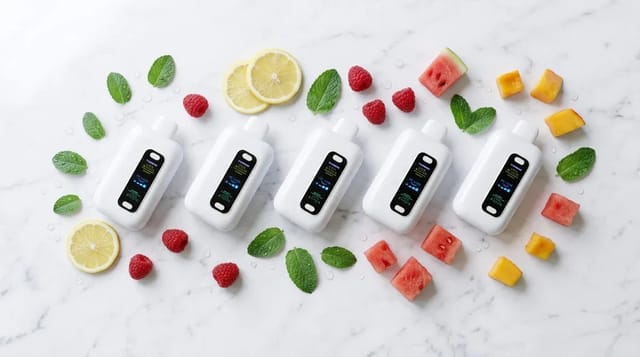
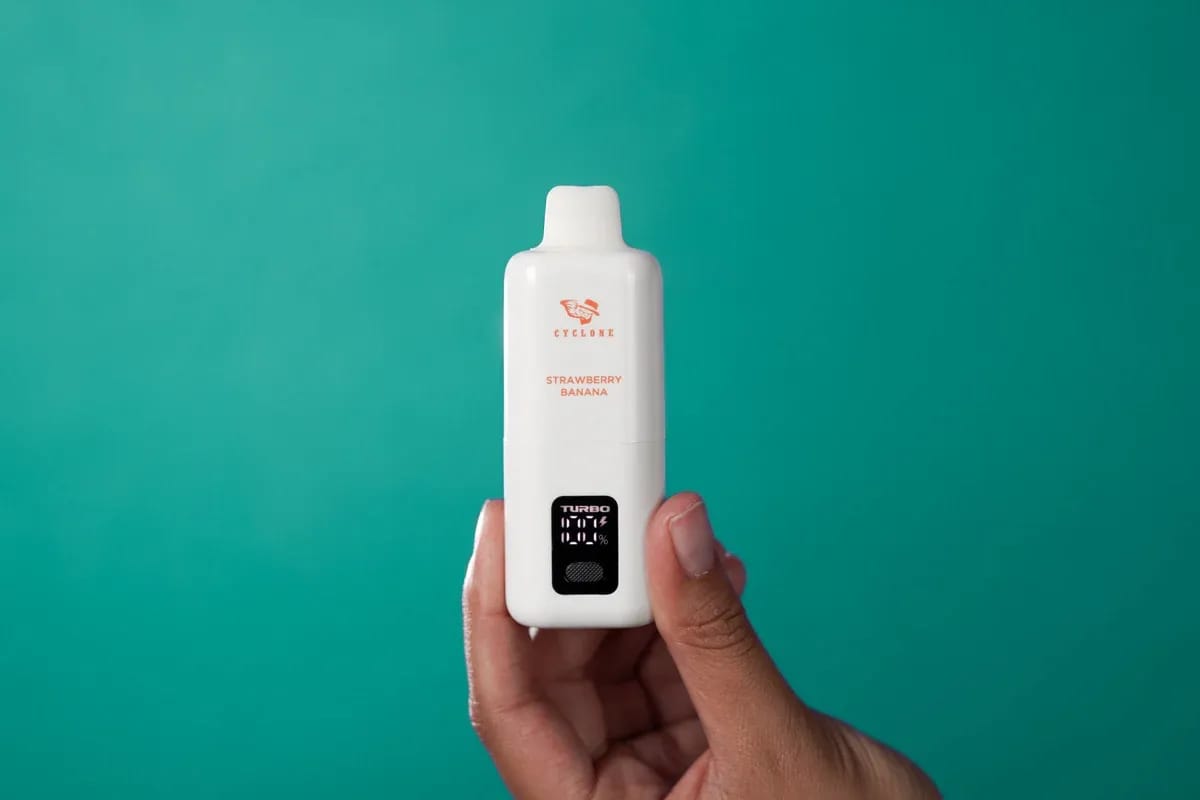
That's the standard we hold our own products to. Our nicotine-free vape lineup — the Gust Pro and the Lightning pod system — use USP-grade VG and PG, food-grade flavorings, and publish their Legend lab results. We still won't call them "safe." We'll call them tested, nicotine-verified, and honest about what inhaling anything costs. If you're deciding between options, our product guide walks through it, and for the broader ranking of low-risk choices see our safest vape breakdown and healthiest vape without nicotine guide.
One more myth worth killing: a single puff of a nicotine-free vape is not "equal to a cigarette." Nicotine content, combustion, and delivery are all different — we did the actual math in how many puffs equal a cigarette.
The Honest Bottom Line
Vaping without nicotine removes the most addictive and most cardiovascularly taxing part of the equation, and for someone coming off cigarettes or nicotine that's a meaningful step down. But the peer-reviewed evidence — cardiovascular effects from a single session, formaldehyde formation at high heat, diacetyl in most flavored products — says the aerosol itself is not harmless. The safest vape is no vape. The next-best thing is a nicotine-free one you can actually verify: real lab results, no diacetyl, no vitamin E acetate, and a nicotine number a lab measured instead of a marketer typed.