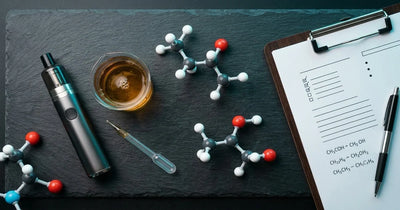

Quitting Smoking Timeline: What Happens to Your Body Hour by Hour
Updated: Conrad Kurth 16 min readWithin 20 minutes of your last cigarette, your heart rate and blood pressure drop to normal levels. By 72 hours, nicotine is completely eliminated from your body and bronchial tubes begin to relax — marking the peak of withdrawal but also the moment your lungs start fighting back.
The quitting smoking timeline is one of the most studied sequences in medicine. The 2020 Surgeon General's Report on Smoking Cessation confirmed that the health benefits of quitting begin almost immediately and accumulate for decades. What most timelines skip is the behavioral side — what to actually do at each stage when cravings hit and your hands don't know where to go. We'll cover both.
The First 24 Hours After Quitting
The first day is a compressed version of everything that comes after — rapid physiological improvement running headfirst into intense withdrawal. Here's what happens hour by hour.
20 Minutes
Your heart rate and blood pressure begin dropping back toward normal. Nicotine causes vasoconstriction (narrowing of blood vessels) and stimulates adrenaline release, which elevates both metrics. Remove the nicotine and your cardiovascular system starts recalibrating almost immediately. The American Cancer Society includes this as the first milestone in their quit-smoking benefits timeline, and it's backed by measurable hemodynamic data.
2 Hours
Heart rate has normalized further. Peripheral circulation improves — your fingertips and toes may feel warmer as blood flow returns to extremities. This is also when the first nicotine cravings typically hit. The half-life of nicotine in the human body is roughly two hours, meaning blood nicotine levels have dropped by 50% at this point.
Withdrawal symptoms arriving at this stage: irritability, restlessness, increased appetite, and difficulty concentrating. These are not psychological — they're pharmacological responses to declining nicotine receptor stimulation in the brain.
8–12 Hours
Carbon monoxide levels in your blood drop by half. Carbon monoxide binds to hemoglobin 200–250 times more effectively than oxygen does, which is why smokers' blood carries less oxygen to tissues and organs. By 12 hours post-quit, your blood oxygen levels approach those of a non-smoker. The CDC documents this milestone as one of the earliest measurable improvements from cessation.
You'll likely notice that breathing feels slightly easier. It's subtle, but the improved oxygen saturation is real.
24 Hours
Your risk of heart attack begins to decrease. Smoking increases heart attack risk through multiple pathways: arterial plaque buildup, increased blood clotting tendency, coronary artery spasm, and reduced oxygen delivery. Within 24 hours, several of these acute risk factors start reversing. Blood pressure is more stable, carbon monoxide is clearing, and platelet function begins normalizing.
This is also when the behavioral challenge intensifies. Every routine that involved a cigarette — morning coffee, post-meal break, the drive to work — now has a gap. Your hands reach for something that isn't there. That oral fixation and hand-to-mouth habit was reinforced thousands of times over your smoking career, and it doesn't vanish with the nicotine.
Days 2–3: The Hardest Part
If you've heard that the first 72 hours are the worst, that's accurate. The science backs it up.
48 Hours
Damaged nerve endings begin to regrow. Your senses of taste and smell — dulled by the 7,000+ chemicals in cigarette smoke — start returning. Former smokers routinely report that food tastes noticeably different at this stage. Everyday smells become sharper, sometimes uncomfortably so (you may suddenly notice how much your car or jacket smells like smoke).
Nicotine is almost entirely eliminated from your system by 48 hours. Blood nicotine levels are negligible. But your brain's nicotinic acetylcholine receptors — which upregulated during months or years of smoking to accommodate constant nicotine supply — are now screaming for stimulation they're not getting. This neurochemical mismatch is what makes Day 2 so difficult.
72 Hours: Peak Withdrawal
Nicotine is fully cleared from your body. Bronchial tubes, which constricted chronically in response to smoke irritation, begin to relax. You may notice improved airflow and slightly easier breathing. Lung capacity starts its slow climb back toward normal.
The trade-off: this is statistically the peak of physical withdrawal symptoms. Headaches, nausea, cramping, sweating, anxiety, and intense cravings all converge around the 72-hour mark. According to the 2020 Surgeon General's Report, nicotine withdrawal symptoms peak within the first three days and gradually decline over the following two to four weeks.
This is the inflection point. If you can push through Days 2–3, the worst of the physical withdrawal is behind you.
The 3-3-3 Rule for Quitting Smoking
The 3-3-3 rule is a popular framework for understanding the withdrawal timeline: the first 3 days are the most physically intense (nicotine leaving your system), the first 3 weeks are the hardest psychologically (habit patterns still intact), and after 3 months, the majority of withdrawal symptoms have subsided and new behavioral patterns are forming.
It's a simplification — individual experiences vary based on how long you smoked, how much you smoked, and your personal neurochemistry — but as a mental framework for what to expect, it holds up reasonably well against the clinical data.
Weeks 1–4: Acute Withdrawal Phase
After the 72-hour peak, withdrawal symptoms don't disappear — they gradually decrease in frequency and intensity. Weeks one through four are the acute withdrawal window.
Circulation continues improving. Blood flow to your gums, skin, and extremities increases as vascular function recovers from chronic nicotine-induced constriction.
Lung function begins measurable recovery. The American Cancer Society notes that lung function can improve by up to 30% within the first two weeks to three months after quitting. Cilia — the tiny hair-like structures that line your airways and sweep out mucus and debris — begin regrowing. They were paralyzed by cigarette smoke. As they reactivate, you may actually cough more during this period, not less. That increased coughing is a sign your lungs are cleaning themselves.
Cravings become less frequent but remain intense. The average craving lasts three to five minutes. They come in waves — often triggered by specific situations (finishing a meal, socializing with other smokers, stress events) rather than the constant background pull of the first few days.
This is the phase where behavioral substitution matters most. The chemical dependency is weakening, but the habits — the routines, the hand-to-mouth motion, the oral fixation, the deep inhale-exhale as a stress response — are still deeply wired. You need something to do with your hands and your mouth. Some people use gum, toothpicks, or sunflower seeds. Others find that nicotine-free alternatives that replicate the physical ritual — the inhale, the exhale, something to hold — help bridge the gap during this critical window. The key distinction: you're replacing the behavior, not the substance.
Months 1–9: Your Body Rebuilds
Once you clear the one-month mark, your body shifts from damage control to active repair.
Cilia fully regenerate. Between one and nine months post-quit, the cilia lining your airways complete their regrowth cycle. This is the period where chronic coughing, sinus congestion, and shortness of breath steadily decline. You'll notice you can exercise harder, climb stairs easier, and recover faster from physical exertion.
Infection resistance improves. Functioning cilia dramatically improve your lungs' ability to clear bacteria and viruses. Former smokers in this window see measurable reductions in bronchitis and respiratory infections.
Energy levels stabilize. Between better oxygen saturation (no more carbon monoxide competing with oxygen in your blood), improved circulation, and deeper sleep (nicotine disrupts sleep architecture), most former smokers report a significant improvement in daily energy levels by month three.
Weight management becomes the new challenge. Nicotine is a mild appetite suppressant and increases basal metabolic rate by roughly 7–15%. Without it, many former smokers gain 5–10 pounds in the first few months. This is normal and manageable — the cardiovascular benefits of quitting far outweigh the modest weight gain.
If you're still using nicotine-free behavioral tools at this stage, that's fine. The goal isn't to white-knuckle your way through every craving — it's to avoid relapsing back to cigarettes or nicotine. A nicotine-free vape that satisfies the hand-to-mouth ritual without delivering nicotine, tobacco, or the 7,000+ chemicals in cigarette smoke is a fundamentally different risk profile than lighting up again. Talk to your healthcare provider about what cessation support makes sense for your situation.
The 1-Year Mark and Beyond
The long-term benefits of quitting smoking are some of the most compelling statistics in preventive medicine. They come from decades of epidemiological research, including the Surgeon General's reports from 1990, 2004, and 2020.
| Time Since Quitting | Health Milestone | Source |
|---|---|---|
| 1 year | Coronary heart disease risk drops by 50% compared to a current smoker | Surgeon General's Report, 2020 |
| 2–5 years | Stroke risk drops to that of a non-smoker | American Cancer Society |
| 5 years | Risk of mouth, throat, esophagus, and bladder cancer cut in half | CDC Smoking Cessation Fact Sheet |
| 10 years | Lung cancer death risk drops by 50% compared to a current smoker. Risk of larynx and pancreatic cancer decreases. | Surgeon General's Report, 2020 |
| 15 years | Coronary heart disease risk equals that of a non-smoker — as if you never smoked | American Cancer Society |
Read that 15-year row again. Fifteen years after quitting, your heart disease risk profile is statistically indistinguishable from someone who never picked up a cigarette. The damage is not permanent. The body's capacity to heal from smoking is remarkable — but only if you actually quit.
The 2020 Surgeon General's Report added important nuance: quitting at any age produces meaningful health gains, but quitting before age 40 reduces the risk of dying from smoking-related disease by approximately 90%. Quitting before 50 still cuts that risk by about two-thirds. There is no "too late" to benefit from quitting, but earlier is better.
Full Quitting Smoking Timeline
Here's every major milestone consolidated into one reference table:
| Time After Last Cigarette | What Happens in Your Body |
|---|---|
| 20 minutes | Heart rate and blood pressure drop to normal levels |
| 2 hours | Heart rate normalizes further; peripheral circulation improves; first cravings begin |
| 8–12 hours | Blood carbon monoxide levels drop by half; oxygen levels approach normal |
| 24 hours | Heart attack risk begins decreasing; blood pressure stabilizes |
| 48 hours | Nerve endings begin regrowing; taste and smell start returning |
| 72 hours | Nicotine fully eliminated; bronchial tubes relax; peak withdrawal symptoms |
| 1–2 weeks | Circulation improves significantly; cilia begin regrowing |
| 2 weeks–3 months | Lung function increases up to 30%; exercise tolerance improves |
| 1–9 months | Cilia fully regenerate; coughing and shortness of breath decline substantially |
| 1 year | Coronary heart disease risk halved vs. current smoker |
| 5 years | Stroke risk equals non-smoker; multiple cancer risks halved |
| 10 years | Lung cancer death risk halved; larynx and pancreatic cancer risk decrease |
| 15 years | Coronary heart disease risk equals non-smoker |
Managing Cravings and Oral Fixation
Nicotine addiction has two components that work in tandem: the chemical dependency (your brain's demand for the drug) and the behavioral habit (the physical rituals surrounding the act of smoking). Most cessation programs focus almost entirely on the chemical side — patches, gums, prescription medications like varenicline (Chantix). These are effective tools, and if your doctor recommends them, listen to your doctor.
But the behavioral component gets underserved. After the nicotine clears your system (72 hours), the chemical cravings gradually fade. The habits persist for months. The hand-to-mouth motion. The deep inhale when you're stressed. The social ritual of stepping outside for a break. The oral fixation — needing something in your mouth. These are conditioned responses built over thousands of repetitions, and willpower alone doesn't rewire them efficiently.
Strategies That Address the Physical Habit
Hand-to-mouth replacement. Your hands were trained to reach for a cigarette hundreds of times per day. Anything that occupies that motor pattern helps: a pen, a stress ball, a straw cut to cigarette length. Some former smokers find that holding and using a nicotine-free vape replicates the physical ritual — the grip, the inhale, the visible exhale — without reintroducing nicotine or tobacco. Products like the Cyclone Pods Gust Pro (20,000 puffs, $20, USB-C rechargeable) and the Lightning pod system ($14/pod, 10,000 puffs) deliver zero nicotine, zero tobacco, and zero diacetyl. They're not medical cessation devices — the FDA hasn't approved any vape for that purpose — but as behavioral substitutes that eliminate the addictive substance, they represent a fundamentally different risk category than lighting another cigarette.
Oral fixation management. The need to have something in your mouth doesn't go away just because the nicotine did. Sugar-free gum, hard candy, and toothpicks are common solutions. Nicotine-free oral pouches are another option — Cyclone Pods Focus Pouches ($9.99/pack of 20) contain zero nicotine and zero tobacco, with a functional blend of ashwagandha, lion's mane, reishi, cordyceps, bacopa monnieri, and 50mg of guarana-derived caffeine per pouch. The adaptogenic mushroom blend may help with the stress and focus disruption that accompanies early withdrawal, though individual responses vary. Available in Cinnamon, Mint, Peach, and Wintergreen. These are not cessation products and should not replace medical advice — but they address the oral habit without nicotine.
Breathing exercises. The deep inhale-exhale pattern of smoking is actually a crude breathing exercise. When you feel a craving, try deliberate box breathing: inhale for 4 seconds, hold for 4 seconds, exhale for 4 seconds, hold for 4 seconds. Repeat three to four times. This activates the parasympathetic nervous system and reduces the acute stress that triggers cravings. It works because you're using the same motor pattern (deep breathing) while redirecting it toward something that actually reduces anxiety.
Consult your healthcare provider. NRT (nicotine replacement therapy), prescription medications, and behavioral counseling are evidence-based cessation tools with decades of clinical data behind them. The nicotine patch, nicotine gum, and medications like varenicline and bupropion have proven efficacy for helping smokers quit. Behavioral tools — whether that's a nicotine-free vape, a pouch, or a chewed pencil — work best alongside professional guidance, not as a replacement for it.
Do Nicotine Cravings Ever Go Away?
Yes — but the timeline depends on what type of craving you're talking about.
Physical nicotine cravings (the ones driven by receptor withdrawal) peak at 72 hours and decline sharply over the first two to four weeks. By three months, most former smokers report that the constant, nagging physical craving is gone.
Situational cravings (triggered by specific contexts — a bar, a stressful phone call, finishing a meal) can persist for months or even years at decreasing intensity. These are conditioned responses, not chemical withdrawal. Your brain associated specific situations with nicotine reward, and those neural pathways don't disappear overnight. They weaken with time and repeated exposure without reinforcement.
Occasional urges. Former smokers who've been quit for 5, 10, even 20 years occasionally report a fleeting urge in very specific contexts. These are brief, easily dismissed, and not a sign that you're "still addicted." They're memory traces — your brain recalling a former habit pattern — and they carry no pharmacological weight.
The practical answer: the overwhelming majority of cravings are gone within three to six months. Occasional, mild situational urges may linger for a year or more but become trivially easy to manage.
Quitting Smoking vs. Quitting Vaping: Different Timelines
If you switch from smoking to vaping (with nicotine) as an intermediate step, you're still taking in nicotine — so the chemical dependency persists. The major benefit is eliminating combustion: no tar, no carbon monoxide, no 7,000+ chemicals produced by burning tobacco. A 2015 review commissioned by Public Health England (McNeill et al.) estimated that vaping is roughly 95% less harmful than smoking, primarily because it removes combustion from the equation.
The quitting vaping timeline is generally shorter and less severe than the quitting smoking timeline. Nicotine withdrawal is similar in both cases — the 72-hour peak, the two-to-four-week acute window — but smoking withdrawal includes additional symptoms from the thousands of non-nicotine chemicals your body was processing. Former smokers deal with more intense coughing (as lungs clear tar deposits), greater metabolic disruption, and a longer cardiovascular recovery arc.
The step-down pathway some people use: cigarettes → nicotine vape → nicotine-free vape → nothing. Each step reduces the risk profile. The first step removes combustion chemicals. The second removes nicotine. The third removes inhalation entirely. Not everyone needs every step, and the specific approach should be discussed with your healthcare provider — but it's a framework that addresses both the chemical and behavioral components of the addiction.
Worth noting: vaping vs. smoking is a harm reduction comparison, not a harm elimination claim. Neither is risk-free. The goal is quitting entirely.
What Makes Quitting Smoking So Hard?
Cigarettes are among the most addictive consumer products ever engineered. That's not hyperbole — it's pharmacology.
Inhaled nicotine reaches the brain within 10–20 seconds, faster than intravenous injection for most other drugs. Each cigarette delivers approximately 1–2 mg of absorbed nicotine in a rapid spike-and-crash cycle that creates powerful reinforcement. A pack-a-day smoker takes roughly 200 puffs per day, meaning the reward circuit gets stimulated 200 times — every single day.
The 2020 Surgeon General's Report noted that cigarette smoking causes more than 480,000 deaths per year in the United States — more than alcohol, illegal drug use, motor vehicle accidents, and firearm-related incidents combined. Despite this, roughly 28.8 million American adults still smoke (CDC, 2022 NHIS data). More than half of current smokers attempt to quit each year. Fewer than 10% succeed without assistance.
That low success rate isn't weakness. It's the product of a drug delivery system optimized for addiction combined with a behavioral habit reinforced tens of thousands of times. Effective quitting almost always requires multiple strategies working in parallel: pharmacological support (NRT, varenicline, bupropion), behavioral tools (something to do with your hands and mouth), psychological support (counseling, support groups), and environmental changes (removing triggers, avoiding smoking contexts).
If you've tried to quit before and failed, that's not a reason to stop trying. The CDC reports that most successful quitters required multiple attempts before achieving long-term abstinence. Every attempt teaches you something about your triggers and what works for your specific situation.
Your Next Steps
The timeline in this article is based on population-level data from the Surgeon General, the American Cancer Society, and the CDC. Your individual experience will vary depending on how long you smoked, how heavily, and your overall health profile. But the core trajectory is consistent: your body starts healing within minutes of your last cigarette and continues for years.
If you're ready to quit or currently in the process:
- Talk to your doctor about evidence-based cessation support — NRT, prescription medications, and counseling programs
- Plan for the behavioral side — decide in advance what you'll do with your hands and mouth when cravings hit
- Expect the 72-hour peak — knowing it's coming makes it more manageable, not less
- Don't count a relapse as failure — most successful quitters needed multiple attempts
If you're exploring nicotine-free options to address the behavioral habit, our full product line is independently lab-tested by Legend Technical Services (ISO 17025 accredited, LC-MS/MS, detection limit 0.063 µg/g) to confirm zero nicotine. We make nicotine-free vapes and caffeine pouches — not cessation devices, but tools that address the physical ritual without the addictive substance. Consult your healthcare provider to determine the best approach for your situation.