
Vaping is roughly 95% less harmful than smoking cigarettes, according to Public Health England and NHS England — a position reaffirmed multiple times since their landmark 2015 evidence review. Cigarettes produce over 7,000 chemicals when burned (CDC data), at least 70 of which are known carcinogens. Vapes heat liquid without combustion, eliminating tar and most of those toxic byproducts entirely.
That doesn't make vaping safe. It makes it a substantially lower-risk alternative to one of the deadliest consumer products ever sold. Here's what the data actually says — and where nicotine-free vaping fits into the picture.
Vaping vs Smoking: Health Comparison
The gap between vaping and smoking isn't close. Combustion is the problem. When tobacco burns at 600-900°C, it releases thousands of compounds — carbon monoxide, formaldehyde, benzene, hydrogen cyanide, arsenic, ammonia, and dozens more. Vapes operate at 100-250°C and heat a liquid, not dried plant matter. No combustion means no tar, no carbon monoxide, and vastly fewer toxic compounds.
Here's a side-by-side breakdown:
| Factor | Cigarette Smoking | Vaping (Nicotine) | Vaping (Nicotine-Free) |
|---|---|---|---|
| Chemicals produced | 7,000+ (CDC), 70+ carcinogens | ~100 identified compounds, far fewer toxicants | Fewer still — no nicotine metabolites |
| Tar exposure | Yes — primary driver of lung disease | None — no combustion | None |
| Carbon monoxide | Yes — reduces oxygen transport | None or negligible | None or negligible |
| Cancer risk | High — 15x lung cancer risk vs non-smokers | Significantly lower (long-term data still emerging) | Even lower risk profile |
| Cardiovascular impact | Doubles heart disease risk (CDC) | Some vascular effects from nicotine | Minimal known cardiovascular impact |
| Lung damage | COPD, emphysema, chronic bronchitis | Some airway irritation; no COPD link established | Minimal airway irritation reported |
| Secondhand exposure | Kills ~41,000 US adults/year (CDC) | Aerosol dissipates fast; much lower particulate | Same — no nicotine in exhaled aerosol |
| Addiction potential | Extremely high (nicotine + MAOIs in smoke) | High (nicotine delivery) | Very low — no nicotine, no dependence mechanism |
| Teeth/gum damage | Severe — staining, gum disease, tooth loss | Some gum irritation from nicotine | Minimal oral health effects |
| Smell/residue | Persistent odor, yellow stains on walls/clothes | Mild, dissipates quickly | Mild, dissipates quickly |
The WHO takes a more cautious stance than the UK. They acknowledge vaping is likely less harmful but emphasize that "less harmful" doesn't mean "harmless," and they warn against using vapes as a gateway product for non-smokers. We think that's a fair position. Nobody should start vaping who wasn't already smoking or looking for an alternative to nicotine.
Is Smoking Better Than Vaping?
No. By every health metric measured so far, smoking is worse. Cigarettes deliver tar, carbon monoxide, and at least 70 confirmed carcinogens through combustion. Vapes heat liquid at far lower temperatures without combustion, producing a fraction of the toxic compounds. Public Health England concluded vaping is roughly 95% less harmful. The Royal College of Physicians put long-term vaping risk at under 5% of smoking's. The CDC reports 480,000 smoking deaths per year in the US; no comparable death toll exists for vaping. Smoking is not better than vaping by any available measure.
What Does the Research Say?
The science isn't settled, but the direction is clear. Every major review comparing vaping to smoking has reached the same conclusion: vaping is substantially less harmful. The debate is over degree, not direction.
Public Health England (2015) — The 95% Figure
In 2015, Public Health England published an independent evidence review concluding that e-cigarettes are approximately 95% less harmful than combustible cigarettes. This became the most-cited statistic in the vaping debate. NHS England has reaffirmed this position repeatedly, most recently calling vaping "far less harmful than smoking" in their official guidance.
Critics point out the 95% figure was partly based on expert opinion rather than longitudinal data. That's true, and PHE acknowledged it. But every subsequent study has supported the general direction. The gap between vaping and smoking harm is massive.
Royal College of Physicians (2016)
The Royal College of Physicians — one of the oldest medical institutions in the world — published "Nicotine without smoke: Tobacco harm reduction" in 2016. Their conclusion: the hazard from long-term vaping is "unlikely to exceed 5% of the harm from smoking tobacco." They recommended vaping as a harm reduction strategy for smokers who can't or won't quit nicotine entirely.
CDC Smoking Death Data
Cigarette smoking kills approximately 480,000 Americans per year, more than alcohol, car accidents, firearms, HIV, and illegal drugs combined (CDC, 2024). Worldwide, tobacco kills over 8 million people annually (WHO). There is no comparable death toll attributed to vaping. The two products are not in the same risk category.
Hajek et al. (2019) — E-Cigarettes for Smoking Cessation
A randomized clinical trial published in the New England Journal of Medicine (PMID: 30699054) found that e-cigarettes were nearly twice as effective as nicotine replacement therapy (NRT) for smoking cessation. At one year, 18% of the e-cigarette group had quit smoking compared to 9.9% of the NRT group. This is the strongest clinical evidence we have that vaping can help people stop smoking.
Biomarker Studies
Multiple studies have measured toxic and carcinogenic biomarkers in smokers who switched to vaping. A study by Shahab et al. (PMID: 28166548), published in the Annals of Internal Medicine, found that long-term e-cigarette users had significantly lower levels of carcinogens and toxic chemicals compared to smokers — with levels similar to people using nicotine patches.
What We Don't Know Yet
Vaping has only been widespread since the early 2010s. We don't have 30-year longitudinal data the way we do with cigarettes. Some researchers have raised concerns about potential effects of inhaling flavoring compounds, long-term PG/VG exposure, and metals from coil heating. These are legitimate questions that deserve continued research.
The honest position: vaping is not proven safe. But the available evidence consistently shows it is far, far less harmful than smoking. For current smokers, switching represents a significant harm reduction. For non-smokers, there is no reason to start.
Nicotine-Free Vaping: A Third Option
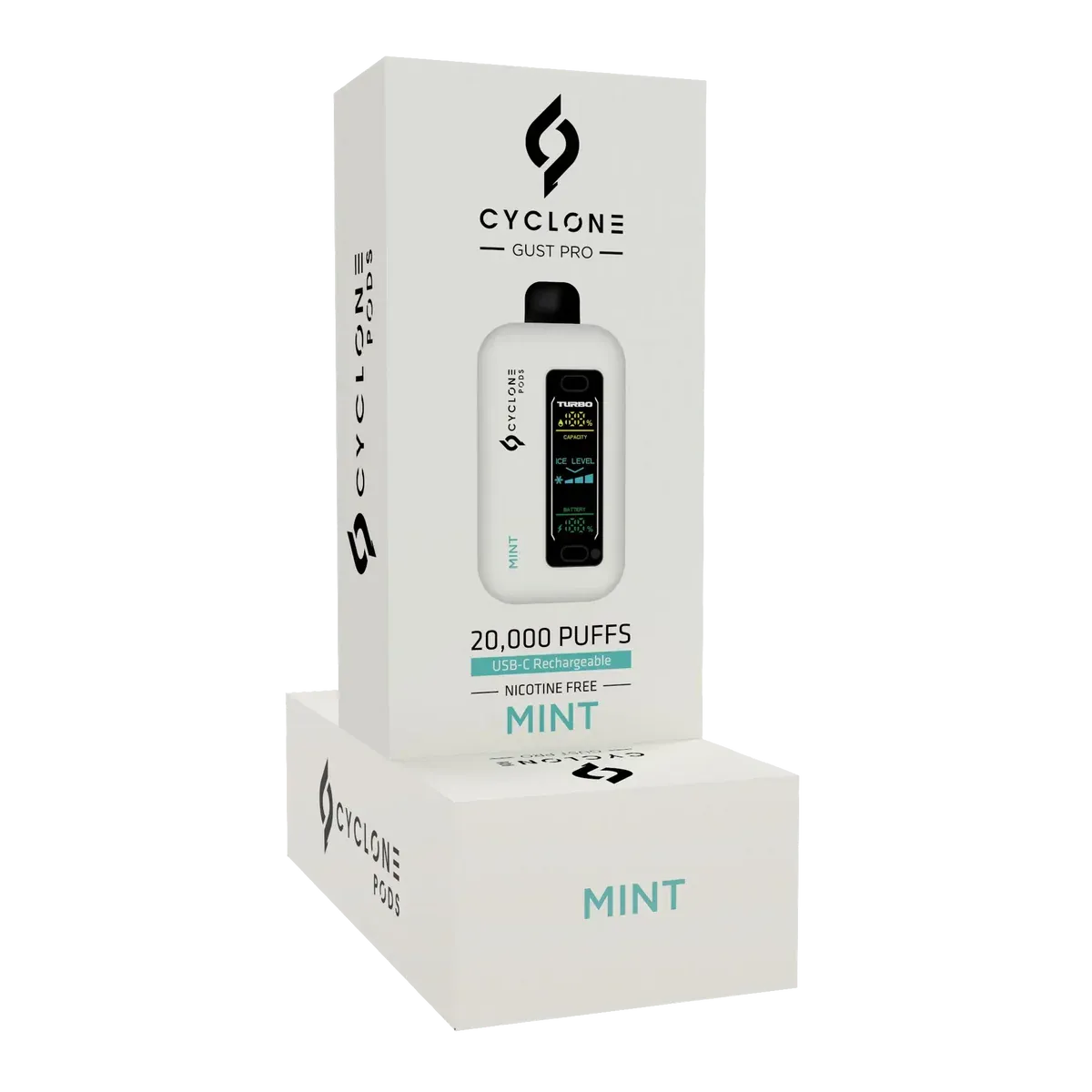
Most of the vaping-vs-smoking conversation assumes nicotine is part of the equation. But a growing category of nicotine-free vapes removes the most controversial variable entirely.
No nicotine means no addiction mechanism. No cardiovascular effects from nicotine. No withdrawal symptoms if you stop. No nicotine metabolites circulating in your body. What you're left with is the aerosol itself — VG, PG, and flavoring.
We've been making nicotine-free vapes at Cyclone Pods since 2018. Our liquid uses USP-grade vegetable glycerin, propylene glycol, and food-grade flavorings. No nicotine, no tobacco derivatives, no diacetyl, no vitamin E acetate. We publish our third-party lab results through Legend Technical Services (ISO 17025 accredited, St. Paul, MN) using LC-MS/MS methodology with a detection limit of 0.063 µg/g.
Other brands in this space include ARRØ (plant-based positioning, though they don't publish lab results) and HealthVape (which makes wellness claims about vitamin delivery through inhalation — claims the FDA has already warned other companies about). If you want to go deeper on how these compare, we wrote an honest breakdown in our safest vapes ranking.
Nicotine-free vaping won't satisfy a nicotine craving — that's the point. It works for people who enjoy the ritual (hand-to-mouth motion, vapor, flavors) without wanting the dependence. Former smokers who've already quit nicotine but miss the habit. People who want something to do with their hands. Stress-relief seekers who want to inhale something that isn't smoke — some brands even market these as anxiety pens for stress relief.
Is it risk-free? No. Inhaling any aerosol introduces some irritation to your airways. But the risk profile is far lower than nicotine vaping, which is itself dramatically lower than cigarettes. It's a spectrum, and nicotine-free sits at the lowest end.
Can Vaping Help You Quit Smoking?
The short answer: the evidence says yes, for many people. The longer answer involves some important caveats.
The Hajek et al. study (PMID: 30699054) showed e-cigarettes were almost twice as effective as patches and gum for quitting smoking. NHS England now actively recommends vaping as a smoking cessation tool and has integrated e-cigarettes into its Stop Smoking Services. The UK is the only major country that has endorsed vaping at the government health system level.
In the US, the picture is different. The FDA has not approved any e-cigarette or vape as a smoking cessation device. Their position is more cautious: they regulate vapes as tobacco products (even nicotine-free ones, in some cases) and emphasize that approved cessation tools include nicotine patches, gum, lozenges, inhalers, nasal spray, and prescription medications like varenicline (Chantix) and bupropion (Zyban).
Here is what we know from real-world data:
- The UK has seen its smoking rate drop from 20.2% in 2011 to approximately 11.6% in 2023, a period that coincides with widespread vaping adoption
- Multiple observational studies show that smokers who switch to vaping see measurable improvements in respiratory symptoms, blood pressure, and biomarker levels within weeks
- Dual use (smoking and vaping simultaneously) provides fewer benefits — the most significant harm reduction comes from complete switching
A common path we see among our customers: start with a nicotine vape to replace cigarettes, then step down to nicotine-free once the chemical dependence is broken, then eventually quit vaping entirely — or keep it as an occasional ritual. The oral fixation and hand motion are real psychological factors. If you're looking for more on this approach, our guide on vaping without nicotine covers the safety data in detail.
One thing we won't do: tell you our products are FDA-approved cessation devices. They aren't. No vape is. If you're quitting smoking, talk to your doctor about the full range of options. Vaping may be one of them, but it should be an informed choice, not a marketing pitch.
Cost Comparison: Smoking vs Vaping
Health gets most of the attention, but cost tells its own story.
| Category | Annual Cost (Estimated) | Notes |
|---|---|---|
| Pack-a-day smoker | $2,500 – $3,500 | $7-10/pack avg. US price × 365 days. Higher in NY, CA ($12-14/pack) |
| Nicotine vaping (disposable) | $900 – $1,500 | Varies widely by device and usage. Pod systems cheaper long-term than disposables |
| Nicotine vaping (refillable) | $300 – $700 | Initial device cost + juice refills. Cheapest option for heavy vapers |
| Nicotine-free vaping (Cyclone Pods) | $240 – $520 | Gust Pro: $20 for 20,000 puffs. Lightning: $20 kit + $14/pod (10,000 puffs each) |
Let's break down the Cyclone Pods math. Our Gust Pro delivers 20,000 puffs for $20. A pack-a-day smoker takes roughly 200 puffs per day (10 puffs per cigarette × 20 cigarettes). At that rate, one Gust Pro lasts about 100 days — roughly three months. That's $80/year for an equivalent-use replacement. Even heavy vapers who go through one per month land at $240/year.
The Lightning pod system works out similarly: $20 for the starter kit, then $14 per pod with 10,000 puffs each. For someone using a pod a month, that's $168/year in pods plus the one-time kit cost.
This isn't an apples-to-apples comparison. Puff counts aren't perfectly equivalent to cigarette draws, and everyone's usage is different. But the direction is clear: vaping costs a fraction of smoking, and nicotine-free vaping costs a fraction of nicotine vaping.
Environmental Impact
Cigarette butts are the most littered item on Earth — 4.5 trillion discarded annually, according to the WHO. Filters contain cellulose acetate (a plastic) that takes 10+ years to decompose and leaches chemicals into soil and water. Tobacco farming drives deforestation, uses heavy pesticides, and accounts for roughly 5% of global deforestation.
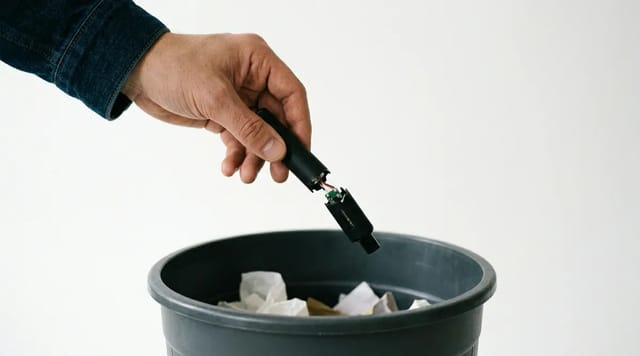
Vaping has its own environmental problems. Disposable vapes generate electronic waste: lithium batteries, plastic housings, and circuit boards that shouldn't go in regular trash. The UK alone discards an estimated 5 million disposable vapes per week. It's a growing problem, and the industry hasn't solved it.
Rechargeable systems are better on this front. Our Lightning pod system uses one rechargeable battery with replaceable pods, reducing waste per-puff significantly compared to fully disposable devices. But honestly, neither vaping nor smoking wins any sustainability awards. If environmental impact is a primary concern, quitting both is the clear answer; our guide to quitting vaping, step by step covers the vaping half.
What About EVALI and Vaping Lung Injuries?
In 2019, a wave of severe lung injuries (EVALI — E-cigarette or Vaping Product Use-Associated Lung Injury) hospitalized 2,807 people and killed 68 in the US. The media initially linked this to all vaping, causing widespread panic.
The CDC's subsequent investigation traced the vast majority of cases to vitamin E acetate — a thickening agent used in illicit THC vape cartridges purchased from black market sources. Not regulated nicotine vapes. Not commercial e-cigarette brands. Black market THC products.
This distinction matters enormously. The EVALI outbreak was not caused by standard vaping products. It was caused by a specific adulterant (vitamin E acetate) in unregulated products. The CDC's final analysis confirmed vitamin E acetate as the primary cause, and cases dropped sharply once that compound was identified and avoided.
Our liquid is made without vitamin E acetate, and we publish our lab results for what we do test. Any reputable commercial vape brand does the same. If you're buying from licensed retailers and established brands, EVALI is not a relevant risk. If you're buying THC cartridges from unregulated sources, that's a different conversation entirely.
Who Should Consider Vaping Instead of Smoking?
We're not going to tell everyone to go buy a vape. But the harm reduction math is straightforward for specific groups:
Current smokers who can't quit cold turkey. Every major health organization agrees: if you're going to use nicotine, vaping delivers it with far fewer toxic byproducts than combustion. Switching completely (not dual use) provides the most benefit.
Former smokers who miss the ritual. You've beaten the nicotine addiction, but you still crave the hand motion, the inhale, the cloud. Nicotine-free vapes give you that without reintroducing the chemical dependency. This is one of the most common reasons our customers buy from us.
People trying to step down gradually. Some people go from cigarettes to nicotine vapes to nicotine-free vapes to nothing. Each step reduces harm. We've heard from hundreds of customers who've followed this exact path. Our article on alternatives to tobacco products covers more options in this space.
Who should NOT start vaping: Non-smokers. Minors. Anyone pregnant. If you don't currently use nicotine or tobacco, there is no health reason to start vaping. Period. The harm reduction argument only applies to people moving from something worse to something less bad.
Not sure where you fall? Our product finder can help you figure out which option fits.
Cyclone Pods: What We Make and Why
We've been making nicotine-free vapes since 2018 out of Santa Monica, California. Every device goes through about a year of development: hardware design, liquid formulation, quality testing. We're not a brand that showed up last year with repackaged Chinese hardware and a nice logo.
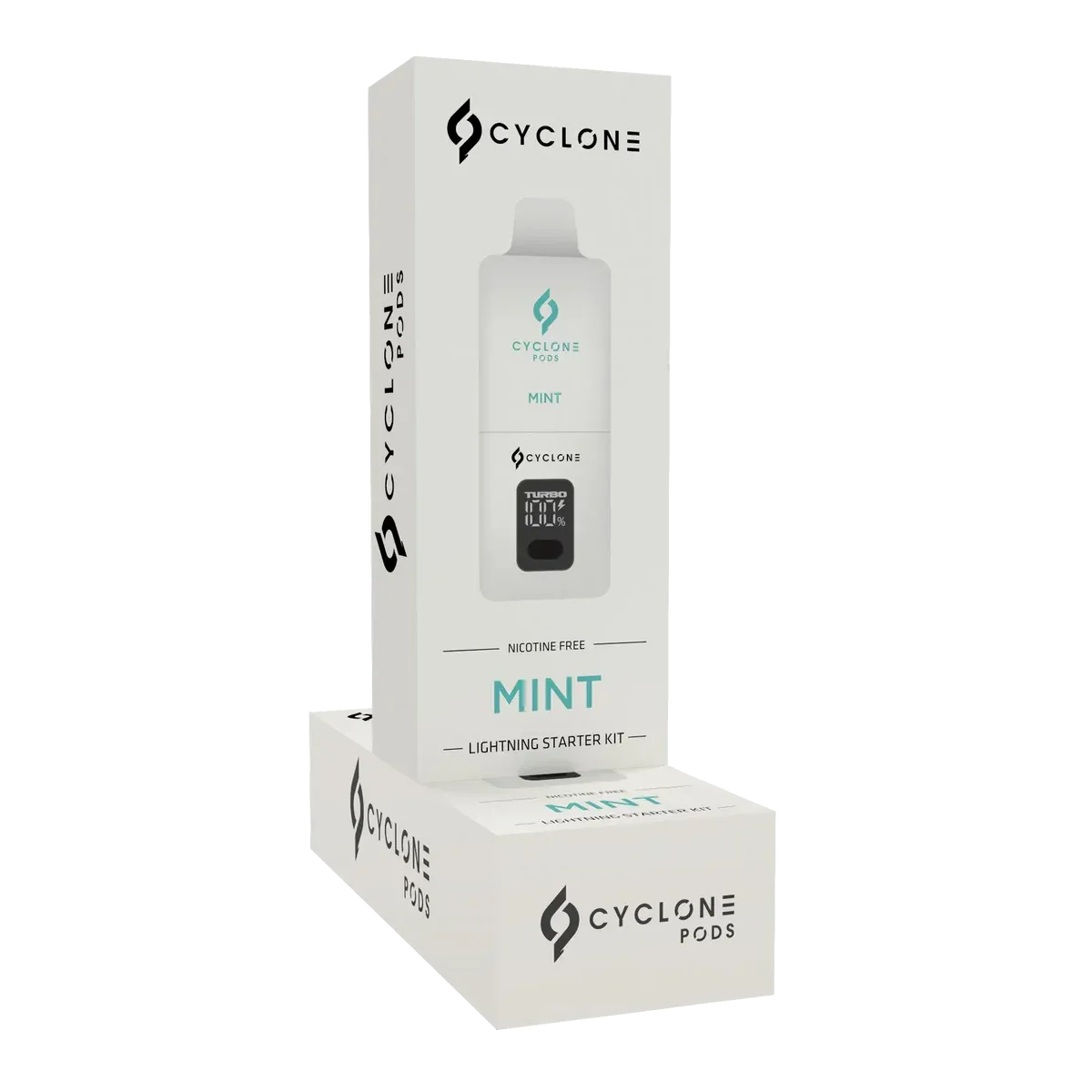
Our current lineup:
Gust Core — Our highest-capacity disposable. Rated 50,000 puffs, USB-C rechargeable, 3 power levels, 9 flavors. $25. Assembled in the USA.
Gust Pro — Our flagship disposable. 20,000 puffs, rechargeable via USB-C, turbo mode, 4 adjustable ice settings, and a screen showing battery and liquid levels. 14 flavors including BlueRazz, Mango Peach Fusion, Mint, Lush Ice, and Watermelon Raspberry. $20.
Lightning — Our reusable pod system. Rechargeable battery with magnetic-connection pods, LED screen display, turbo button. 10,000 puffs per pod, 13 flavors including Bold Tobacco, Cinnamon Churro, and Peach Ice. $20 starter kit, $14 per pod.
Ingredients across all devices: USP-grade vegetable glycerin, propylene glycol, and food-grade flavorings. That's the full list. Zero nicotine. Zero tobacco derivatives. No diacetyl. No vitamin E acetate.
Lab testing for the Gust Pro and Lightning through Legend Technical Services, Inc. (ISO 17025 accredited, St. Paul, MN). Testing methodology: LC-MS/MS with a nicotine detection limit of 0.063 µg/g. Results published on our lab testing transparency page.
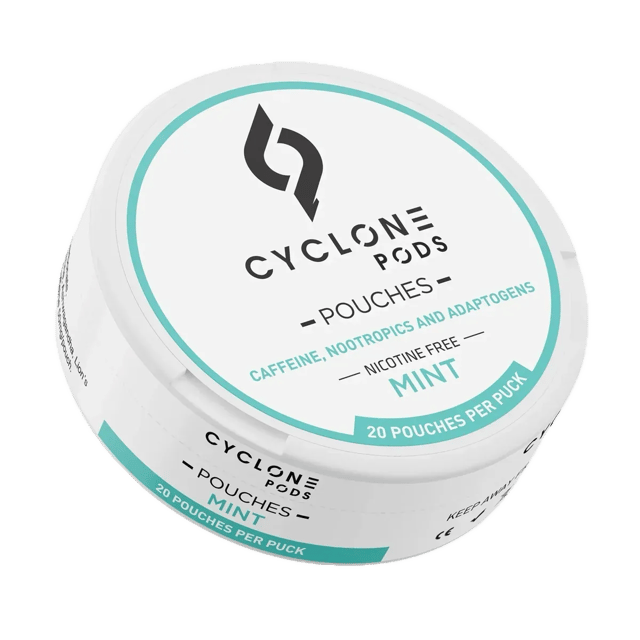
We also make caffeine and energy pouches — a completely different product. Not a vape. An oral pouch with functional mushrooms (Ashwagandha, Lion's Mane, Reishi, Cordyceps), Bacopa Monnieri, and Guarana (50mg caffeine per pouch). Four flavors: Cinnamon, Mint, Peach, Wintergreen. $9.99 for a pack of 20. No nicotine, no tobacco. If caffeine intake is something you're thinking about, we wrote a deep dive on how much caffeine is too much.