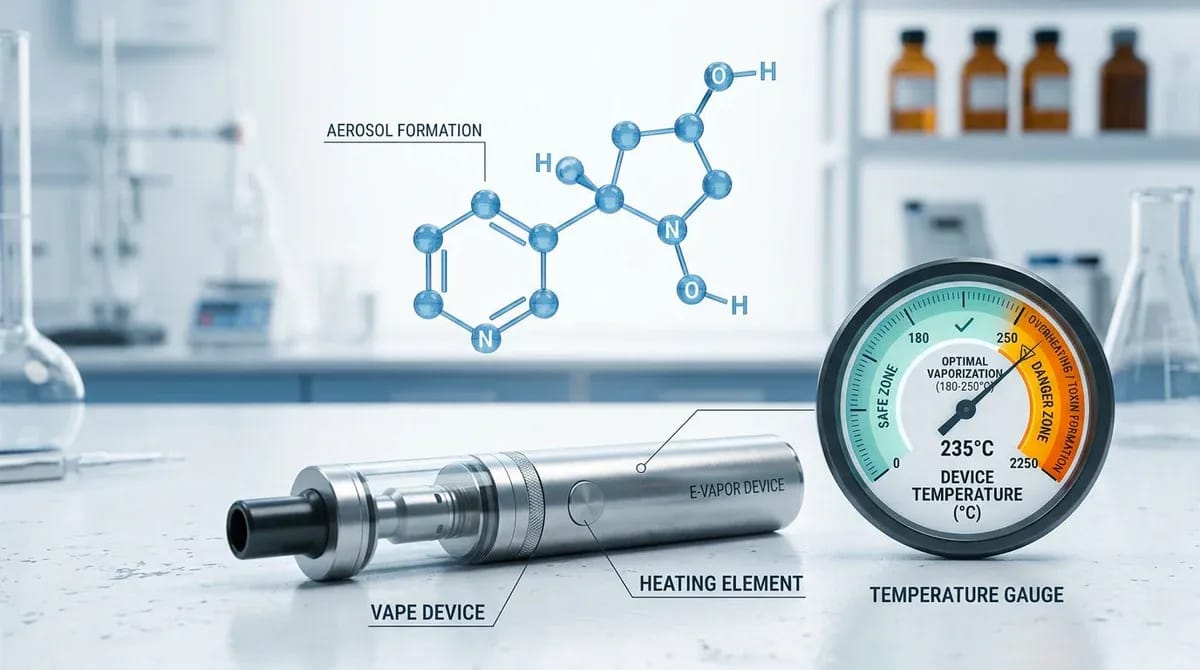
Vaping can produce formaldehyde when propylene glycol (PG) and vegetable glycerin (VG) are heated past their thermal decomposition threshold — roughly 300°C (572°F). A 2015 study in the New England Journal of Medicine (PMID: 25607446) found that at high voltage (5.0V), more than 2% of solvent molecules converted to formaldehyde-releasing agents. A 2017 follow-up study (PMID: 28864295) found users hit unpleasant dry puffs above about 4.2V; at 4.0V, the top of realistic use, daily formaldehyde exposure was 32% lower than smoking 20 cigarettes.
High levels of formaldehyde exposure have been linked to lung damage, heart disease, and other potential health risks.
That said, the levels aren't always the same every time. Certain conditions can make them higher:
- When the device overheats
- When a dry puff (or dry hit) occurs
- When high voltage or temperature settings are used
The good news:
You can reduce this risk by using a vaping device with high-purity e-liquids and built-in overheating protection, such as Cyclone Pods — which uses only USP-grade VG, PG, and food-grade flavorings and publishes Gust Pro and Lightning lab results from an ISO 17025 accredited lab.
Further Reading:
- Learn how Acrolein Exposure can occur during vaping, its potential health effects, and how to reduce your risk.
- Explore if Nicotine-free or Herbal Cigarettes are a safer way to quit smoking cigarettes or tobacco use.
What Is Formaldehyde and How Does It Form During Vaping?
Formaldehyde is more common than most people realize. It's a naturally occurring chemical — colorless, flammable, and known for its sharp, pungent smell.
You'll find formaldehyde-releasing agents in household products and building materials. The chemical is even used industrially as a disinfectant or as an embalming fluid in medical laboratories and mortuaries.
When an electronic cigarette heats up, the coil gets extremely hot. That high temperature doesn't just vaporize the liquid — it can also change it chemically.
E-liquids are mainly made of propylene glycol (PG) and vegetable glycerin (VG). Under high heat, these ingredients start to break down. And when that happens, they can create harmful chemicals like formaldehyde, which can end up in the vapor you inhale.
Lower-quality or impure PG and VG may contain contaminants that increase these emissions when heated.
Lab tests have shown that at realistic settings, daily formaldehyde exposure from vaping was 32% lower than smoking 20 cigarettes, even at 4.0V, the top of the range users tolerate.
However, a study in the New England Journal of Medicine found different results at extreme power settings. When devices run hot enough to produce harsh "dry puffs," formaldehyde levels can spike 5 to 15 times higher than those in traditional cigarettes.
Luckily, most vapers avoid these conditions because they're unpleasant.
Regardless of the formaldehyde levels, any exposure can harm your health. For a broader look at vape safety, see our guide on the safest vapes in 2026.
What Are the Harmful Effects of Formaldehyde Exposure Through Vaping?
Formaldehyde exposure from vaping affects multiple organ systems:
1. Risk of Lung Damage
Vape aerosol isn't just harmless vapor. It contains formaldehyde and ultrafine particles that can affect your lungs.
When you inhale these, they can irritate your airways, cause inflammation, and damage lung tissue over time. This kind of ongoing stress can contribute to serious conditions like Chronic Obstructive Pulmonary Disease (COPD), which can make breathing more difficult.
Lab tests have also revealed that the vapor from e-cigarettes also contains a chemical called formaldehyde hemiacetal. This compound forms when formaldehyde reacts with PG and VG. They penetrate deep into lung tissue via tiny aerosol particles, potentially causing respiratory damage.
2. Heart Problems
Over time, breathing in toxic chemicals, like formaldehyde and other aldehydes, can raise your heart rate and blood pressure, increasing your risk of heart disease.
In real terms, people who vape regularly experience issues like irregular heart rhythms and, in severe cases, cardiac arrest.
3. Increased Risk of Cell and DNA Damage
Formaldehyde is a known human carcinogen (cancer-causing substance).
Studies have found signs of cell damage, DNA changes, and tumor growth after exposure to vape aerosol. These are all early warning signals linked to cancer risk.
That said, the long-term risk is still being studied, and more evidence is needed to fully understand the impact. For a closer look at what goes into vape liquid, read our breakdown of diacetyl-free vape juice and what ingredients to avoid. If lung health is your primary concern, see our guide on the safest vapes for your lungs.
Vaping vs Smoking: How Much Formaldehyde?
The data on formaldehyde levels across different sources is scattered across multiple studies. Here it is consolidated:
| Source | Formaldehyde Level | Reference |
|---|---|---|
| Cigarette smoke | 10–70 µg per cigarette | Separations, 2021 |
| Vaping at normal power (3.3V) | ~3.4 µg per 10 puffs | PMID: 28864295 |
| Vaping at high voltage (5.0V) | 5–15× cigarette levels | NEJM, 2015 |
| Indoor air (baseline) | 10–50 µg/m³ | WHO Guidelines, 2010 |
At normal power, vaping produces less formaldehyde than smoking. That gap collapses at extreme power settings — which is why voltage and coil condition matter so much.
Several vaping habits can increase your exposure to formaldehyde.
6 Factors That Affect How Much Formaldehyde Is in Your Vape Aerosol
Even minor changes in your vape setup can increase or decrease your risk of formaldehyde exposure:
1. Vape Flavors
Some vape flavors, such as floral or citrus varieties, have been shown to produce high levels of formaldehyde when heated.
These flavors contain chemicals called terpenes that can increase formaldehyde emissions by up to 2 times compared to other flavors.
2. Power Settings
Higher power settings can lead to higher levels of formaldehyde because the e-cigarette liquid is exposed to more heat.
Researchers have shown just how big that jump can be.
One study found that raising the voltage from 3.2 to 4.8 V increased levels of toxic chemicals such as formaldehyde and acetaldehyde by 4- to >200-fold.
3. E-liquid Levels
A "dry puff" or "dry hit" happens when there isn't enough e-liquid reaching the coil.
When that happens, the coil can overheat. And with that high temperature, the liquid breaks down faster, which can sharply increase formaldehyde levels — sometimes by 30 to 250 times normal levels.
4. Wick Material
Vapes that use a microporous ceramic wick may produce lower levels of formaldehyde.
One study found that a vaping device with a silica wick produced up to 8 times more formaldehyde than one with a ceramic wick — even when using the same e-liquid.
5. Coil Age
Using a mid-life vape coil can actually lead to more formaldehyde than using an older one.
A 2023 study found that formaldehyde peaked around 500 puffs, then began to decline. This means a partially used coil may, surprisingly, emit more than a brand-new or heavily used one.
The coil becomes more chemically reactive after some use, even though it's not necessarily getting hotter. Over time, that reactivity fades again as the coil continues to degrade.
6. PG/VG Ratio
Analysis has shown that using e-liquids with a high VG ratio, such as 80% VG and 20% PG, can lead to higher formaldehyde exposure.
This means an e-cigarette user who uses high-VG liquids for cloud chasing could be at a higher risk of formaldehyde exposure.
Reduce Your Formaldehyde Exposure With Cyclone Pods
Cyclone Pods is a nicotine-free vape brand designed for people who want the ritual of vaping without getting hooked.
Without an addictive chemical driving repeated use, you may naturally reach for these zero nicotine vapes less often. This potentially reduces your overall exposure to harmful compounds like formaldehyde.
Beyond that, the devices are designed to keep heating more stable during use. More consistent heating means fewer fluctuations, leading to fewer unwanted byproducts in the vapor.
We won't pretend the number is zero — heating VG and PG always leaves a trace of formaldehyde. Our July 2026 lab panel (Legend Technical Services, Work Order #2602062) measured it across six Gust Pro and Lightning flavors at 0.74 to 13 µg/g: the low background of normal use, not the runaway spike a dry puff or a 5-volt coil produces. Formaldehyde output is driven by device design and power far more than by the liquid sitting in the tank, which is exactly what the choices below are built to control.
Several design choices work together to reduce formaldehyde exposure:
-
Controlled power output/low voltage settings: Helps prevent excessive heating, reducing the amount of formaldehyde produced.
-
Consistent liquid delivery: Keeps the coil properly soaked, lowering the risk of a dry puff.
-
Reliable batteries: Provide steady power instead of sudden surges that can overheat the liquid.
-
Food-grade flavoring ingredients: Carefully chosen flavorings that support more stable vapor chemistry.
- Balanced VG/PG ratio: Prevents excess VG from overheating and breaking down into formaldehyde.
A few Cyclone Pods devices put these design choices into practice:
1. Gust Pro Nicotine Free Disposable Vape
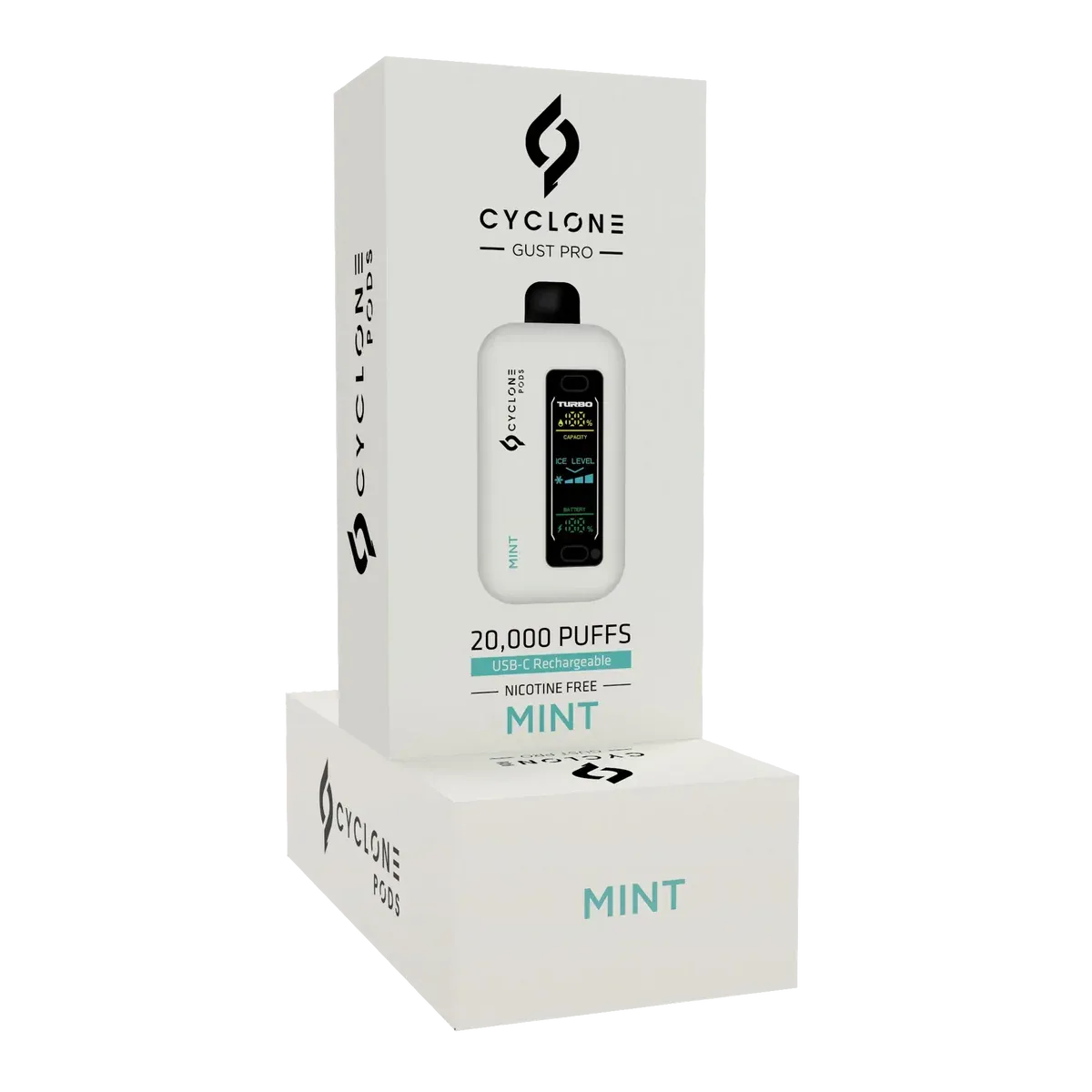
The Gust Pro is a rechargeable disposable vape that's easy to use for new vapers. There's no setup to worry about. Just pick a flavor, and you're ready to go.
Key features:
- 15ml flavor tank plus a 6ml ice tank (21ml total), rated at 20,000 puffs
- E-liquid free from vitamin E acetate, diacetyl
- Adjustable ice control with 4 levels from mild mint to glacier fresh
- Turbo Boost button for a stronger hit without overheating
- Clear screen display to track battery, liquid, and ice levels
- USB-C recharging for convenience
- 14 delicious flavors (classic, fruity, drinks, desserts, etc.)
2. Lightning Nicotine-Free Pod Vape Kit
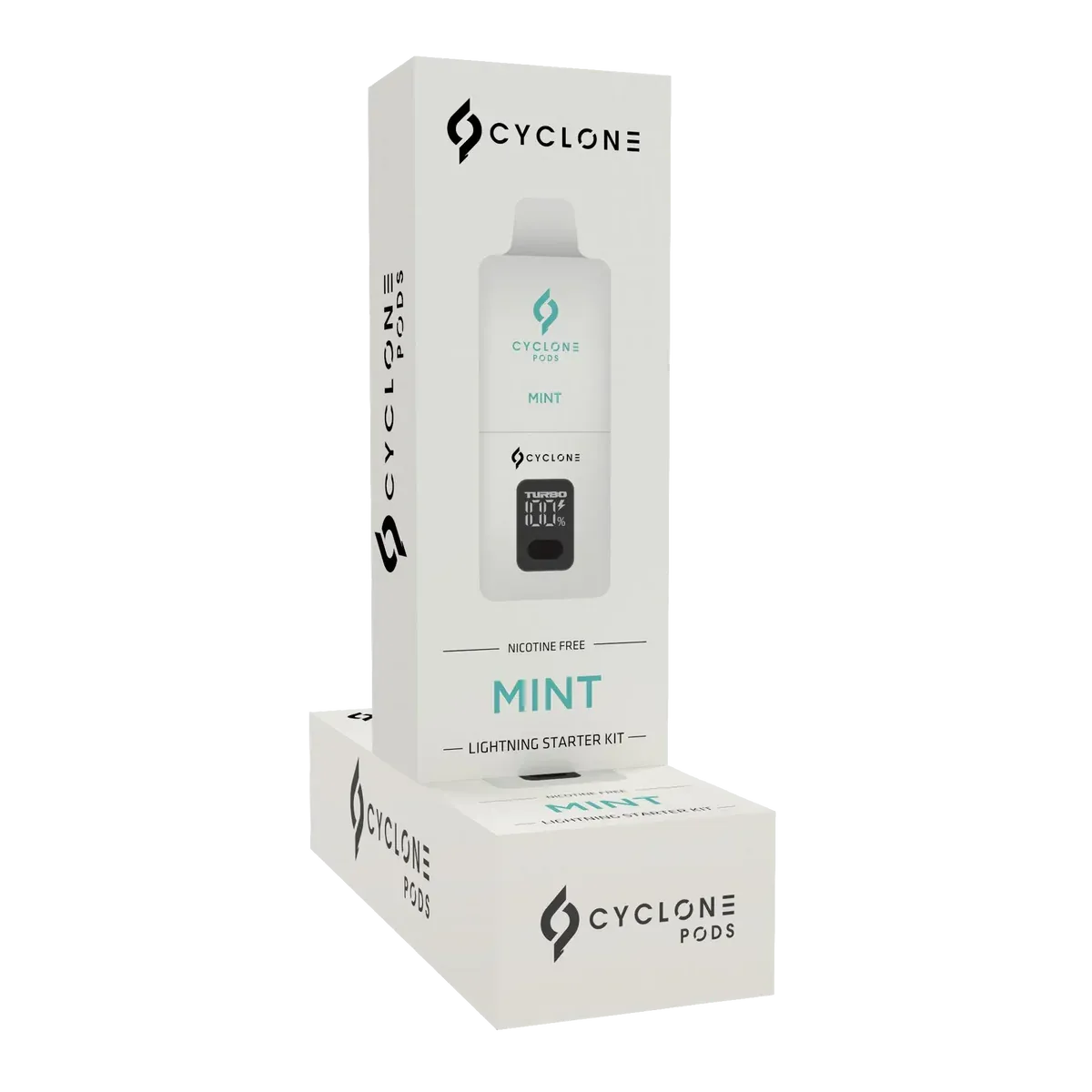
The Lightning is a sleek, rechargeable pod system built for both new and experienced vapers who like a bit more control. You can easily switch between flavors with replaceable pods and adjust the intensity whenever you like.
Key features:
- 7ml pre-filled pods with up to 10,000 puffs per pod
- E-liquid free from vitamin E acetate, diacetyl
- Magnetic pod connection — snap in and swap out without any mess
- Built-in LED display to keep an eye on your battery level
- Turbo Mode for bigger clouds and a stronger hit
- USB-C recharging for convenience
- 13 bold pod flavors
The way a device is built can reduce the risk of unwanted by-products. But your vaping habits matter just as much. Small, everyday choices can go a long way in keeping formaldehyde exposure in check.
6 Smart Tips to Lower Your Formaldehyde Exposure from Vaping
These simple habits can influence how much formaldehyde forms while vaping:
-
Be cautious with citrus/floral vapes (from less reliable e-cigarette makers): Since their flavoring agents are linked with higher formaldehyde levels.
-
Use a balanced VG/PG ratio: Using a high VG e-cigarette liquid can produce more formaldehyde, especially at higher temperatures.
-
Keep wattage moderate (if using a refillable vape): Higher power can overheat the coil and sharply increase aldehyde production.
-
Avoid vaping on empty pods or disposables: As e-liquid levels drop, the wick dries out quickly, increasing the risk of dry puffs and higher formaldehyde levels.
-
Replace coils regularly: Residue buildup over time can increase formaldehyde exposure.
- Consider nicotine-free options: Less nicotine exposure can reduce the urge for frequent or extended sessions, helping lower formaldehyde levels. Browse our full nicotine-free vapes collection to find a device designed with ingredient purity in mind.
Browse our full nicotine-free vapes collection or find the right device for you.