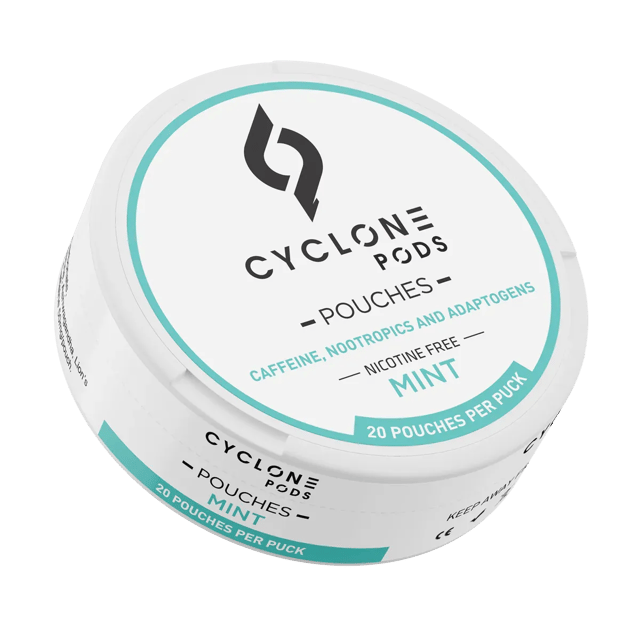
Coffee pouches are small, tobacco-free oral pouches that deliver caffeine — no brewing, no spilling. Brands like Grinds pioneered the category with real-coffee-based pouches, while newer options like Cyclone Pods Focus Pouches combine caffeine with nootropics like lion's mane and ashwagandha for focus.
The category started as a chewing tobacco alternative for baseball players. Grinds appeared on Shark Tank in 2013, pitching coffee pouches as a dip replacement. Since then, the market has expanded well beyond dugouts. Office workers, truck drivers, students, military — anyone who needs caffeine but can't (or doesn't want to) drink a cup of coffee.
We sell caffeine pouches in this space, so we have a stake in this market. We'll be upfront about that. But we'll also cover the full landscape honestly — including brands that do things differently than we do.
What Are Coffee Pouches?
Coffee pouches are small, pre-portioned pouches you place between your lip and gum. They deliver caffeine and, depending on the brand, other active ingredients.
There are two main types:
- Traditional coffee pouches — Contain actual ground coffee or coffee extract. Grinds and BaccOff are the main players. Taste like coffee. Deliver caffeine the same way chewing tobacco delivers nicotine, but without any tobacco or nicotine.
- Caffeine + nootropic pouches — Contain synthetic or plant-derived caffeine combined with focus-enhancing compounds like adaptogens and mushroom extracts. Cyclone Pods Focus Pouches, NZE, and ALP fall in this category. Often taste like mint, cinnamon, or fruit rather than coffee.
Both types are tobacco-free, nicotine-free, and designed for oral use. The difference is what else they deliver alongside the caffeine.
How Do Coffee Pouches Work?
You tuck a pouch between your upper lip and gum. The moisture in your mouth activates the pouch, releasing caffeine (and other active ingredients, depending on the brand).
Most pouches last 20-40 minutes. You don't need to chew or suck on them — just park them and let them work. When you're done, you toss the pouch. No spitting required (though some traditional coffee pouches may produce more saliva than nicotine-style pouches).
Can You Swallow Coffee Pouch Spit?
Yes. Unlike tobacco dip, coffee pouch spit is safe to swallow. The ingredients are food-grade — coffee, caffeine, sweeteners, flavorings. Some people prefer to spit, especially with traditional coffee-ground pouches that produce more saliva, but swallowing won't hurt you. Just be aware that swallowing more may increase total caffeine intake slightly.
Best Coffee Pouch Brands in 2026
We tested the major brands in this space. Here's how they compare.
| Brand | Type | Caffeine per Pouch | Key Ingredients | Price | Best For |
|---|---|---|---|---|---|
| Grinds | Coffee-based | 20-50mg (varies by SKU) | Ground coffee, B vitamins, taurine | ~$5-8/can (18 pouches) | Tobacco/dip quitters who want a coffee taste |
| Cyclone Pods Focus Pouches | Caffeine + nootropic | 50mg (label, guarana-derived) | Ashwagandha, lion's mane, reishi, cordyceps, bacopa monnieri, guarana | $9.99/pack (20 pouches) | Focus and cognitive performance |
| NZE | Caffeine pouch | 50mg | Caffeine, L-theanine, B vitamins | ~$7/can (15 pouches) | Clean caffeine with L-theanine smoothing |
| ALP | Caffeine pouch | 50mg | Caffeine, taurine | ~$7/can (15 pouches) | Simple caffeine hit, no extras |
| BaccOff | Coffee-based | ~20-30mg | Real coffee, natural flavors | ~$4-5/can | Budget-friendly dip alternative |
| Smokey Mountain | Caffeine pouch | 35mg | Natural caffeine, flavoring | ~$5/can | Known chewing tobacco alternative brand |
Grinds: The Original Coffee Pouch
Grinds built this category. Founded by two college students who wanted to help baseball players quit dip, they appeared on Shark Tank in Season 4 (2013) and have been the market leader since. Their pouches contain actual ground coffee — you get a real coffee taste, and the caffeine ranges from 20mg to 50mg per pouch depending on the variety.
Pros: Authentic coffee flavor, widely available (Walmart, Amazon, direct), huge flavor selection (18+), strong brand reputation.
Cons: Some users report the pouches are "messy" or produce too much saliva. The caffeine amount varies significantly across SKUs (their original line is only 20mg), and there's no additional focus-enhancing ingredients beyond caffeine and basic B vitamins.
Cyclone Pods Focus Pouches
That's us. We're transparent about the bias, so here are the straight facts. Our caffeine pouches aren't traditional coffee pouches — they're caffeine + nootropic pouches. Each pouch is labeled at 50mg of caffeine from guarana, plus ashwagandha, lion's mane, reishi, cordyceps, and bacopa monnieri. Four flavors: Cinnamon, Mint, Peach, and Wintergreen. $9.99 for a 20-pack.
Our pouches are tested by Certified Laboratories (A2LA accredited, Burbank, CA) for pesticides, residual solvents, heavy metals and caffeine content. Download the full Certificate of Analysis.
Pros: Nootropic stack (not just a caffeine hit), lab-tested with published results, no artificial sweeteners in some flavors.
Cons: Doesn't taste like coffee (mint/cinnamon flavors). Pricier per pouch than Grinds. Only 4 flavors compared to Grinds' 18+. You're getting a nootropic pouch, not a coffee pouch — if you specifically want that coffee taste, this isn't it.
NZE, ALP, and Others
NZE combines 50mg caffeine with L-theanine, which smooths out the caffeine curve — less spike, less crash. ALP keeps it simple: 50mg caffeine, taurine, done. BaccOff is the budget play with real coffee grounds. Smokey Mountain (the chewing tobacco alternative brand) added a caramel coffee caffeine pouch line at 35mg per pouch.
Each has a different angle. If you want pure coffee-in-your-lip, Grinds or BaccOff. If you want caffeine + focus compounds, that's where we and NZE play. If you want basic caffeine delivery with nothing extra, ALP.
Coffee Pouches vs. Regular Coffee
This is the question everyone asks: why not just drink coffee?
Fair question. For plenty of people, a cup of coffee is fine. Coffee pouches solve specific problems that a mug doesn't:
| Factor | Coffee Pouches | Regular Coffee |
|---|---|---|
| Portability | Pocket-sized, no prep | Requires brewing, container |
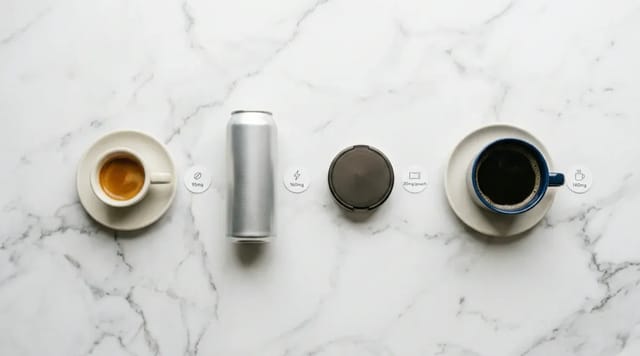
| Caffeine control | Exact dose per pouch (20-50mg) | Variable (80-200mg per cup) |
| Teeth staining | Minimal (some coffee-based pouches may stain) | Significant over time |
| Situations | Meetings, driving, working out, outdoors | Desk, kitchen, coffee shop |
| Cost per dose | $0.25-0.50 | $0.15-0.50 (home brew) / $4-7 (cafe) |
If coffee gives you acid reflux or stomach issues — and the American College of Gastroenterology estimates 20% of U.S. adults deal with GERD — a pouch is a way to get caffeine without a hot acidic drink. For more on this angle, see our guide on caffeine without coffee.
The biggest disadvantage is the experience. Coffee is a ritual. Pouches are functional. If you enjoy the process of making and drinking coffee, a pouch is not a substitute for that — it's a supplement for situations where coffee isn't practical.
Are Coffee Pouches Safe?
The safety profile of coffee pouches comes down to two factors: the caffeine dose and the other ingredients.
Caffeine: The FDA identifies 400mg per day as the generally safe limit for healthy adults (FDA Consumer Update, 2023). A single coffee pouch delivers 20-50mg — far less than a typical cup of coffee (95mg for an 8oz drip). You'd need to use 8-20 pouches per day to hit that ceiling. If you're sensitive to caffeine, start with one pouch and assess.
A 2025 investigation by The Conversation noted that caffeine pouches "make it easy to overshoot safe limits, especially for teens" due to their convenience. That's a fair concern. These products aren't designed for minors, and the caffeine adds up if you're chaining pouches throughout the day. For a deeper look at caffeine limits, read our article on how much caffeine is too much.
Other ingredients: Traditional coffee pouches (Grinds, BaccOff) use food-grade ingredients — ground coffee, flavoring, sweeteners. Nootropic pouches add adaptogens and mushroom extracts. The main adaptogens in Focus Pouches — ashwagandha and lion's mane — have clinical evidence supporting safety in healthy adults. A 2021 systematic review (PMID: 34254920) found ashwagandha root extract was well-tolerated in doses up to 600mg/day for up to 12 weeks. In a 16-week double-blind trial, lion's mane showed no adverse effects on laboratory tests (Mori et al., 2009, PMID: 18844328).
What coffee pouches don't contain matters too: no tobacco, no nicotine, no diacetyl, no vitamin E acetate. They're not a combustion product. You're not inhaling anything. The risk profile is fundamentally different from smoking, vaping, or chewing tobacco.
Coffee Pouches vs. Nicotine Pouches
Coffee pouches use the same delivery mechanism as nicotine pouches (ZYN, VELO, On!) — tuck it in your lip. The format is nearly identical. The substance is completely different.
| Factor | Coffee / Caffeine Pouches | Nicotine Pouches |
|---|---|---|
| Active ingredient | Caffeine (20-50mg) | Nicotine (2-8mg) |
| Addictive potential | Mild (caffeine dependence) | High (nicotine is highly addictive) |
| Withdrawal symptoms | Headache, fatigue (1-3 days) | Irritability, anxiety, cravings (weeks to months) |
| Regulation | Not regulated as tobacco | Regulated as tobacco product (FDA) |
| Primary use case | Energy, focus | Nicotine delivery, smoking cessation |
| Gum irritation | Minimal to mild | Common, sometimes significant |
Grinds explicitly markets itself as a dip replacement — a way for chewing tobacco users to keep the habit (oral fixation, the ritual of packing a lip) without the tobacco and nicotine. Many coffee pouch users are former dip users who want the physical sensation without the addiction.
Coffee pouches use the same under-the-lip format as nicotine pouches but contain no nicotine. We compare caffeine pouch brands in our best caffeine pouches guide.
How to Use Coffee Pouches
Using a coffee pouch is straightforward:
- Open the can/pack and take one pouch.
- Place it between your upper lip and gum. Upper lip is better than lower because it's more comfortable for most people and you produce less saliva.
- Leave it for 20-40 minutes. You don't need to chew or suck on it. Let it sit.
- Remove and discard. Most brands include a used-pouch compartment in the lid of the can.
Tips from actual daily users:
- Start with lower-caffeine options (Grinds original at 20mg) if you're new to oral caffeine delivery
- Don't use right before bed — even 50mg can disrupt sleep if you're sensitive
- Rotate sides of your mouth to avoid localized gum irritation
- Stay hydrated — caffeine is a mild diuretic
Who Should Try Coffee Pouches?
Coffee pouches make the most sense for people in specific situations:
- Former dip/chew users who want to keep the oral ritual without tobacco or nicotine
- People with acid reflux or GERD who can't tolerate coffee but need caffeine
- Outdoor workers and athletes who can't carry or brew coffee on the job
- Professionals in meetings who need a discreet caffeine boost
- Drivers on long trips who want controlled caffeine without bathroom stops every hour
- Anyone trying to cut back on coffee — pouches let you dose caffeine in smaller increments (20-50mg vs. 95-200mg per cup)
If you want the cognitive benefits beyond just caffeine — stress adaptation, mental clarity — nootropic-enhanced pouches add ingredients that coffee (or basic caffeine pouches) don't provide. Our Focus Pouches include lion's mane for neurogenesis support and ashwagandha for cortisol regulation, which address focus from a different angle than raw stimulation.
The Bottom Line
Coffee pouches are a legitimate caffeine delivery method with a growing market. Grinds owns the "coffee in your lip" segment. We compete in the "caffeine + cognitive support" segment with Focus Pouches. Other brands (NZE, ALP, Smokey Mountain) fill niches in between.
If you're curious, start with a single can from whichever brand matches your use case. If you want coffee flavor and a dip-like experience, try Grinds. If you want focus-enhancing nootropics with your caffeine, try Focus Pouches. The barrier to entry is $5-10 and a willingness to tuck something in your lip.
Not sure which caffeine pouch to try first? Start with our Focus Pouches.