Nicotine is not a depressant — it is a stimulant that activates nicotinic acetylcholine receptors in the brain, triggering dopamine and adrenaline release. The "relaxing" effect long-term users describe is actually withdrawal relief, not true sedation.
This distinction matters because it changes how you think about quitting. If nicotine were a depressant, you'd need a replacement sedative. Since it's a stimulant that creates a false calm through dependence, breaking the cycle looks different — and there are concrete tools that help.
We get asked this question constantly at Cyclone Pods. We make nicotine-free vapes and caffeine pouches. Understanding what nicotine actually does to your brain is the first step.
Is Nicotine a Depressant or a Stimulant?
Nicotine is classified as a stimulant by the National Institute on Drug Abuse (NIDA). Stimulants increase central nervous system activity, raising alertness and energy levels. The FDA regulates nicotine as an addictive substance — not as a depressant, sedative, or narcotic.
When you think of stimulants, illegal drugs might come to mind — but many stimulants are legal and widely used, like caffeine and nicotine. Legal status does not make nicotine less addictive.
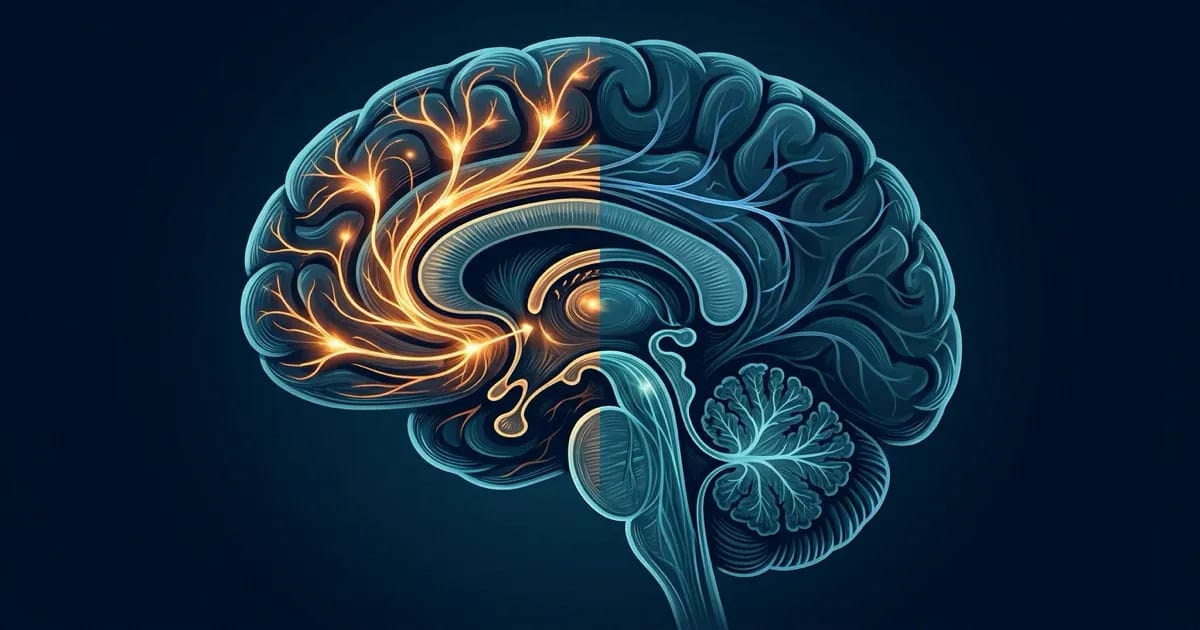
Nicotine activates the nicotinic acetylcholine receptor (nAChR) in the brain. These receptors control how neurons send signals to each other. When activated, several changes happen:
- Dopamine release: Dopamine is a "feel-good" neurotransmitter. It creates a sense of pleasure and reward — a major driver of nicotine addiction (Benowitz, 2010, PMID: 20554984).
- Epinephrine (adrenaline) release: Your body's "fight-or-flight" chemical. It raises heart rate and makes you feel alert — but it can also trigger stress or anxiety.
- Increased glutamate activity: Glutamate helps your brain process information, so boosting it can briefly improve focus and memory. This effect fades quickly with regular use.
If nicotine is a stimulant, why do so many people say it makes them feel relaxed?
Stimulant vs Depressant: How to Tell the Difference
| Property | Stimulants | Depressants | Nicotine |
|---|---|---|---|
| CNS effect | Increases activity | Decreases activity | Increases activity (stimulant) |
| Heart rate | Raises | Lowers | Raises |
| Alertness | Increases | Decreases (sedation) | Increases acutely |
| Primary neurotransmitter | Dopamine, norepinephrine | GABA | Dopamine, acetylcholine |
| Common examples | Caffeine, amphetamine | Alcohol, benzodiazepines | Cigarettes, vapes, pouches |
| Withdrawal mood | Fatigue, depression | Anxiety, seizure risk | Irritability, anxiety, cravings |
This is where the confusion starts. Nicotine's withdrawal symptoms — anxiety, irritability, restlessness — overlap with what you'd feel withdrawing from a stimulant. But the subjective "calm" that smokers report is not a depressant effect. It's the relief of those withdrawal symptoms.
Why Does Nicotine Feel Relaxing?
Many nicotine users report using it to unwind. This has led some people to believe nicotine is a depressant.
In a 2022 study by El-Sherbiny & Elsary (Journal of Family & Community Medicine) of 2,000 participants who each reported mental health problems like stress, anxiety, and depressive disorder, nearly half said they used smoking to relax. Yet the same study found that higher nicotine consumption was linked to higher stress and more severe depression symptoms.
Something does not add up. Why would a nicotine user rely on it for relaxation when it worsens stress?
Here is what is actually happening:
- When you first start using nicotine, it triggers a dopamine surge.
- Nicotinic receptors temporarily deactivate after firing — a process called desensitization.
- Your brain interprets deactivated receptors as a shortage and starts building new ones. This is upregulation.
- During withdrawal, these extra receptors recover and become hyperactive without nicotine, creating stress and discomfort until you get another dose.
- Over time, you need more nicotine to keep the growing receptor network satisfied.
- Meanwhile, your brain adjusts to external dopamine and produces less of its own.
Nicotine does not have true relaxing properties. What feels relaxing is withdrawal relief — your brain returning to baseline after being deprived of the chemical it now depends on.
There is one pharmacological nuance worth noting: nicotine's effects are dose-dependent. At low doses, the stimulant effects dominate — increased heart rate, alertness, dopamine release. At higher doses, nicotine can activate ganglionic receptors that produce mild muscle relaxation and a sensation of calm. This biphasic response is real, but it is not a depressant mechanism — it is still mediated through nicotinic acetylcholine receptors, not the GABA system that true depressants use.
True depressants — like benzodiazepines or certain sleep medications — are prescribed by doctors for anxiety or insomnia and work by enhancing GABA activity. Nicotine dependence is linked to worsening depression and anxiety symptoms, not lasting relief.
Can Nicotine Cause Depression?
Nicotine does not directly cause clinical depression, but chronic use creates conditions that worsen depressive symptoms. The mechanism is the same upregulation cycle described above: your brain becomes dependent on nicotine for dopamine release and reduces its own production. When the drug wears off, you drop below your pre-nicotine baseline — not just back to it.
Nicotine use disorder is a recognized clinical diagnosis in the DSM-5 (code 305.1), with defined withdrawal criteria including depressed mood. The relationship runs both directions: people with depression are more likely to use nicotine, and nicotine use makes depression harder to treat.
If you are using nicotine to manage stress or mood, talk to a doctor. Nicotine is masking symptoms, not treating them.
What Are the Short and Long-Term Effects of Using Nicotine?
Short-term effects:
- Brief increase in focus and reaction time
- Mild euphoria ("buzz")
- Reduced perceived stress or anxiety
- Increased heart rate
- Elevated blood pressure
- Narrowed blood vessels
- Dizziness
- Nausea, dry mouth, appetite suppression
Long-term effects:
- Physical dependence and withdrawal symptoms when you stop
- Contributing to or worsening existing mental health conditions (stress, depression, anxiety)
- Cardiovascular strain and increased heart disease risk
- Reduced sleep quality
- Possible promotion of existing tumor growth — nicotine does not cause cancer, but research suggests it may accelerate tumor progression in people who already have it (Grando, 2014, PMID: 24827506)
And those are nicotine's effects alone. Tobacco smoke contains thousands of additional chemicals — many carcinogenic — that compound the risk. Separating "nicotine harm" from "combustion harm" matters because it shapes which quitting strategies make sense. Nicotine replacement therapy reduces combustion exposure; zero-nicotine products eliminate both.
Your physical and mental health can recover after you stop using nicotine products.
What Happens When You Quit Nicotine?
When you first quit, expect:
- Intense and frequent cravings
- Irritability and anxiety
- Difficulty concentrating
- Headaches
- Sleep disturbances
Things get easier after the first few weeks as mood, sleep patterns, appetite, and cardiovascular function stabilize. You will no longer rely on nicotine to control how you feel. We have a detailed vape withdrawal timeline if you want to know what to expect day by day.
Your health improves gradually. If you smoke cigarettes, your risk of cancer, stroke, and heart attacks drops over time. According to the CDC, stroke risk falls to that of a non-smoker 5-15 years after quitting, and lung cancer risk drops by half after 10 years.
Quitting is easier said than done — whether your dependence comes from cigarettes, nicotine pouches, chewing tobacco, or vaping. But there are tools that make it realistic. If yours is a vape, we lay them out in a step-by-step plan to quit vaping.
How to Quit Nicotine (and What Actually Helps)
Nicotine dependence makes you reliant on the drug's stimulant effects to stabilize mood and suppress withdrawal. Without nicotine, your brain can learn to regulate itself again. There are two main approaches:
- Cold turkey: Stop immediately and push through withdrawal. Effective for some, but the dropout rate is high.
- Tapering: Gradually reduce intake so withdrawal symptoms stay manageable. More sustainable for most people.
For tapering, you can reduce the nicotine strength of your current product, or use nicotine replacement therapy (NRT) like nicotine gum or patches. NRT administers controlled nicotine doses that you reduce over time.
The challenge with NRT: you are still consuming nicotine. At some point, the NRT dose has to taper to zero, ideally on a schedule you set with your doctor.
Zero-Nicotine Vapes for the Final Step
Our nicotine-free vapes are not a quit aid or a nicotine replacement, and we don't sell them as one. They keep the flavors, hand-to-mouth ritual, and sensory experience of vaping — no added nicotine or tobacco, and made without diacetyl or vitamin E acetate. In the Legend Technical Services nicotine test (ISO 17025 accredited, LC-MS/MS method, Work Order #2503988), 13 of 16 Gust Pro and Lightning flavors were non-detect and 3 showed trace nicotine (Lush Ice, Bold Tobacco, Tobacco).
- Gust Pro — 20,000-puff rechargeable disposable with USB-C, turbo mode, 4 ice settings, and a screen display. 14 flavors including Mint, Menthol, Summer Grape, and Piña Colada.
- Lightning Pod System — Reusable battery with magnetic 7ml snap-on pods. 13 flavors including Coffee, Bold Tobacco, Blue Razz, and Mint.
- Gust Core — rechargeable disposable rated 50,000 puffs, with USB-C and 3 power levels. 9 flavors, $25, assembled in the USA.
Caffeine Pouches to Replace Nicotine's Stimulant Effect
If you use nicotine pouches and want the same oral-pouch format without nicotine, our Focus Pouches deliver a different kind of lift — 50mg caffeine from guarana plus adaptogens and functional mushrooms:
- Ashwagandha — Reduces cortisol and perceived stress in clinical trials (Chandrasekhar et al., 2012, PMID: 23439798). During nicotine withdrawal, when your stress response is heightened from receptor upregulation, cortisol management matters.
- Lion's Mane and Reishi — Two functional mushrooms working different angles: lion's mane supports nerve growth factor and cognitive clarity, reishi supports stress resilience and immune function
- Cordyceps — Functional mushroom that supports energy and mood stability during withdrawal
- Bacopa Monnieri — Plant with clinical evidence for memory consolidation over longer-term use (Roodenrys et al., 2002, PMID: 12093601)
- Guarana (50mg caffeine) — Natural caffeine source for sustained energy
Every ingredient and its exact dosage is independently verified by Certified Laboratories (Burbank, CA) — you can read the full certificate of analysis on our lab testing page.
Breaking Free From Nicotine Addiction
Nicotine is a stimulant. Any relaxation you feel from it is withdrawal relief — your brain temporarily returning to the baseline that nicotine itself disrupted.
Nicotine dependence causes long-term health risks and leaves you trapped in a cycle where you need the drug to feel normal. But the cycle is breakable. Your brain's receptor network normalizes within weeks of quitting, and natural dopamine production recovers.
We make nicotine-free vapes and Focus Pouches, but we don't sell either as a quit aid; for a quit plan, talk to your doctor or visit smokefree.gov.