
"Vaper's lung" is not a single medical diagnosis — it is an umbrella term covering several distinct respiratory conditions linked to vaping, including EVALI, lipoid pneumonia, and bronchiolitis obliterans. Between 2019 and 2020, the CDC confirmed 2,807 hospitalizations and 68 deaths from vaping-related lung injuries in the United States, nearly all traced to vitamin E acetate in illicit THC cartridges.
We make nicotine-free vapes. We have a financial incentive to downplay vaping risks. We won't do that. Inhaling aerosolized particles into your lungs carries real risks regardless of what's in the liquid. What we can do is walk you through exactly what the science says — which conditions fall under "vaper's lung," what causes them, and how to reduce your risk if you choose to vape.
What Is "Vaper's Lung"?
"Vaper's lung" is a colloquial term — you won't find it in a medical textbook. Doctors don't use it as a formal diagnosis. Instead, it functions as a catch-all label for several respiratory conditions associated with vaping:
- EVALI (e-cigarette or vaping product use-associated lung injury) — the acute condition behind the 2019 outbreak
- Lipoid pneumonia — inflammation caused by inhaling oil-based substances into the lungs
- Bronchiolitis obliterans — irreversible scarring of the smallest airways, commonly called "popcorn lung"
- Chemical pneumonitis — lung inflammation triggered by inhaling irritant chemicals
- Hypersensitivity pneumonitis — an immune-mediated lung reaction to inhaled substances
Each condition has a different mechanism, different causes, and different outcomes. Lumping them together as "vaper's lung" muddies the picture. Understanding which condition you're actually dealing with matters because the risk factors — and what you can do about them — are different for each one.
EVALI: The 2019 Vaping Lung Crisis
In August 2019, clusters of severe lung injuries started appearing across the United States. Patients — many of them young, previously healthy — arrived at emergency rooms with respiratory failure, chest pain, and shortness of breath. Some needed mechanical ventilation. Sixty-eight died.
The CDC launched a multi-state investigation. By February 2020, researchers identified the primary culprit: vitamin E acetate, a thickening agent used in illicit THC vape cartridges. A landmark study by Blount et al. (2020) found vitamin E acetate in bronchoalveolar lavage (BAL) fluid of 48 out of 51 EVALI patients — 94% — while none of the healthy controls tested positive (PMID: 31860793).
The numbers, per the CDC's final tally:
- 2,807 hospitalizations across all 50 states, D.C., and two U.S. territories
- 68 confirmed deaths
- Median patient age: 24 years
- 82% of patients reported using THC-containing products
- 33% reported exclusive use of nicotine-containing products (though self-reporting of illicit THC use is unreliable)
The critical takeaway: EVALI was overwhelmingly linked to unregulated, illicit THC cartridges cut with vitamin E acetate — not to commercial nicotine or nicotine-free vaping products. That doesn't make commercial vapes "safe." It means the 2019 crisis was primarily a contamination event, not evidence that regulated vaping ingredients cause acute lung failure.
Vitamin E acetate is safe to ingest orally or apply topically. But when vaporized and inhaled, it coats the lungs in an oily film that interferes with surfactant function — the substance that keeps your alveoli from collapsing. The result is a kind of chemical suffocation at the cellular level: the alveoli can't exchange oxygen and carbon dioxide properly, leading to the rapid respiratory decline clinicians observed during the outbreak.
EVALI cases dropped sharply after late 2019, coinciding with public warnings about illicit THC cartridges and law enforcement crackdowns on black-market suppliers. By February 2020, new hospitalizations had slowed to a trickle. But the episode permanently changed how regulators and consumers think about vaping safety — and rightly so.
Our e-liquids are made without vitamin E acetate: the formula is USP-grade VG, PG and food-grade flavorings. Our published lab results from Legend Technical Services (ISO 17025 accredited) cover nicotine, diacetyl and heavy metals. No lab report covers vitamin E acetate, so we don't claim one.
Popcorn Lung and Diacetyl
Bronchiolitis obliterans — "popcorn lung" — earned its nickname from a 2000 outbreak at a Missouri microwave popcorn factory. Workers who inhaled diacetyl fumes (the chemical that gives butter its flavor) developed permanent scarring of the bronchioles, the smallest airways in the lungs. The damage is irreversible.
In 2016, Allen et al. published a study that found diacetyl in 39 of 51 tested e-cigarette flavoring liquids (76%), with concentrations ranging from trace amounts to concerning levels (PMID: 26642857). This study triggered widespread alarm about "popcorn lung from vaping."
Here's what the evidence actually shows:
- Zero confirmed cases of bronchiolitis obliterans have been attributed to vaping in the medical literature as of 2026
- Diacetyl exposure from vaping is 10-100x lower than occupational exposure levels in the popcorn factories where workers developed the disease
- Cigarette smoke contains diacetyl at 100-750x higher concentrations than e-cigarettes — yet bronchiolitis obliterans is not a recognized consequence of smoking
Does that mean diacetyl in vapes is safe? No. It means the dose-response relationship at vaping-level exposures hasn't produced confirmed cases yet. The precautionary principle still applies: if you can avoid inhaling diacetyl, you should. Many manufacturers — including us — have removed diacetyl from their formulations entirely. Our products use USP-grade vegetable glycerin, USP-grade propylene glycol, and food-grade flavorings. No diacetyl. No 2,3-pentanedione (a diacetyl substitute with similar concerns).
Our July 2026 lab panel (Legend Technical Services, Work Order #2602062) puts numbers behind that claim: six Gust Pro and Lightning flavors, non-detect for both diacetyl and 2,3-pentanedione in every one.
Vaping Lung Damage Beyond EVALI
EVALI and popcorn lung grab headlines, but the more relevant concern for regular vapers is subtler: chronic, low-grade respiratory effects from long-term aerosol inhalation.
A 2019 study by Ghosh et al. sampled the airways of chronic e-cigarette users and found raised neutrophil elastase and matrix metalloprotease, markers of the tissue breakdown also seen in smokers (PMID: 31390877). Nicotine-free aerosol is not inert either: a 2019 study by Chatterjee et al. found a single vaping session with no nicotine briefly raised oxidative-stress and inflammation markers in healthy nonsmokers (PMID: 31042077).
Olmedo et al. (2018) analyzed aerosol from e-cigarettes and detected metals including chromium, nickel, lead, and manganese — likely leaching from the heating coil (PMID: 29467105). These metals are known respiratory irritants and, at sufficient concentrations, carcinogens.
The Cochrane review of e-cigarettes for smoking cessation, updated in August 2026, found high-certainty evidence that nicotine e-cigarettes help people quit, but its trials mostly follow people for two years or less, so long-term safety data remain thin (PMID: 42642048).
To summarize the state of the science: vaping is almost certainly less damaging than smoking, but "less damaging than smoking" is a low bar. The lungs evolved to inhale air. Everything else — including USP-grade VG/PG aerosol — is a compromise.
Symptoms of Vaping-Related Lung Problems
Vaping-related lung conditions present differently depending on the specific condition. Here's what to watch for:
| Condition | Key Symptoms | Onset | Severity |
|---|---|---|---|
| EVALI | Cough, chest pain, shortness of breath, fever, nausea, vomiting, diarrhea, fatigue | Days to weeks | Potentially fatal — requires immediate ER visit |
| Lipoid pneumonia | Chronic cough, progressive shortness of breath, chest pain, fever | Weeks to months | Serious — can cause permanent lung damage |
| Bronchiolitis obliterans (popcorn lung) | Persistent dry cough, wheezing, shortness of breath on exertion | Weeks to months | Irreversible airway scarring |
| Chemical pneumonitis | Cough, chest tightness, burning sensation in airways, wheezing | Hours to days | Usually resolves after stopping exposure |
| Chronic irritation | Persistent sore throat, dry cough, increased mucus production, mild wheezing | Gradual | Typically mild — may resolve after quitting |
When to seek emergency care: If you vape and develop sudden shortness of breath, chest pain, fever above 100.4°F (38°C), or coughing up blood, go to the emergency room. Don't wait it out. EVALI can progress from mild symptoms to respiratory failure within days.
Milder symptoms — a persistent cough, increased throat irritation, or slight wheezing that wasn't there before — warrant a conversation with your doctor, especially if they've developed or worsened since you started vaping.
How to Reduce Your Risk
The only way to eliminate vaping-related lung risk is to not vape. If you choose to vape, these steps meaningfully reduce your exposure:
1. Never use illicit THC cartridges
This is the single most important risk reduction step. The 2019 EVALI crisis was driven almost entirely by black-market THC products containing vitamin E acetate. If someone offers you a THC cartridge from an unlicensed source, pass. No exception.
2. Demand ingredient transparency
Your vape liquid should contain a short, identifiable ingredient list. USP-grade (United States Pharmacopeia) VG and PG are the baseline. If a manufacturer won't tell you exactly what's in their product, that's a red flag. If they can't produce third-party lab results, that's a bigger one. Our ingredient list: USP-grade VG, USP-grade PG, food-grade flavorings. That's it.
3. Choose lab-tested products
Independent lab testing is the only way to verify what's actually in a vape product. Look for ISO 17025 accredited labs — that accreditation means the lab's testing methods have been validated by a third party. We publish our results from Legend Technical Services (St. Paul, MN), tested via LC-MS/MS with a detection limit of 0.063 µg/g.
4. Avoid products with diacetyl
While no confirmed popcorn lung cases have been linked to vaping, avoiding diacetyl is basic risk management. Many brands have removed it — verify before you buy. Check for 2,3-pentanedione and acetoin as well, which are structurally similar and raise comparable concerns.
5. Watch for counterfeits
Counterfeit vapes are a growing problem. They bypass quality controls, may contain undisclosed ingredients, and are manufactured with no regulatory oversight. Buy from authorized retailers. If a deal looks too good to be true — a $20 device for $5 — it probably is.
6. Use quality devices with proper coils
The Olmedo et al. study (PMID: 29467105) found that metal contamination in aerosol comes primarily from heating coils. Cheap coils with poor metallurgy leach more chromium, nickel, and lead. Quality devices with properly manufactured coils reduce this exposure. Replace coils on schedule — degraded coils release more particulates.
Are Nicotine-Free Vapes Safer for Your Lungs?
Removing nicotine from the equation eliminates one specific category of harm — but it doesn't make vaping safe. Let's be precise about what nicotine does and doesn't contribute to lung risk.
What nicotine adds to vaping risk:
- Vasoconstriction — nicotine narrows blood vessels, including those in the lungs, reducing blood flow and potentially impairing the lung's ability to clear irritants and repair damage
- Addiction — nicotine keeps you vaping, which extends cumulative aerosol exposure. More puffs over more years means more total particulate load on your lungs
- Cardiovascular strain — elevated heart rate and blood pressure from nicotine compound the respiratory stress of aerosol inhalation
What nicotine does NOT account for:
- Aerosol particle deposition — ultrafine particles from VG/PG aerosol penetrate deep into the lungs regardless of nicotine content. Chatterjee et al. (PMID: 31042077) measured short-lived inflammation from nicotine-free aerosol
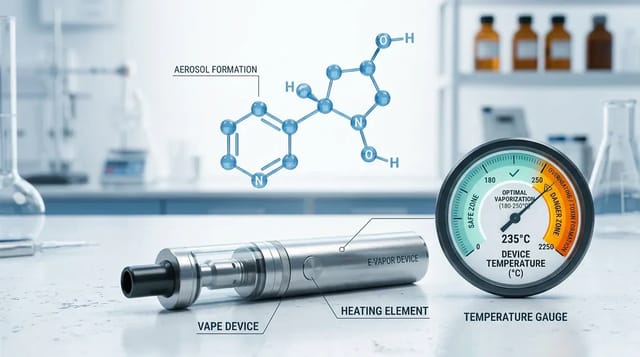
- Thermal degradation products — when VG and PG are heated, they can produce formaldehyde, acrolein, and acetaldehyde. This happens independent of nicotine
- Flavoring chemical exposure — flavoring compounds are inhaled whether or not the liquid contains nicotine
- Metal exposure — coil-derived metals enter the aerosol regardless of e-liquid nicotine content
So: nicotine-free vaping removes the vasoconstriction, the addiction loop, and the cardiovascular load. Those are meaningful reductions. But the base-level risks of inhaling heated aerosol remain. Nicotine-free products with published ingredient and lab data remove some of these risks, but not all of them.
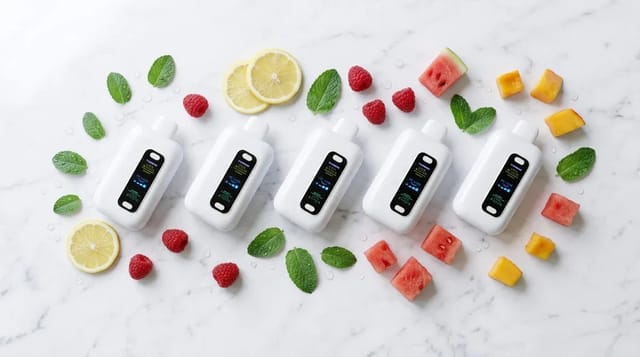
Our products — the Gust Pro (20,000 puffs, $20) and Lightning (10,000 puffs/pod, $14/pod) — contain no added nicotine, and are made without diacetyl or vitamin E acetate. We believe that's the minimum standard any vape brand should meet. But we won't tell you that makes vaping "safe." It just means we've removed the ingredients we can control.
We also make the Gust Core: rated 50,000 puffs, $25, 9 flavors, assembled in the USA.
What We Still Don't Know
Vaping as a mass consumer behavior is roughly 15 years old. Compared to the 70+ years of epidemiological data on cigarette smoking, we're still early. Several critical questions remain unanswered:
- 20-year outcomes: No long-term cohort studies track daily vapers over decades. We simply don't have the data yet.
- Cumulative particle burden: We know ultrafine particles deposit in the lungs. We don't know the clinical significance of 10 or 20 years of that deposition at typical vaping volumes.
- Cancer risk: Some aerosol components (formaldehyde, certain metals) are known carcinogens. Whether vaping-level exposure produces meaningful cancer risk is unknown.
- Flavor-specific effects: Thousands of flavoring compounds are used across the industry. Most have GRAS (Generally Recognized as Safe) status for ingestion, but inhalation safety data is sparse for the majority of them.
The latest Cochrane review (PMID: 42642048) reflects this: existing studies rarely extend beyond 24 months, and the confidence in long-term safety conclusions is low.
This uncertainty isn't a reason to panic. It's a reason to make informed choices with the data available right now — and to update those choices as new evidence emerges. Honesty requires saying that out loud. Anyone — brand, doctor, blogger — who tells you vaping is definitively safe long-term is outrunning the evidence.
The Bottom Line
The safest choice for your lungs is not vaping at all. Air is what lungs are built for. If you currently smoke and are considering vaping as a step toward quitting, the evidence supports that switch — the Cochrane review found moderate-certainty evidence that e-cigarettes help smokers quit and are less harmful than continuing to smoke.
If you choose to vape — whether to quit nicotine, replace a smoking habit, or for the experience — minimize your risk:
- Never use illicit THC cartridges
- Choose products with published, third-party lab testing
- Verify the ingredient list: USP-grade VG, PG, food-grade flavorings
- Avoid diacetyl, vitamin E acetate, and unknown additives
- Consider nicotine-free options to eliminate addiction and vasoconstriction
- Buy from verified sources — counterfeit products bypass every safety measure
We built Cyclone Pods in 2018 in Santa Monica, California, specifically for people who want to vape without nicotine. Our e-liquids contain no added nicotine and are made without diacetyl or vitamin E acetate. For the Gust Pro and Lightning, the Legend Technical Services nicotine report (ISO 17025, Work Order #2503988) found 13 of 16 flavors non-detect, with trace nicotine in Lush Ice, Bold Tobacco and Tobacco. The July 2026 panel above (Work Order #2602062) did not detect diacetyl in any of its six flavors. None of that makes vaping risk-free. We think you deserve to know that.
If you're experiencing any respiratory symptoms and you vape, talk to your doctor. Bring your device and your e-liquid so they can assess what you've been inhaling. Early intervention matters — especially with conditions like EVALI, where outcomes are dramatically better with prompt treatment.
Sources
- Blount BC, Karwowski MP, Shields PG, et al. Vitamin E acetate in bronchoalveolar-lavage fluid associated with EVALI. N Engl J Med. 2020;382(8):697-705. PMID: 31860793
- Lindson N, Livingstone-Banks J, Butler AR, et al. Electronic cigarettes for smoking cessation. Cochrane Database Syst Rev. 2026;8(8):CD010216. PMID: 42642048
- Ghosh A, Coakley RD, Ghio AJ, et al. Chronic e-cigarette use increases neutrophil elastase and matrix metalloprotease levels in the lung. Am J Respir Crit Care Med. 2019;200(11):1392-1401. PMID: 31390877
- Olmedo P, Goessler W, Tanda S, et al. Metal concentrations in e-cigarette liquid and aerosol samples: the contribution of metallic coils. Environ Health Perspect. 2018;126(2):027010. PMID: 29467105
- Allen JG, Flanigan SS, LeBlanc M, et al. Flavoring chemicals in e-cigarettes: diacetyl, 2,3-pentanedione, and acetoin in a sample of 51 products. Environ Health Perspect. 2016;124(6):733-739. PMID: 26642857
- CDC. Outbreak of lung injury associated with the use of e-cigarette, or vaping, products. Updated February 25, 2020.